
 EN
EN  English
 中文简体
中文简体 عربى
عربى Tiếng Việt
Content
What is an Evaporative Air Cooler? Is it an air conditioner?
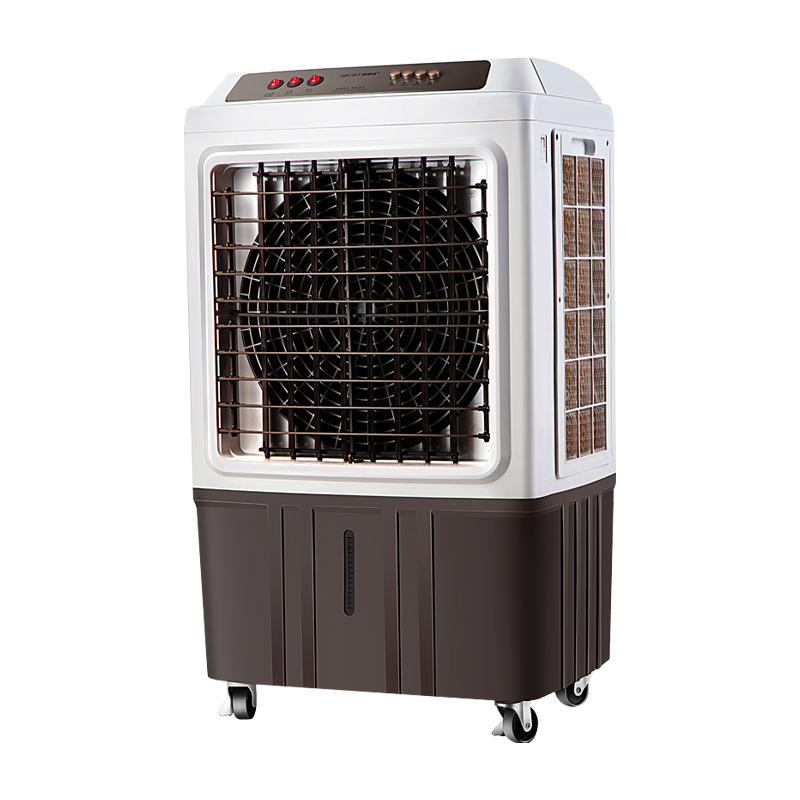
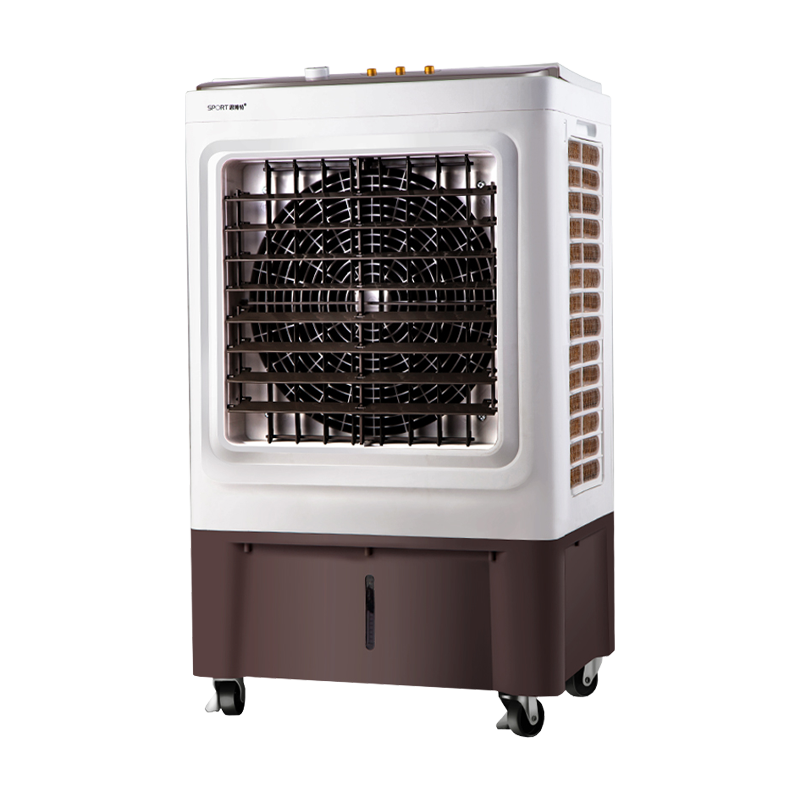
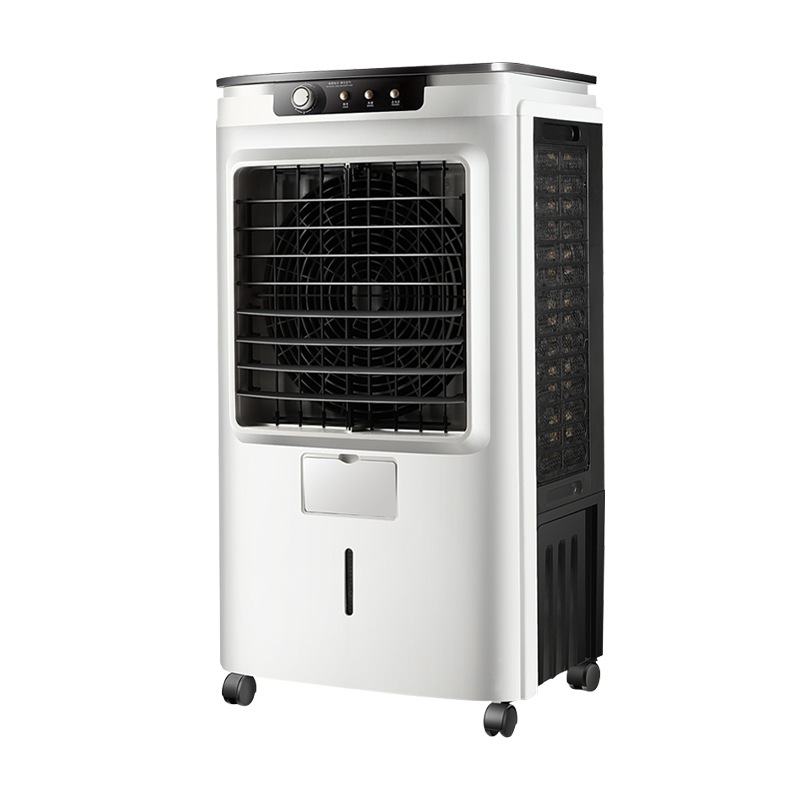
An Evaporative Air Cooler is a high-powered fan that uses water evaporation to create a cool breeze. It is not a traditional air conditioner.
Think about the chill you feel when a breeze blows over your skin after you've been in a swimming pool. This device uses that exact same natural principle—the cooling effect of water evaporation. It pulls warm air from outside, passes it through water-saturated cooling pads, and blows the newly cooled and humidified air into your space. Unlike a compressor-based air conditioner, it doesn't recirculate indoor air or require a closed room.
Key Difference from AC: A 2023 report from the U.S. Department of Energy clearly distinguishes the two technologies: while air conditioners use refrigerants and a closed-loop system to remove heat, evaporative coolers are "ventilation systems that use water to provide cooling." Source: U.S. Department of Energy, "Evaporative Coolers"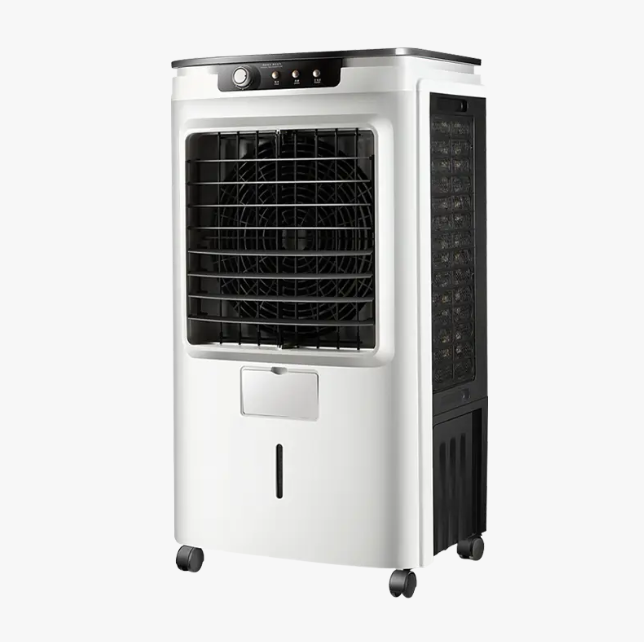
Why Should I Consider One? Is it just a trendy gadget?
Evaporative coolers are important because they offer significant savings on energy bills and provide healthy, ventilated cooling in dry climates, addressing key pain points of traditional AC.
Customers don't buy them because they're novel; they buy them to solve specific problems.
- They Drastically Cut Electricity Costs: The biggest draw is operational savings. A residential evaporative cooler uses about 75-90% less electricity than a central air conditioner of equivalent cooling capacity. This is because its major components are only a fan and a small water pump, not an energy-intensive compressor. Source: California Energy Commission, "Cooling Systems"
- They Provide Continuous Fresh Air: Unlike AC units that require sealed spaces, evaporative coolers work best with windows partially open. They constantly exhaust stale indoor air and replace it with 100% fresh, cooled, outdoor air. This is critical for spaces like workshops, garages, and restaurants where air quality matters.
- They Add Beneficial Humidity: In arid regions, traditional air conditioning can over-dry air, leading to respiratory irritation. Evaporative coolers add moisture, making the air more comfortable and reducing static electricity—a common complaint in dry, AC-cooled spaces.
When is the Best Time and Place to Use One?
Use an evaporative cooler if you live in a hot, dry climate (e.g., the southwestern U.S., Australia's Outback, Mediterranean regions) and need to cool large, open, or well-ventilated spaces affordably.
- Ideal Climates: These coolers are most effective where relative humidity is below 60%. Their performance is scientifically tied to the "wet-bulb depression"—the difference between dry and wet-bulb temperatures—which is larger in drier air. [Source: ASHRAE Fundamentals Handbook, Psychrometrics Chapter]
- Perfect Applications:
- Industrial & Commercial Spaces: Warehouses, factories, workshops, gyms, and barns where installing ducted AC is prohibitively expensive.
- Dry-Climate Homes: Whole-house cooling in regions like the American Southwest, where they are a common and effective primary cooling solution.
- Spot or Supplemental Cooling: Cooling a patio, garage, or a specific room with a portable unit.
- Industrial & Commercial Spaces: Warehouses, factories, workshops, gyms, and barns where installing ducted AC is prohibitively expensive.
- When to Stick with Traditional AC: If you live in a humid climate (e.g., the southeastern U.S., tropical regions), need precise temperature and humidity control, or must cool a sealed space (like a server room or a home tightly sealed for efficiency), a refrigerant-based air conditioner is the necessary choice.
How Does It Actually Work? Is the setup complicated?
The machine works by pulling hot, dry air through water-moistened pads, causing the water to evaporate and cool the air, which is then blown into the room by a fan. Setup is typically plug-and-play.
The process, governed by the laws of thermodynamics, is straightforward:
- Water Soaking: A water reservoir (or direct water line) continuously soaks the thick cooling pads, typically made of aspen wood or rigid cellulose.
- Air Intake & Evaporation: A powerful internal fan draws warm, dry outdoor air through these saturated pads.
- Heat Absorption: As the air passes through, water molecules evaporate from the pad surface. This phase change from liquid to vapor requires energy (heat), which is drawn directly from the incoming air. This significantly lowers the air's temperature.
- Cool Air Delivery: The now-cooled and humidified air is circulated into your living or working space by the fan. A cross-ventilation strategy (opening windows opposite the cooler) exhausts warm air and maximizes effectiveness.
By understanding how an Evaporative Air Cooler works and where it performs best, you can decide whether this energy-efficient and environmentally friendly cooling solution is right for your space.

 CONTACT US