
 EN
EN  English
 中文简体
中文简体 عربى
عربى Tiếng Việt
-
 Industry News
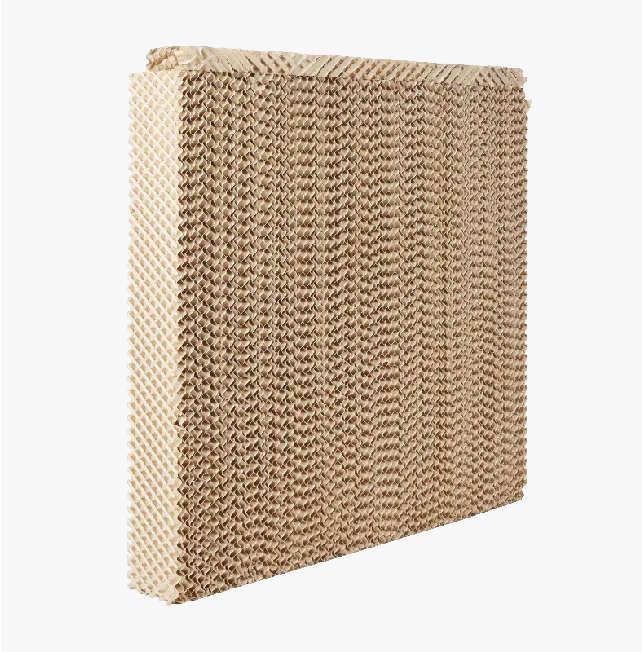
Cooling Pad Lifespan: How Long Do Evaporative Cooling Pads Really Last?
A cooling pad does not fail on a calendar date. In evaporative cooling, a rigid cellulose honeycomb pad usually lasts 2 to 5 years; a premium, well-maintained pad can reach 5 to 7 years; inexpensive aspen or low-density pads often last one season to 18 months. Hard water, dust, algae, and long daily runtimes push those numbers down. The useful que...
 Sep 25, 2026
 -
 Industry News
what flute angle is best for cooling pads: Practical Applications, Selection
Direct answer: for most evaporative cooling installations, a 15° flute angle offers the best balance between cooling efficiency and pressure drop. Choose 8° when you run tunnel-ventilation fans at 2 m/s or higher in poultry or livestock buildings, and treat 5° as a niche specification for ultra-high-velocity or dusty systems where static pressure...
Sep 18, 2026 -
 Industry News
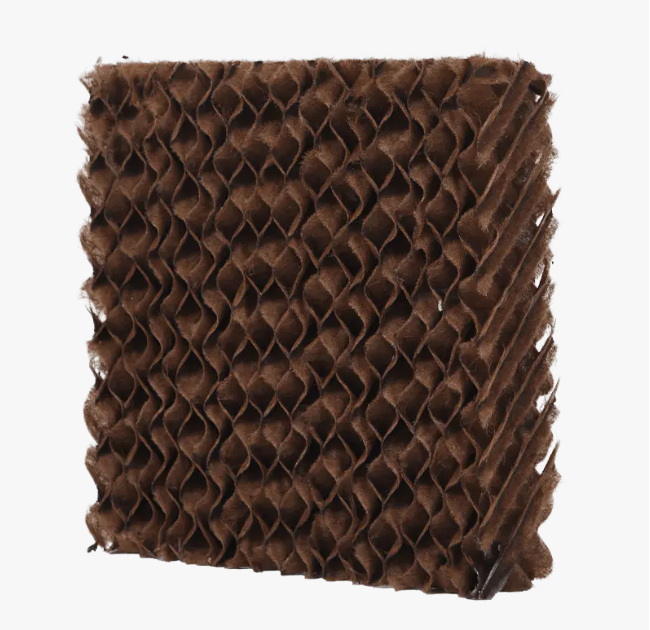
How to Install Evaporative Cooling Pads in a Poultry House: Step-by-Step Guide
When outdoor temperature climbs past 32°C, a poultry house without evaporative cooling delivers inlet air at nearly the same temperature as outside. Birds then eat less, shell quality drops, and mortality rises in severe cases. The proven fix is a pad-and-fan system: wet cellulose pads on the inlet wall, exhaust fans pulling air through them, and ...
Sep 11, 2026 -
 Industry News
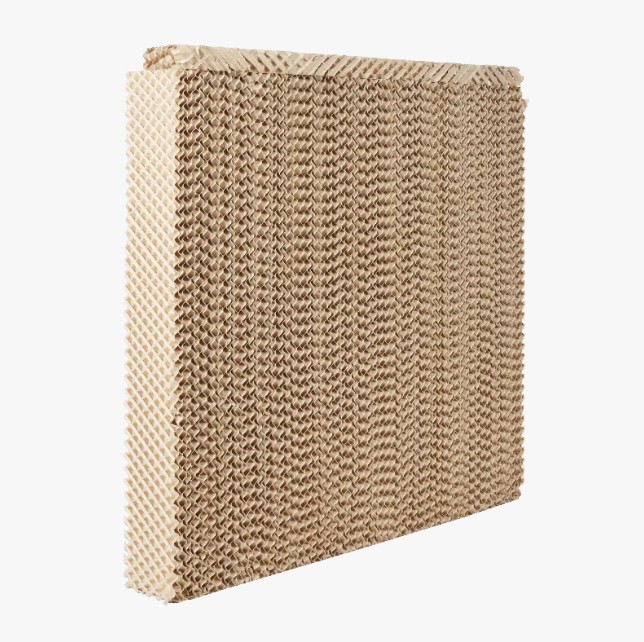
Cooling Pad Saturation Efficiency Explained: Key Metrics, Design Factors, and Selection
On a 38°C dry-bulb day with a 24°C wet-bulb temperature, a cooling pad running at 90% saturation efficiency can deliver air at roughly 25°C. The same system at 65% saturation efficiency will deliver air at about 29°C. That four-degree gap translates directly into poultry house productivity, worker comfort, or greenhouse crop quality. Saturation ef...
Sep 04, 2026
If you are interested in our products, please consult us
CONTACT DETAILS
- Address: Weiyi Road, Fanshi Industrial Zone, Longshan Town, Cixi City, Zhejiang Province, China
- TEL: 86-0574-63936881
QUICK LINK
NEWS CENTER
MOBILE TREMIAL

 CONTACT US