
 EN
EN  English
 中文简体
中文简体 عربى
عربى Tiếng Việt
-
 Industry News
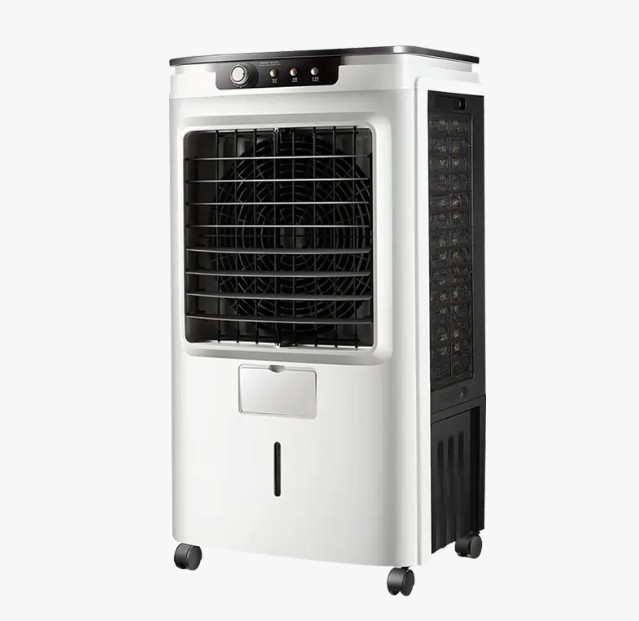
Do evaporative air coolers require regular maintenance? How often and how should it be maintained?
Evaporative air coolers require regular maintenance over the long term to ensure efficient operation and extend their lifespan. Daily maintenance includes checking the power and water supply, observing the fan for smooth operation, any unusual sounds or vibrations, and verifying that the control system is functioning properly. These basic checks he...
 Aug 01, 2025
 -
 Industry News
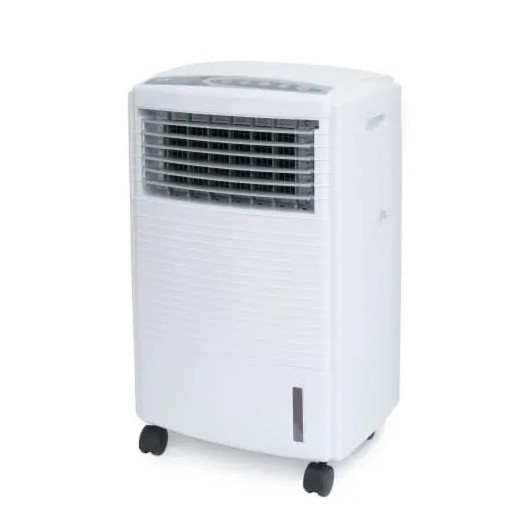
How does the 3D honeycomb cooling pad of the evaporative air cooler with cooling pad improve airflow and evaporation?
This air cooler uses a 3D honeycomb cooling pad, which is inspired by the honeycomb structure in nature, which has high structural efficiency and excellent heat dissipation performance. The honeycomb is composed of hexagonal units. This geometric structure is widely considered in engineering to have extremely high strength and heat dissipation effi...
Jul 25, 2025 -
 Industry News
What is the role of the cooling pad in the evaporative cooling process?
In an evaporative air cooler, the cooling pad is one of the core components of the entire system. Its main function is to absorb heat from the air through the evaporation of water, thereby achieving air cooling. This process not only improves the comfort of the air, but also provides a good operating environment for the equipment. 1. Basic structur...
Jul 18, 2025 -
 Industry News
What are the main competitive advantages of evaporative cooling pads compared to other cooling technologies?
Poultry Equipment Evaporative cooling Pad are an efficient and environmentally friendly cooling technology that is widely used in poultry farming, greenhouses, industrial plants and other fields. Traditional air conditioners rely on electricity to drive compressors, which consumes extremely high energy, while evaporative cooling only requires water...
Jul 11, 2025
If you are interested in our products, please consult us
CONTACT DETAILS
- Address: Weiyi Road, Fanshi Industrial Zone, Longshan Town, Cixi City, Zhejiang Province, China
- TEL: 86-0574-63936881
QUICK LINK
NEWS CENTER
MOBILE TREMIAL

 CONTACT US