
 EN
EN  English
 中文简体
中文简体 عربى
عربى Tiếng Việt
Content
- 1 Why Windowless Rooms Change the Cooling Result
- 2 Practical Ventilation Options For A Room With No Window
- 3 Direct Versus Indirect Systems In Closed Spaces
- 4 Evaporative Cooling Product Range
- 5 Setting Up Windowless Workshops, Factories, And Greenhouses
- 6 Maintenance Habits That Protect Performance In Closed Rooms
- 7 Key Takeaway
An evaporative air cooler can be used in a room without a window, but only if there is another way for warm, moist air to leave the space. Evaporative cooling depends on continuous airflow: dry air enters, passes through a wet cooling pad, picks up moisture, and exits as cooled air. If that moist air has nowhere to go, humidity climbs quickly, the cooling effect drops within minutes, and condensation can form on walls and equipment. A door left ajar, a wall vent, an exhaust fan, or a short duct routed to an adjoining space or outside wall opening can all serve the same purpose as a window.
Why Windowless Rooms Change the Cooling Result
A direct evaporative air cooler works as an open-loop system rather than a sealed one, which is the opposite of how standard air conditioning cooling operates. Cool, damp air is pushed in, and an equal volume of air must be pushed out, otherwise the room pressurizes and airflow through the wet curtain paper slows down. In a sealed windowless room, relative humidity can rise from a comfortable 45 percent to over 80 percent in under 30 minutes when a mid-size unit runs at full fan speed, based on typical airflow ratings between 3,000 and 6,000 cubic meters per hour. Once humidity passes roughly 60 percent, the evaporation rate across the honeycomb paper drops sharply and the unit behaves more like a fan blowing warm, humid air.
- Below 60 percent relative humidity: strong evaporative cooling, drop of 4 to 9 degrees Celsius is common
- 60 to 75 percent relative humidity: noticeably weaker cooling, drop of 1 to 3 degrees Celsius
- Above 75 percent relative humidity: little to no cooling benefit, risk of condensation and dampness
Practical Ventilation Options For A Room With No Window
The fix is rarely a window itself, it is an exhaust path of roughly the same size as the cooler's air intake. Installers commonly apply a simple rule: provide at least 0.2 square meters of open exhaust area for every 1,000 cubic meters per hour of rated cooler airflow. Below are the most common solutions used in homes, workshops, and factory floors that lack outside windows.
| Ventilation Method | Best Suited For | Effect On Humidity |
| Door opened to an adjoining room or hallway | Homes, offices | Moderate relief, works for small units |
| Wall-mounted exhaust fan | Workshop cooling, storage rooms | Strong relief, keeps humidity stable |
| Roof or ridge vent | Factory ventilation, warehouses | Strong relief, supports rapid cooling across large floors |
| Ducted air outlet to outside wall | Basements, interior rooms | Strong relief, best for fully enclosed spaces |
| Louvered vent panel | Greenhouse cooling, poultry and livestock buildings | Continuous relief, supports farm ventilation and cooling cycles |
Direct Versus Indirect Systems In Closed Spaces
If a room genuinely cannot be vented, an indirect evaporative cooler is a better fit than a direct one. A direct unit exposes airflow straight to the wet curtain, adding both cooling and humidity, which is why it depends on exhaust. An indirect unit uses a heat exchanger, so the moist air stays on one side of the exchanger while dry, cooled air passes to the room on the other side. This makes indirect systems, and standalone industrial humidifier units used purely for humidity control, more forgiving in enclosed interior rooms, server rooms, and printing areas where moisture control matters as much as temperature.
- Direct evaporative cooler: highest cooling output, requires an exhaust path, ideal for workshop cooling and open factory floors
- Indirect evaporative cooler: lower humidity gain, milder cooling, better suited to sealed interior rooms
- Stand-alone humidification curtain systems: used when moisture, not temperature, is the primary goal, common in printing, textile, and storage facilities
Evaporative Cooling Product Range
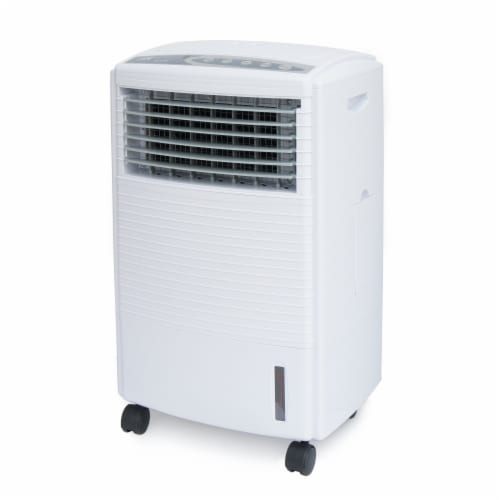
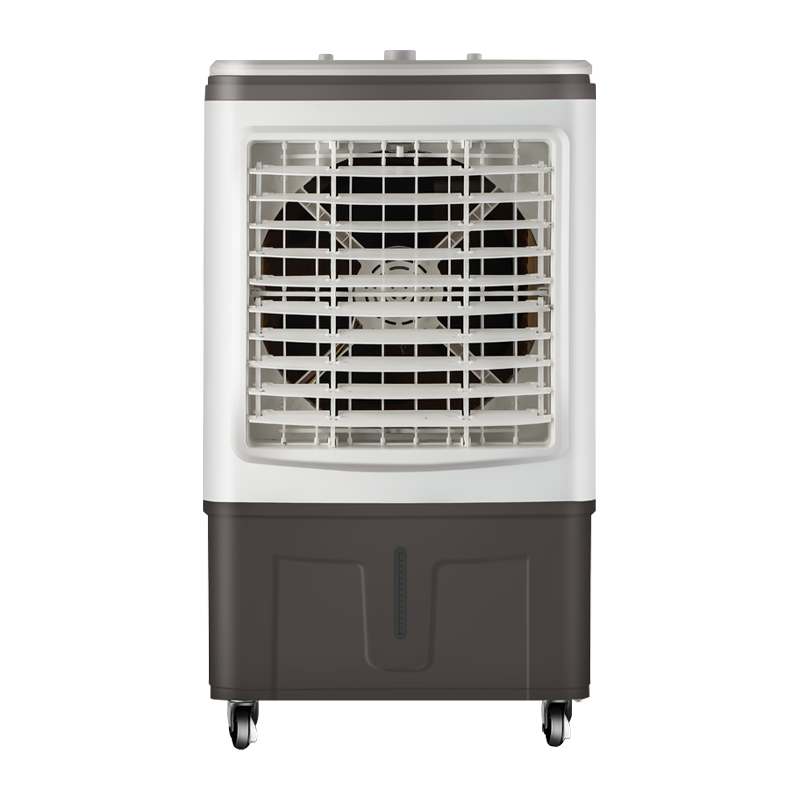
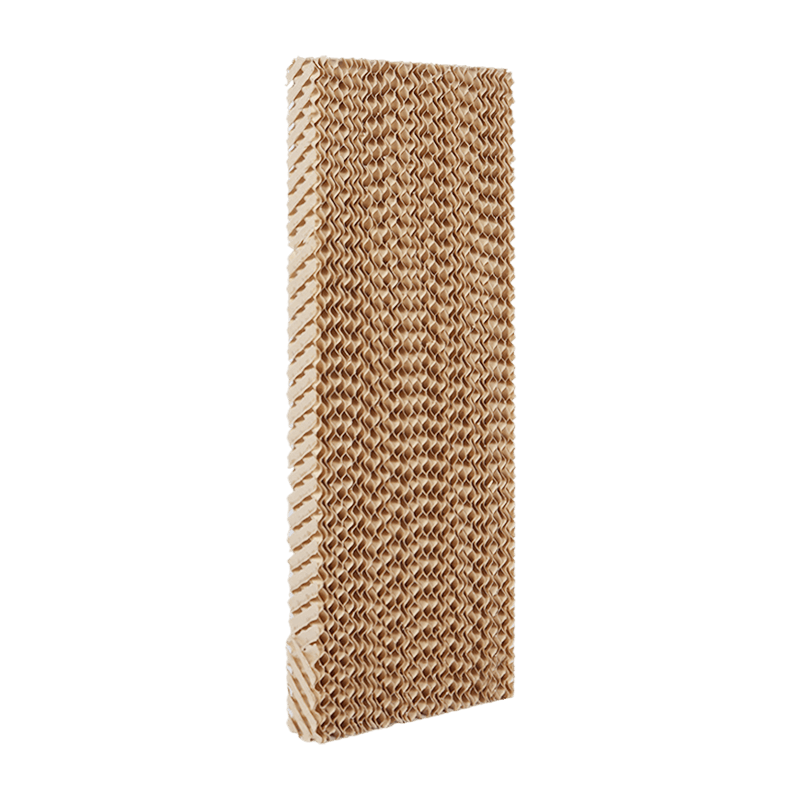
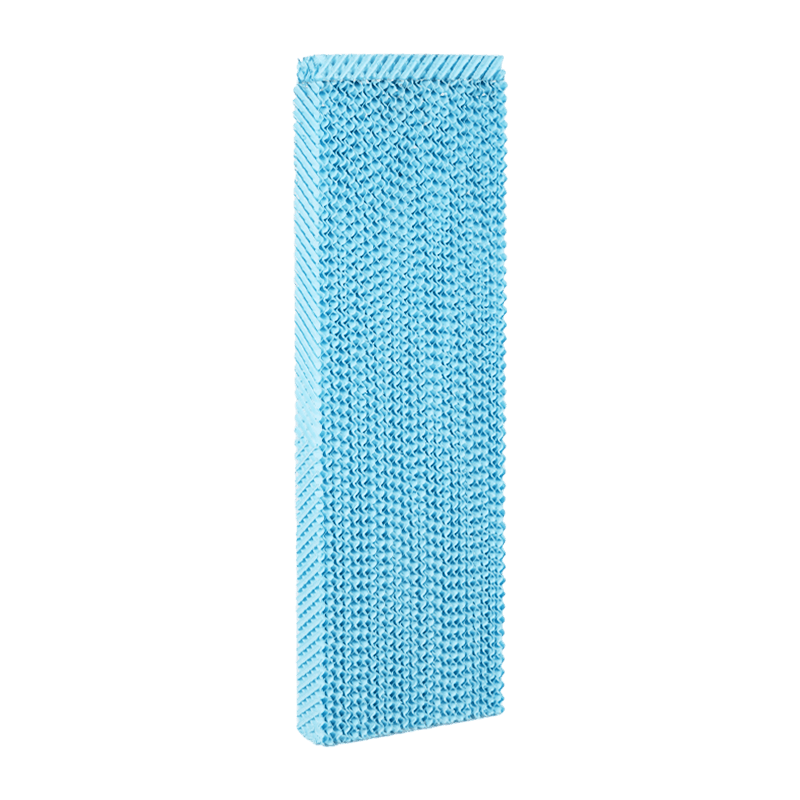
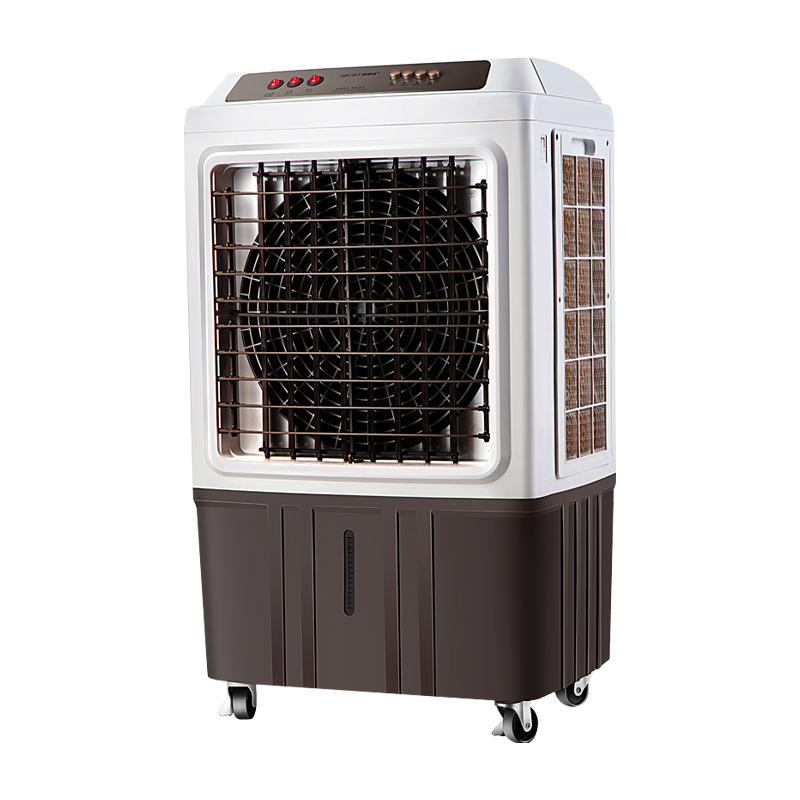
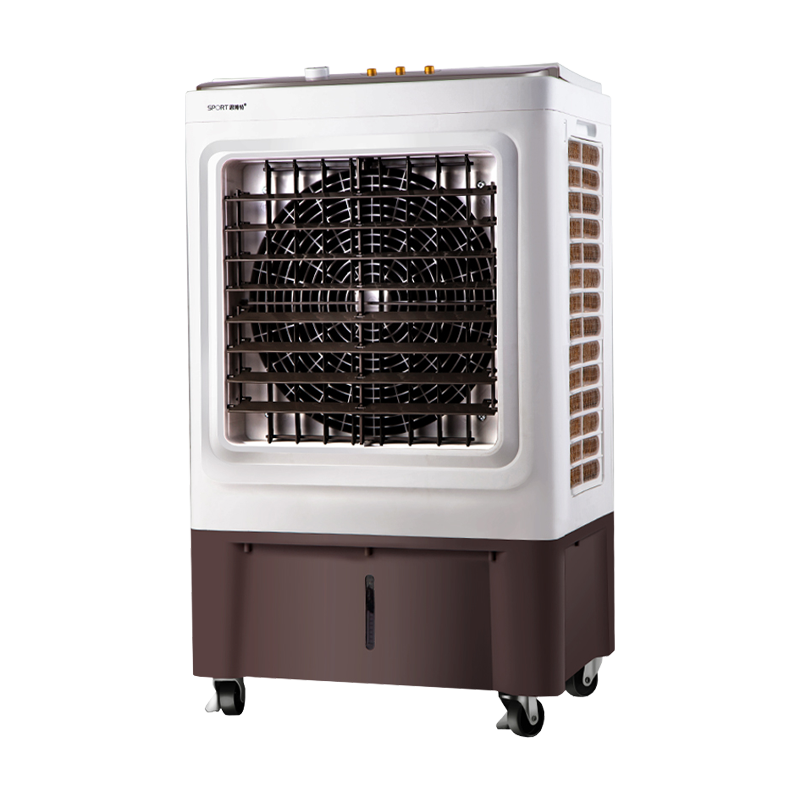
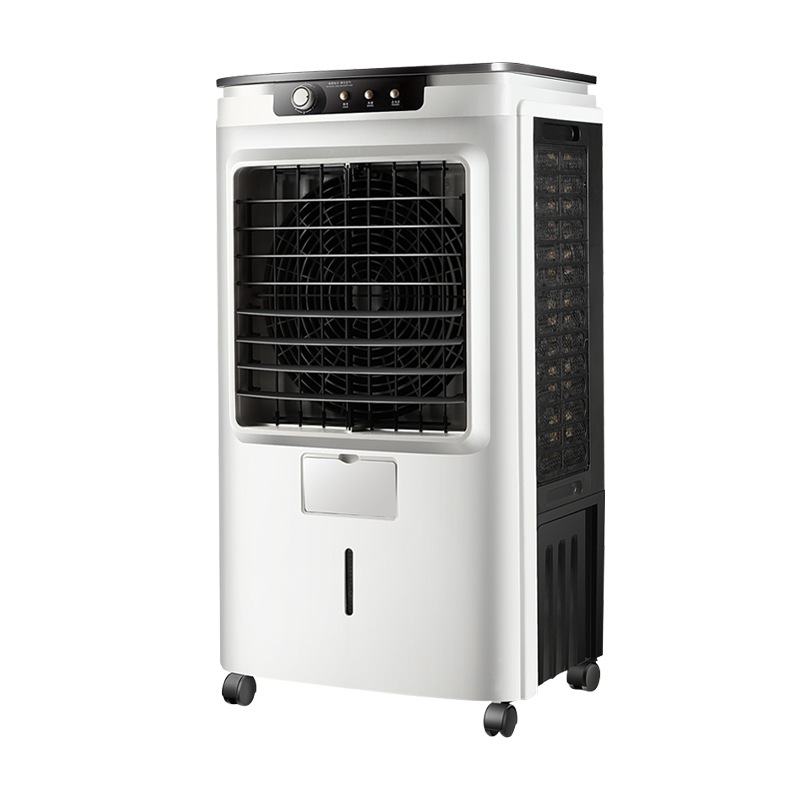
A short overview of cooler units and wet curtain paper cooling pads suited to homes, workshops, greenhouses, and factory floors, whether the space is naturally ventilated or fitted with an exhaust path.
Setting Up Windowless Workshops, Factories, And Greenhouses
Large working spaces rarely rely on a single window anyway, so the same principle scales up easily. Factory ventilation typically pairs one or more evaporative units on one wall with roof extractor fans or ridge vents on the opposite side, pulling air across the entire floor and out the far end. This cross-flow layout is what allows rapid cooling in spaces with high internal heat loads, such as metal stamping shops or textile mills. In greenhouse cooling and farm ventilation and cooling setups, the same wet curtain wall principle is used at one end of the structure with extraction fans at the other, so airflow direction, not the presence of a window, is what determines performance.
- Position the cooler intake on the wall opposite the exhaust fan or vent for a straight airflow path
- Match exhaust fan capacity to at least 90 percent of the cooler's rated airflow
- Avoid placing the unit in a corner with no clear path to the exhaust point
Maintenance Habits That Protect Performance In Closed Rooms
Enclosed rooms with limited airflow put extra strain on cooling pads because trapped humidity encourages mineral buildup and slower drying between cycles. Rinsing the wet curtain paper monthly during heavy use, checking the water pump and float valve for scale, and replacing honeycomb paper pads every one to two seasons keeps the evaporation rate consistent. Homemade wet curtain paper substitutes are sometimes used in small farm setups, but factory-produced evaporative cooling paper generally holds shape longer and resists sagging when humidity stays elevated for extended periods, which matters most in rooms without natural ventilation.
Key Takeaway
A windowless room is not a reason to avoid evaporative cooling, but it does mean the exhaust side of the system needs as much attention as the cooler itself. Add a fan, vent, or duct sized to the unit's airflow, keep relative humidity under 60 percent where possible, and choose an indirect system for spaces that truly cannot be vented. With that one adjustment, the same environmentally friendly air conditioning cooling approach used in open workshops works just as well behind a closed door.

 CONTACT US