
 EN
EN  English
 中文简体
中文简体 عربى
عربى Tiếng Việt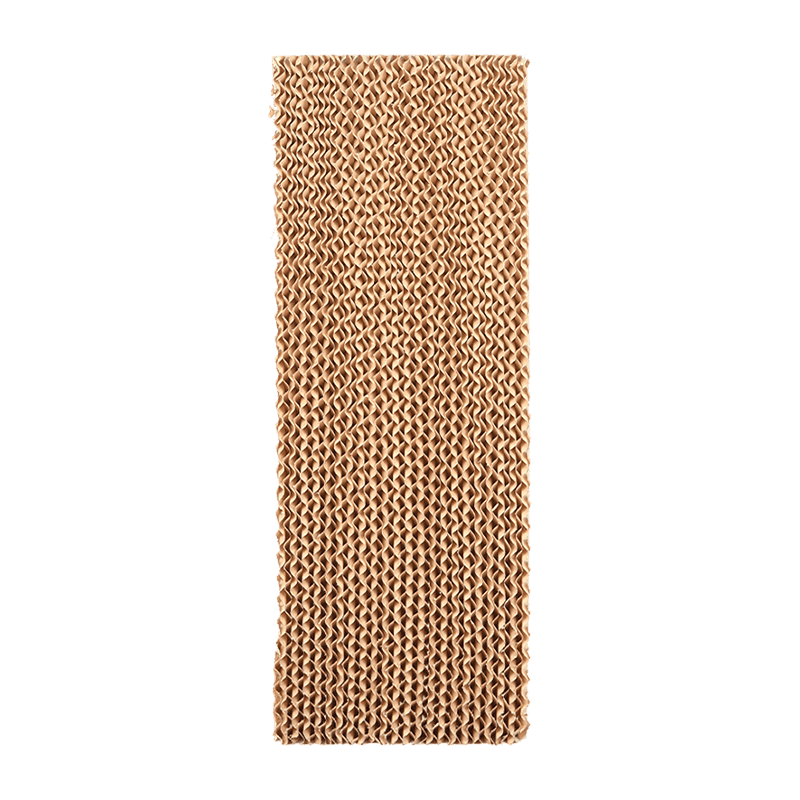
Content
- 1 What Determines How Long a Cooling Pad Lasts
- 2 Evaporative Cooler Pad Replacement Schedule by Material Type
- 3 Warning Signs That Mean Replace Now
- 4 How Water Quality Shortens or Extends Pad Life
- 5 Cooling Pad Product Range
- 6 Maintenance Habits That Add Years to a Pad
- 7 Where These Pads Do More Than Cool a Room
- 8 Choosing a Replacement Pad That Lasts Longer
Most Evaporative Cooler Pads need replacement every one to three years for standard cellulose media, while industrial-grade honeycomb paper pads can last three to five years when the water is treated and the system is maintained properly. The exact interval depends on water hardness, airborne dust levels, how many hours the unit runs each season, and how well the pad is rinsed and dried between uses. Waiting too long past this window typically costs more in wasted energy and lost cooling than the price of a new pad.
What Determines How Long a Cooling Pad Lasts
Evaporative cooler pads age through a combination of mechanical, chemical, and biological wear. Mineral scale from hard water is usually the biggest factor, followed by dust and airborne particulate that clog the flute channels. Operating frequency also matters: a pad running continuously through a long, hot season accumulates far more mineral deposit than one used only a few hours a day.
- Water hardness and impurity content in the local supply
- Airborne dust, pollen, and pollution levels around the installation
- Daily and seasonal operating hours
- Material density and corrugation thickness of the pad itself
- How consistently the system is cleaned and how well the pad dries during shutdown periods
Evaporative Cooler Pad Replacement Schedule by Material Type
Not every cooling pad is built to the same standard, so the replacement window shifts depending on the material and how it is treated during manufacturing.
| Pad Type | Typical Lifespan | Best Suited For | Key Advantage |
| Standard cellulose pad | 1 to 2 years | Residential swamp coolers | Low cost, strong initial water absorption |
| Rigid honeycomb paper pad | 2 to 3 years | Commercial evaporative coolers | Stable structure, high cooling efficiency |
| Industrial-grade treated pad | 3 to 5 years | Factory ventilation, workshop cooling | Corrosion resistance, anti-scaling, anti-mildew coating |
| Fiber or synthetic water curtain | 3 to 4 years | Greenhouse cooling, farm ventilation and cooling | Resists chemical exposure and mineral buildup |
Warning Signs That Mean Replace Now
A pad does not need to wait for its theoretical lifespan to expire before it is replaced. If any of the following appear, performance is already dropping and replacement should happen sooner rather than later.
- Heavy white or gray scale crust covering a large portion of the surface
- Sagging, softened, or deformed honeycomb structure that no longer holds its shape
- Persistent musty or moldy odor that does not go away after cleaning
- A noticeably smaller temperature drop across the pad than when it was new
- Dry patches or uneven wetting across the pad face, showing broken water distribution
How Water Quality Shortens or Extends Pad Life
Water hardness has a direct and measurable effect on how fast a pad scales over and clogs. In moderately hard water areas, roughly 150 to 450 mg per liter, a softening device paired with a scale-resistant pad noticeably slows deterioration. In high hardness areas above 450 mg per liter, plastic PP or PVC pads and fiberglass composite pads are generally the stronger choice because they resist mineral buildup far better than untreated cellulose. Checking total hardness before selecting a pad is one of the simplest ways to avoid a short replacement cycle.
Cooling Pad Product Range
A quick look at common evaporative cooling pad formats, from honeycomb paper panels to industrial water curtain media, each suited to a different cooling scenario.
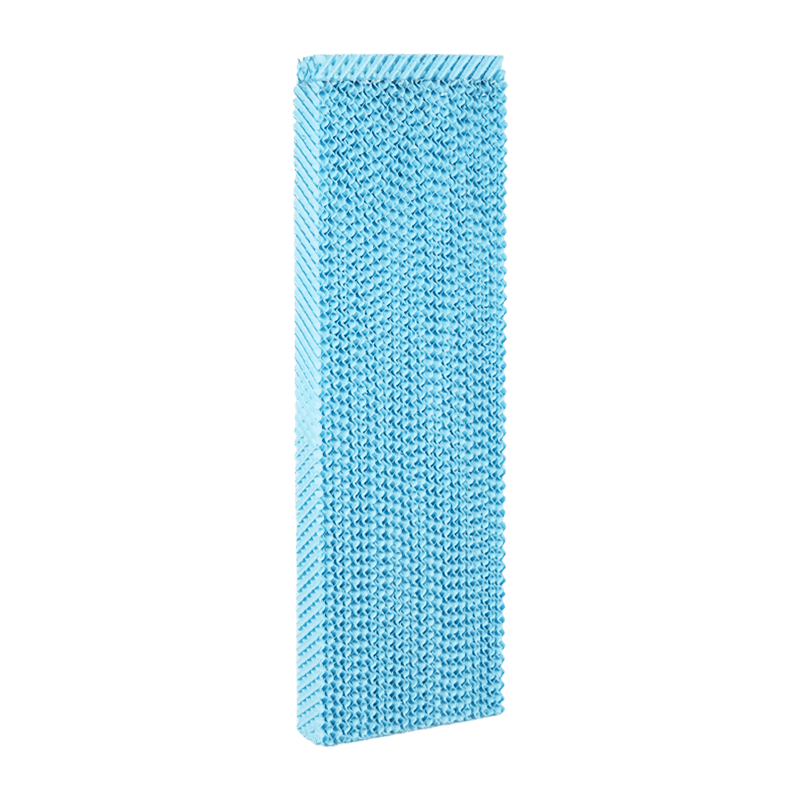
Blue Evaporative Cooling Pad
Industrial Pad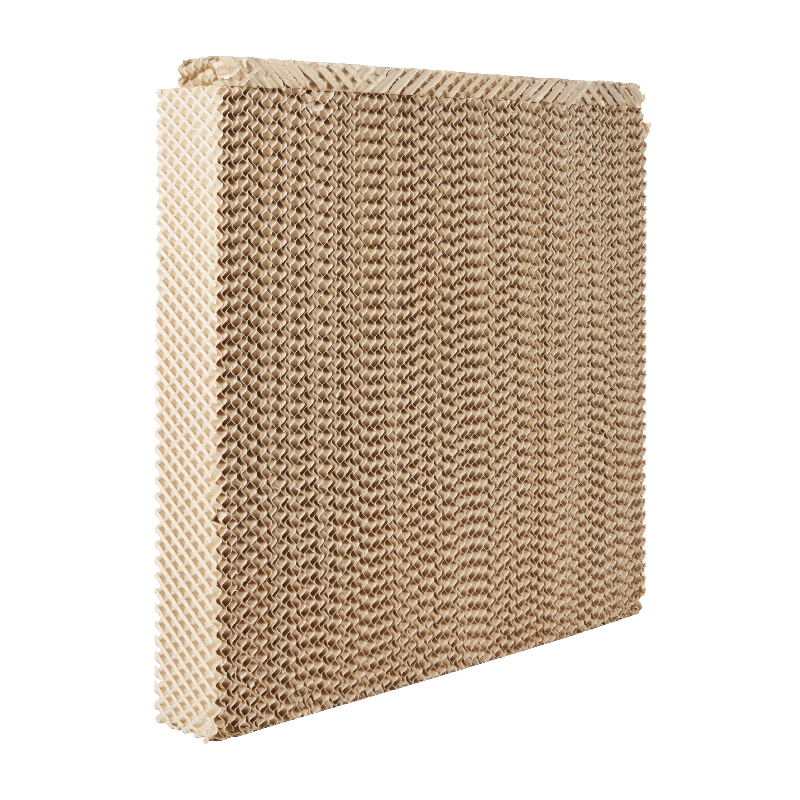
5090 Honeycomb Cooling Pad
Greenhouse Cooling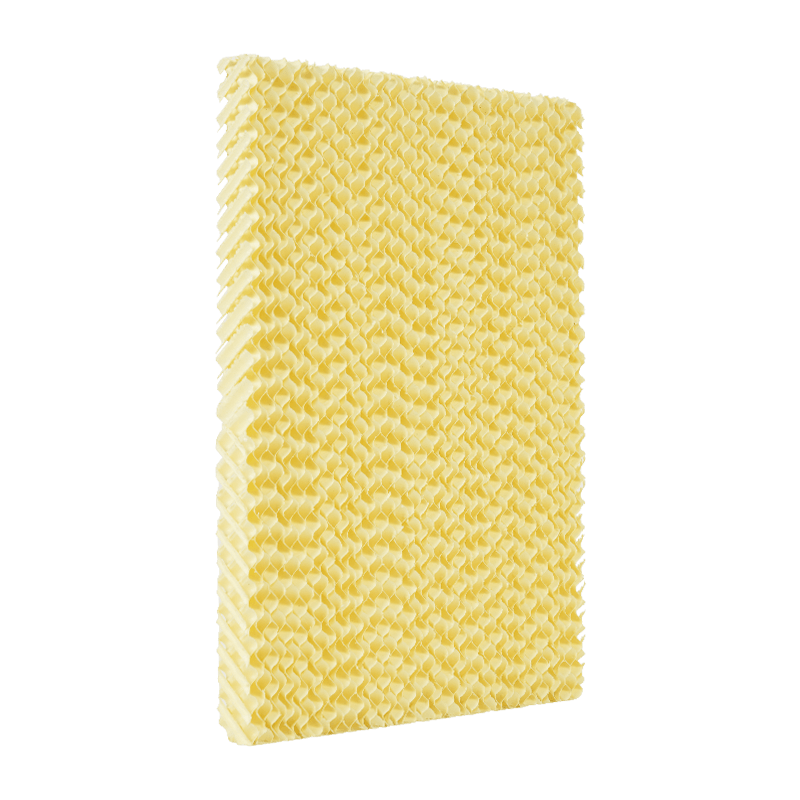
6090 Poultry Cooling Pad
Farm Ventilation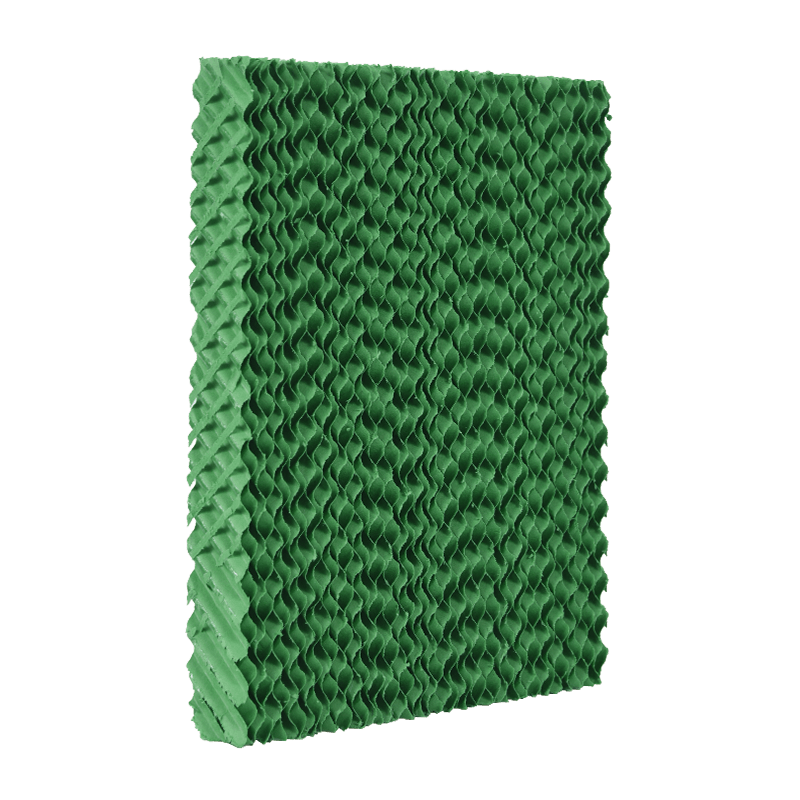
7090 Greenhouse Cooling Pad
Greenhouse CoolingMaintenance Habits That Add Years to a Pad
Scientific maintenance can extend service life by more than 30 percent compared to running a pad without care. The habits below are simple but make a measurable difference over a full cooling season.
- Descale and rinse the pad every one to two months during peak use
- Use filtered or softened water wherever hardness is above moderate levels
- Install a pre-filtration screen to catch dust before it reaches the pad
- Clean the water tank on a regular schedule to prevent algae and sediment buildup
- Dry the pad fully before long shutdown or off-season storage
- Avoid running the system continuously at high load without rest cycles
Where These Pads Do More Than Cool a Room
Evaporative cooling pads are not limited to home swamp coolers. The same honeycomb paper and water curtain media are core components in industrial humidifier systems, environmentally friendly air conditioning cooling for factory floors, and wet curtain wall installations used across greenhouse cooling operations. In textile plants, a humidification curtain keeps fiber from drying out, while in poultry housing the same media provides rapid cooling during heat stress periods. Workshop cooling and factory ventilation setups rely on identical pad technology, just scaled to larger frame sizes and higher airflow volumes.
Choosing a Replacement Pad That Lasts Longer
When it is time to replace a pad, match the material to the environment rather than defaulting to whatever was originally installed. A workshop with high dust levels benefits from a denser honeycomb paper structure, while a greenhouse with heavy mineral content in its irrigation water often does better with a treated water curtain designed for scale resistance. Working with an established wet curtain paper manufacturer also helps, since custom sizing and documented certification, such as flame retardancy and RoHS compliance, reduce the chance of buying evaporative cooling paper that fails early. A slightly higher upfront cost for a properly rated pad is almost always cheaper than replacing a low-quality one every single season.

 CONTACT US