
 EN
 English
 中文简体
 عربى
 Tiếng Việt
How Does an Evaporative Cooling Pad Work? The Short Answer
Picture a poultry house at 38°C, or a textile workshop where motors push the indoor temperature higher every hour. A fan pulls hot, dry outside air through a wet honeycomb pad. Water evaporates from the pad surface into the air stream, and that phase change absorbs heat. The air leaves cooler and more humid, without a compressor or refrigerant.
The pad is not a filter that “adds cold.” It is a wet heat-exchange surface. Its job is to create the largest possible water film in contact with moving air for the longest practical time, at the lowest acceptable pressure drop.
What Happens Inside the Pad
A typical cellulose pad is made from corrugated sheets bonded into a honeycomb block. The flutes are angled so adjacent sheets cross. Air passes through the open channels; water drips from a distribution pipe at the top and runs down the sheet surfaces. The result is a thin, continuous film of water exposed to a large air volume.
As unsaturated air touches that film, some water becomes vapour. The energy needed for evaporation is taken from the air and the remaining water, so the dry-bulb temperature drops. The air’s moisture content rises at the same time. The process moves the air condition toward the wet-bulb temperature; a real pad does not reach it perfectly.
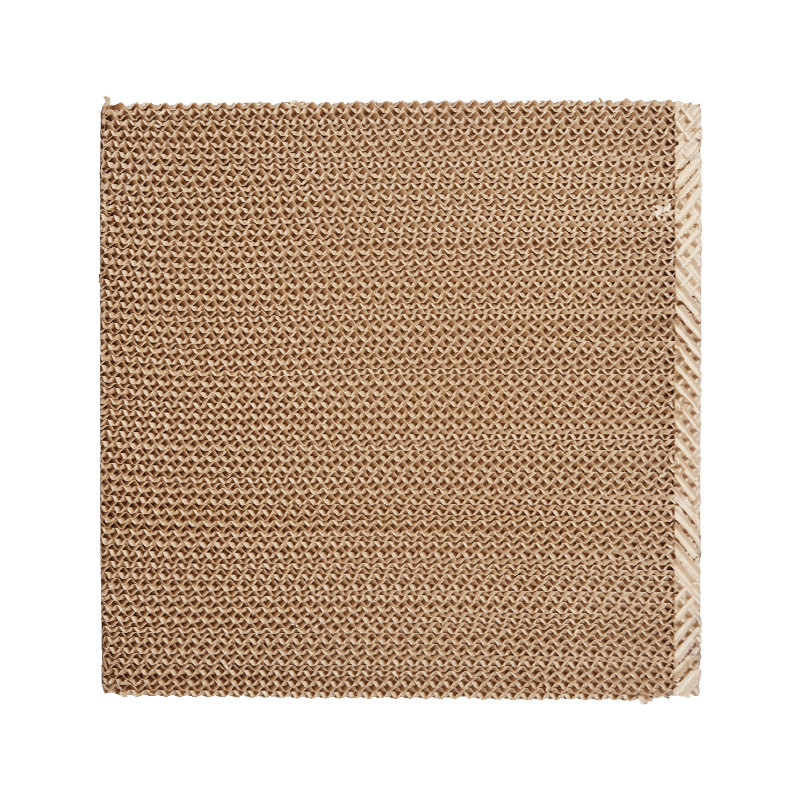 5090 Honeycomb Evaporative Cooling PadsHoneycomb pads for evaporative coolers, offered in 50, 100 or 150 mm depths and treated to support durable wet-surface performance.View Product →
For a pad to keep working, three conditions must hold: the surface stays wet, air keeps moving through the flutes, and the water does not become a breeding ground for scale or algae. A dry patch is not a cooling surface. A flooded pad is not automatically better either, because excess water can increase pressure drop and carryover.
Why Honeycomb Geometry Matters
The cross-corrugated structure does two jobs. It increases surface area per cubic metre of pad, and it creates a tortuous path that improves contact between air and water. A well-formed honeycomb can deliver high saturation efficiency in a relatively shallow depth. The trade-off is pressure drop: tighter flutes and greater thickness extract more heat, but the fan must work harder.
Product families such as 5090, 6090 and 7090 usually indicate different pad formats and dimensions, not a universal performance ranking. Two pads with similar model numbers can differ in flute angle, sheet treatment, basis weight and frame fit. Ask for the actual face area, thickness, target face velocity and expected saturation efficiency. The honeycomb design’s effect on heat dissipation is useful background, but the final number depends on the complete fan-and-pad system.
Water Flow and Airflow: The Two Controls That Decide Performance
Water distribution is often the weak point. The top header must spread water evenly across the full width; blocked holes create dry streaks, and dry streaks cut cooling capacity immediately. The pad should be uniformly wet without heavy runoff. A sump, pump, bleed-off and strainer are not accessories to ignore, especially when make-up water is hard.
Airflow is the other control. If face velocity is too low, the pad is underused. If it is too high, pressure drop rises, water droplets can be carried into the duct, and the fan may move less air than expected. A thicker pad can tolerate a lower face velocity and still achieve good contact time; a thin pad needs more face area or accepts lower efficiency.
 Cellulose Cross-Corrugated Evaporative Cooler PadCross-corrugated cellulose pad in 48 x 12 x 6 in., designed to filter debris and fit evaporative air coolers without excess fan load.View Product →
This is why replacing a pad with a “similar” sheet is risky. A different flute geometry changes both heat transfer and static pressure. The fan curve and the pad resistance must be matched, or installed cooling output can fall even when the pad looks identical from the outside.
Real Cooling Output: Wet-Bulb, Efficiency and a Simple Example
Evaporative cooling performance is tied to the wet-bulb temperature, not the dry-bulb alone. In hot, dry air the gap between dry-bulb and wet-bulb is large, so the pad can produce a big temperature drop. In humid air the gap is small, and the same pad will deliver less sensible cooling while adding moisture.
A useful estimate is: outlet temperature = outdoor dry-bulb − (saturation efficiency × (dry-bulb − wet-bulb)). If outdoor air is 38°C dry-bulb and 22°C wet-bulb, and the pad achieves 85% saturation efficiency, the outlet is about 24.4°C. At 70% efficiency, the same conditions give about 26.8°C. That difference matters in a greenhouse, a poultry shed or a factory with heat-generating equipment.
Do not confuse saturation efficiency with “energy efficiency.” A high-efficiency pad reduces the air temperature more, but it also creates more resistance. The best selection is the pad that meets the required cooling load at an acceptable fan power and maintenance interval.
Where a Wet Pad Works Best, and Where It Struggles
Evaporative pads are strongest in hot, dry or semi-dry climates and in spaces that need high air exchange. Greenhouses use them to cool incoming air while adding humidity. Poultry houses use them to reduce heat stress and improve air quality. Industrial buildings, textile plants and hardware workshops use them where exhaust fans create negative pressure and fresh air must be cooled.
They are weaker in closed, humid spaces or in applications where added moisture is unacceptable. A data room, a dry pharmaceutical store or a museum with strict humidity control is not a natural fit. In humid weather, the pad still moves air and can improve perceived comfort, but the temperature drop will be smaller.
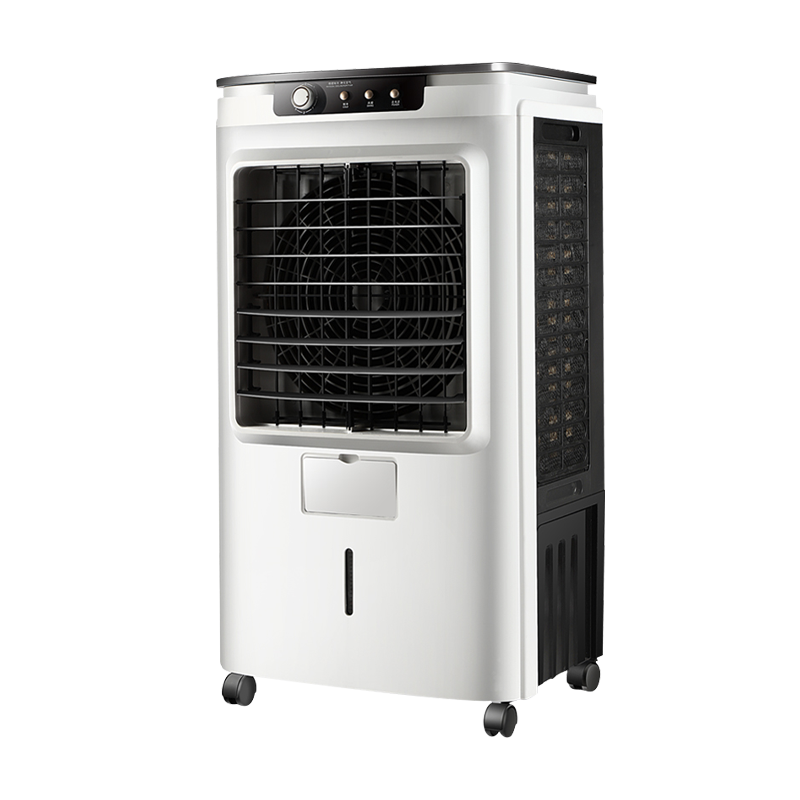
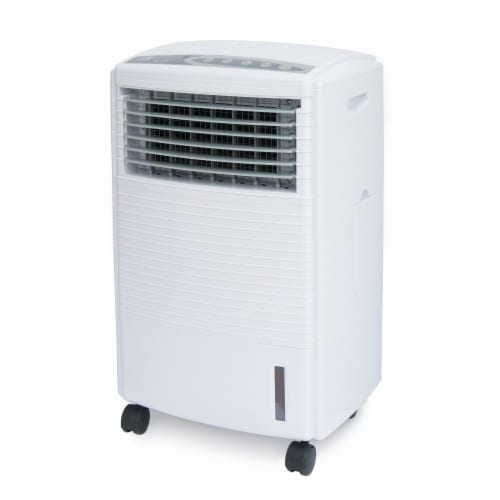 Portable Evaporative Air Cooler with Honeycomb Pad65W portable cooler with 10L tank, three speeds, remote control and ETL certification for local cooling and humidification where airflow is available.View Product →
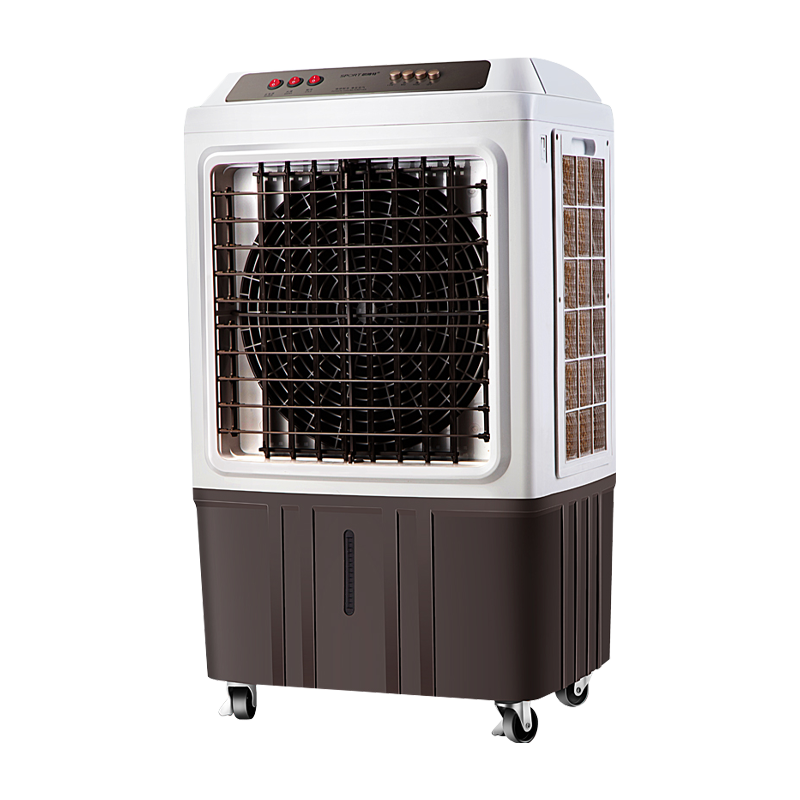
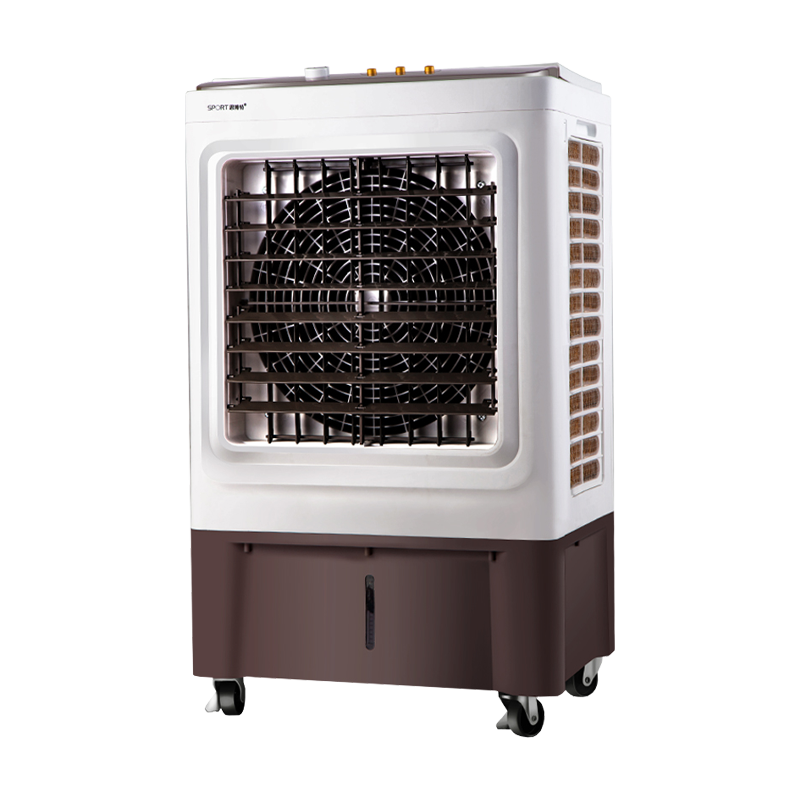
Commercial and residential use follows the same rule. A portable evaporative cooler with a 30L, 45L, 50L or 75L tank can cool a workshop, shop or open living area when doors or windows provide an air path. If the space is sealed, the fan has nowhere to exhaust the humid air, and comfort drops.
Selection and Maintenance Checks That Prevent Expensive Mistakes
Before choosing a pad, confirm six things: air volume, face velocity, pad thickness, water quality, available water flow and the fan’s static pressure capability. Then check the physical fit. Gaps around the pad, a warped frame or a crushed edge allow bypass air, and bypass air is uncooled air.
- Inspect the distribution header for blocked holes and adjust flow so the full face is wet.
- Check the sump for sediment and the strainer for blockage; hard water needs bleed-off or treatment.
- Look for scale, algae, sagging, delamination or a collapsed flute structure; replace pads that no longer hold shape.
- Measure pressure drop after cleaning, not only by eye; a dirty pad can look wet while airflow has already fallen.
| Check | Why it matters | Practical signal |
|---|---|---|
| Water coverage | Dry areas stop evaporating and reduce efficiency | Dry streaks or uneven colour after 10–15 minutes |
| Face velocity | Too high raises pressure drop and carryover; too low wastes pad area | Water droplets downstream or weak airflow |
| Pad thickness | More contact time, but also more resistance | Fan no longer reaches its rated airflow |
| Water quality | Scale and algae block flutes and breed odour | White deposits, slime, musty smell |
For OEM or custom projects, confirm sheet treatment, frame dimensions, water distribution layout and spare-part availability before approving samples. A pad that performs on day one but clogs in six weeks is not a low-maintenance choice.
FAQ: Evaporative Cooling Pads
Does the pad lower temperature by adding water?
Water vapour does not feel “cold” by itself. The cooling comes from latent heat absorbed during evaporation. The air becomes cooler but more humid, which is why the process works best when the incoming air is dry.
Is a thicker pad always better?
No. A thicker pad can improve contact time and saturation efficiency, but it also increases pressure drop. If the fan cannot overcome that resistance, airflow falls and the system may cool less overall.
How often should a pad be replaced?
There is no single interval. Water quality, runtime, pre-filtration and cleaning determine life. Replace when the pad no longer holds shape, has heavy scale, shows persistent dry areas or produces odour after cleaning.
Bottom Line
An evaporative cooling pad works by turning a large, wet honeycomb surface into an evaporative heat exchanger. The pad cools only when water evaporates, air flows through the flutes and the fan can handle the pressure drop. Start with the climate, airflow and water quality, then choose the geometry and thickness that meet those conditions.
Need help matching a pad to an existing fan, cooler or OEM project? Send the application details and target conditions so the pad, water system and airflow can be checked together.

 CONTACT US