
 EN
 English
 中文简体
 عربى
 Tiếng Việt
Content
A 1,000 m² poultry house and a 120 m² restaurant terrace almost never look like the same problem, yet the same two quotes tend to land on the table: a fan and pad system, or a mist cooling line. Both cool by evaporating water, both cost far less to run than a compressor-based air conditioner, and both fail in predictable ways when the site does not match the design. One leaves the floor wet; the other leaves the air humid and still warm.
The short answer: choose fan and pad when you have an enclosed building, solid inlet and exhaust walls, and a need to cool the entire air volume. Choose mist cooling when the space is open or semi-open, the heat load sits in one spot, and a little surface moisture is acceptable.
- Fan and pad: cools the whole room evenly, adds humidity in a controlled way, needs wall area for pads and matching exhaust fans.
- Mist cooling: cools people and local zones, needs no ductwork or wall openings, but is sensitive to water hardness, air movement and how open the space is.
How Each System Actually Moves Heat
Every kilogram of water that evaporates absorbs roughly 2,450 kJ of heat from the surrounding air. That one number explains why both systems work, and why neither can go below the wet-bulb temperature of the day. The real difference is where the evaporation happens.
Fan and pad: evaporation inside a fixed wall
Water is pumped over a cellulose pad, usually 100 mm or 150 mm thick, mounted in the inlet wall. Exhaust fans on the opposite side pull outside air through the wet pad at a face velocity of about 1.5–2.3 m/s. Contact time is short, but the wetted surface area is enormous, so 70–90% of the available wet-bulb depression is realised. Exhaust fans are sized in m³/h to hold a slight negative pressure, and the cooled air travels the length of the building, picking up heat from animals, plants or machinery as it goes.
In practice that means a 6–10 °C drop at the pad face and a 3–6 °C drop in the working zone of a long house, with relative humidity rising 20–40 points along the way. Cooling is even, because the whole volume is being exchanged.
Mist cooling: evaporation in the air
High-pressure pumps push water at 70–100 bar through nozzles that break it into droplets of roughly 5–15 microns. Droplets that small evaporate within about a metre of the nozzle. Controllers usually pulse the line rather than run it continuously, and the cooling is concentrated where the fog lands. Low-pressure misters producing 50–100 micron droplets are cheaper, but much of the water simply falls out of the air and wets whatever is underneath.
Side-by-Side Comparison
| Factor | Fan and pad system | Mist cooling system |
|---|---|---|
| Where cooling happens | Inside the cellulose pad on the inlet wall | In the air, at and below the nozzles |
| Air movement | Exhaust fans create the airflow; part of the design | Assisted by fans, or none at all |
| Typical temperature drop | 6–10 °C at the pad, 3–6 °C across the room | 2–6 °C locally, much less in moving outdoor air |
| Humidity | Rises evenly across the whole space | Rises sharply near the nozzles, unevenly |
| Wet surfaces | Confined to the pad and drain tray | Floors, equipment, packaging, people |
| Water quality sensitivity | Tolerant of moderate hardness, but scale blocks airflow | High — hard water leaves white mineral dust |
| Maintenance focus | Pad cleaning and replacement, bleed-off, pump, fan belts | Nozzle cleaning, filtration, high-pressure pump seals |
| Best fit | Enclosed agricultural, industrial and commercial buildings | Open or semi-open spaces, spot and patio cooling |
| Main weak point | Needs usable walls and a balanced air path | Wetness, mineral deposits and limited reach |
Where Fan and Pad Wins
Enclosed buildings with a consistent cross-section and a real heat load are the natural home of pad-and-fan cooling. A poultry house running tunnel ventilation at 2–3 m/s along the birds depends on the pad as the only inlet: it cools the incoming air and pushes heat, dust and ammonia out the fan end. Greenhouses use the same principle to hold a 5–8 °C depression through midday, and the added humidity is often welcome in dry production regions. Textile mills, hardware plants and workshops with hot machinery get the same benefit, with the extra advantage that a pad system keeps a steady air change rate rather than cooling one aisle.
What makes it reliable is that the numbers are predictable. Pad area, fan capacity, static pressure and air changes can be calculated before purchase, and the equipment can be matched to a specific temperature target at the far end of the house. The trade-off: you need inlet wall area, drainage, and a reason for the air to travel in a defined direction.
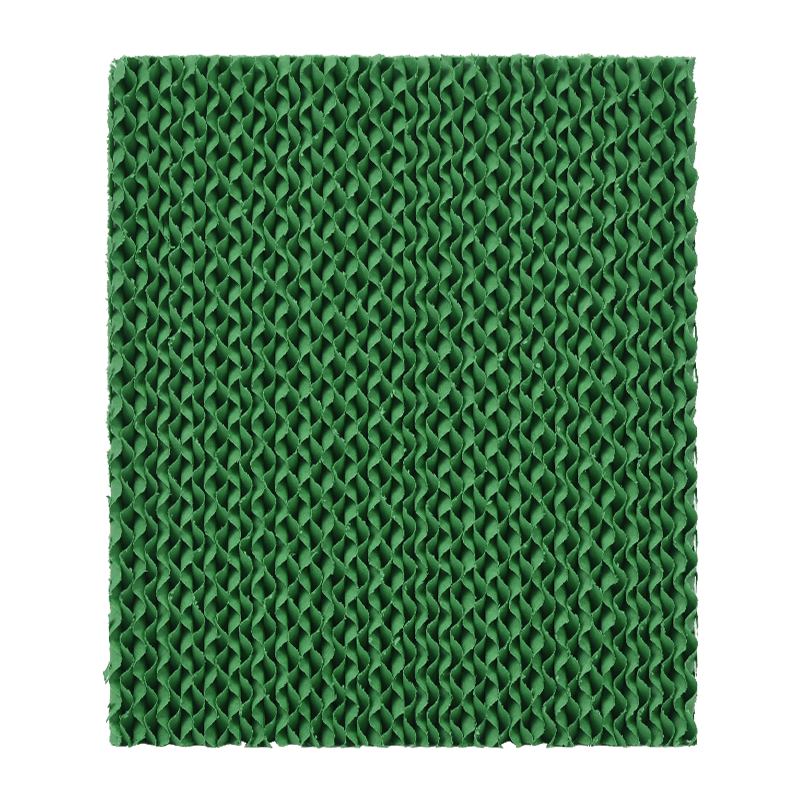 7090 Honeycomb Evaporative Cooling Pad for GreenhousesWholesale pad with 1,500–2,000 mm heights, 100–300 mm depths and 7 mm flute, suited to planned greenhouse cooling where inlet wall area and airflow direction are available.View Product →
Where Mist Cooling Wins, and Where It Fails
Mist cooling earns its place where walls do not exist. Restaurant terraces, loading docks, semi-open workshops with high ceilings, livestock holding pens and outdoor event areas can all be made tolerable with a nozzle line, and a mist system can be installed on a weekend without cutting openings in a building. Spot cooling is its strength: one work station under a fan-assisted fogger is cheaper than cooling a warehouse nobody occupies.
It fails badly in three situations. First, sealed rooms with poor air exchange — the humidity climbs until evaporation slows and condensation forms on cold surfaces, which is how mould starts behind panels. Second, areas where dry floors matter: packaging lines, electronics assembly, paper storage and any space with slip hazards. Third, hard water areas, where dissolved minerals dry into a fine white dust that settles on machines and stock. A mist line that is switched off but left wet also becomes a breeding ground for biofilm and odour, so draining and purging are not optional.
Pad Selection Decides the Fan and Pad Result
Most fan and pad disappointment traces back to the pad, not the fans. A 100 mm pad needs roughly 1 m² of face area to handle 5,000–7,000 m³/h at the correct velocity; a 150 mm pad tolerates a higher velocity and holds more water, which helps in dusty or very dry conditions. Panel codes such as 5090, 6090 and 7090 describe different sizes and corrugation profiles, and they are not interchangeable — a poultry house and a greenhouse want different airflow resistance and water retention.
Three details separate a pad that lasts five seasons from one that collapses in two: the glue line and edge sealing, the water distribution header that must wet the full width evenly, and continuous bleed-off, which dumps a small percentage of circulating water so minerals never concentrate. Without bleed-off, calcium and magnesium scale on the pad surface reduces airflow long before the pad looks worn.
The full range of sizes, thicknesses and frame options is worth reviewing before you fix a wall layout — evaporative cooler pads come in different heights, corrugation angles and resin grades for exactly this reason.
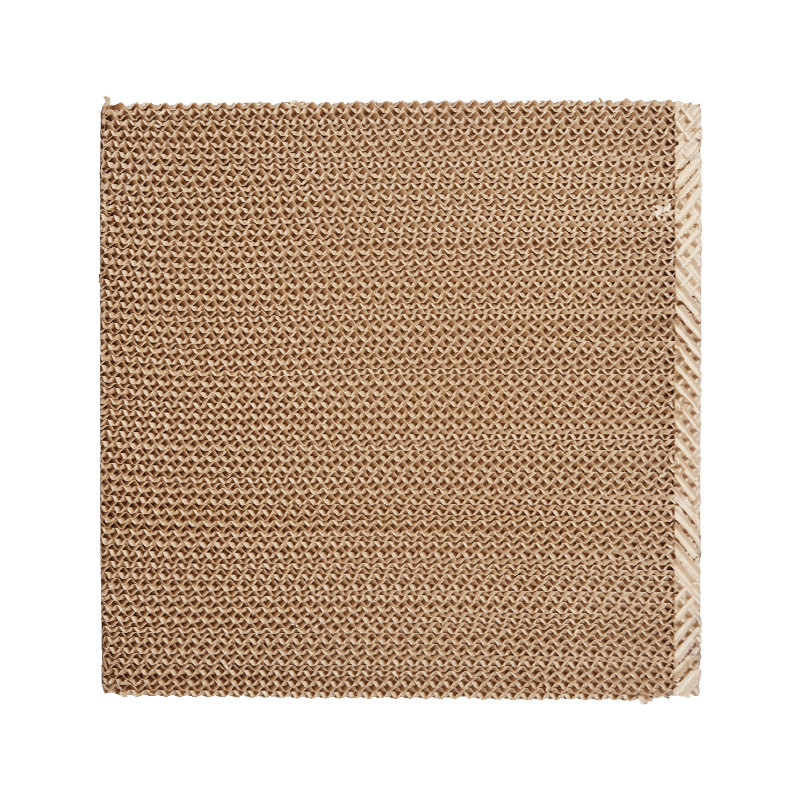 5090 Custom-Size Honeycomb Cooling Pad for Evaporative CoolersHoneycomb pad with made-to-requirement height and width, 50–150 mm depths and 5 mm flute; useful when comparing sizes and thicknesses before fixing a wall layout.View Product →
Purchase Risks and Running Costs
Water hardness above 200 mg/L
If your supply sits above roughly 200 mg/L as calcium carbonate, budget for softening or higher bleed-off on a pad system, and for reverse osmosis or softened feed on a mist system. This single test changes the maintenance picture more than brand choice does.
Air balance on pad systems
Exhaust fans cannot move their rated volume through a sealed building. Inlet openings, doors and transfer grilles must add up to roughly the fan opening area, or static pressure rises and delivered airflow falls by 20–30%. Short-circuiting — air entering the pad and leaving through a nearby open door — has the same effect.
Hidden running costs
A pad system moving 20,000 m³/h evaporates roughly 70–90 litres of water per hour on a design day, and the pump runs continuously while the fans do. A 30-nozzle mist line typically consumes 50–100 litres per hour but needs filtration and higher-grade water. Electricity favours mist cooling; water treatment and floor-drying labour usually favour pads. Honeycomb geometry and its effect on heat dissipation is covered in more depth in this note on honeycomb cooling pad advantages.
When Neither Fits: Small-Space Alternative
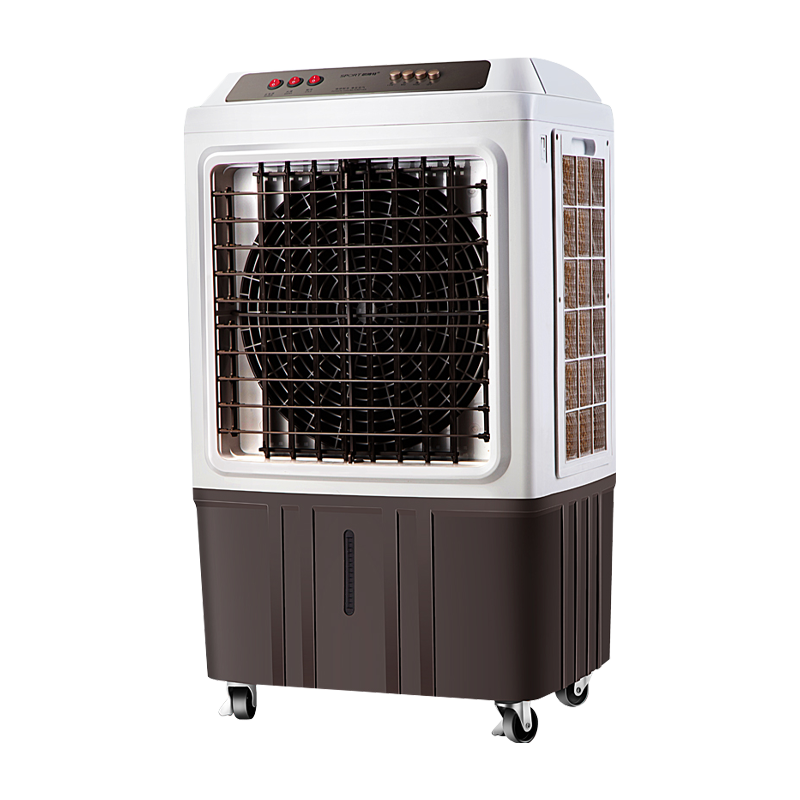
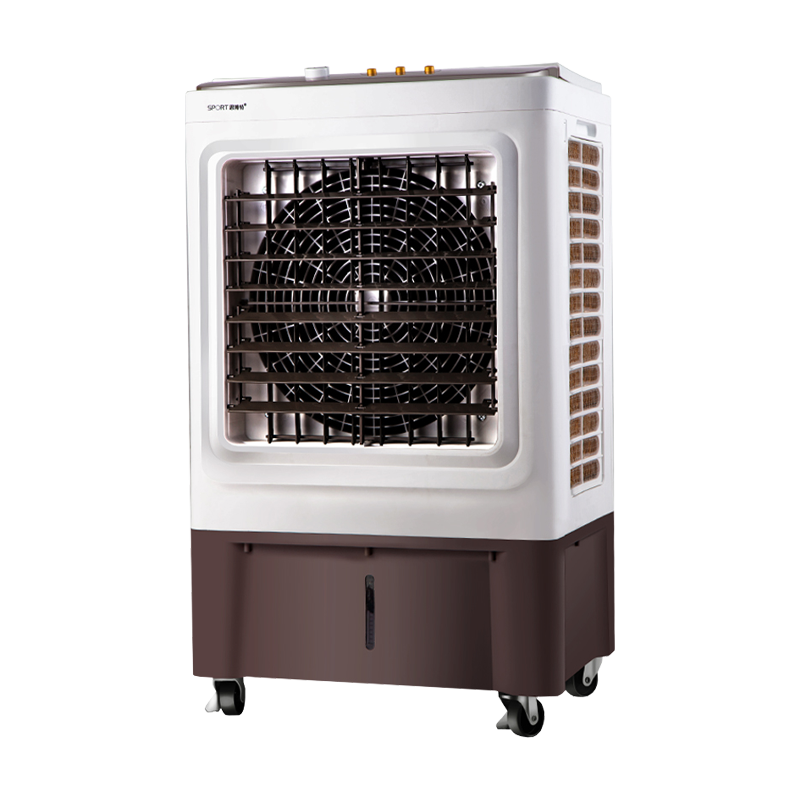
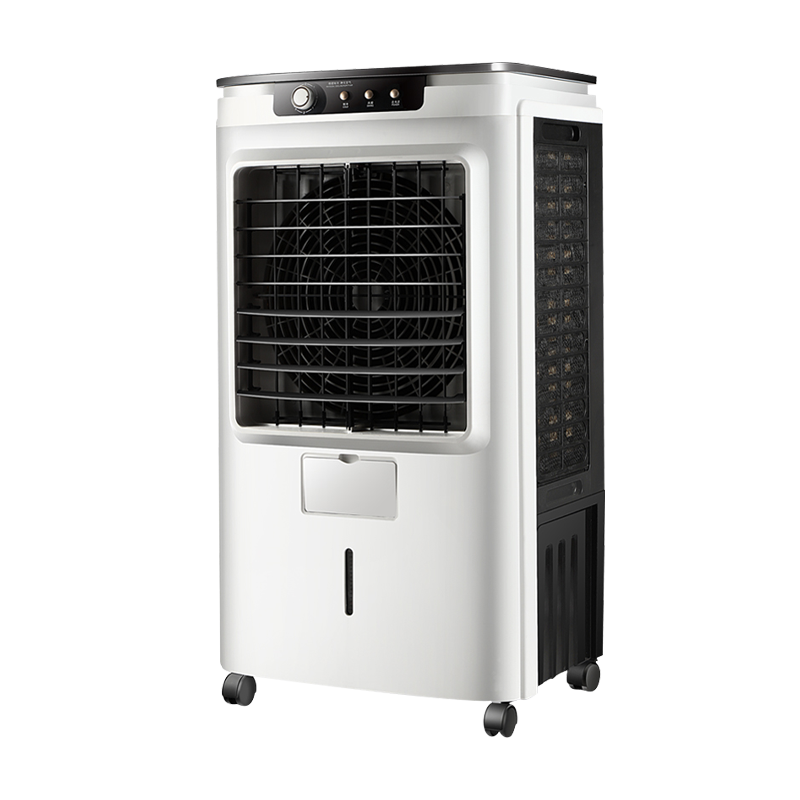
A single office, a small shop or a rented workshop rarely justifies either a pad wall or a plumbed nozzle line. In that case a portable evaporative air cooler with its own pad, tank and three-speed fan delivers the same physics in a plug-in package, and it can be wheeled between rooms that need cool, humidified air rather than a full ventilation design.
 SBT-40 Portable 3-Speed Evaporative Air CoolerPlug-in cooler with 30 L tank, three speeds, remote or mechanical control and 100 W power for small or rented spaces without a pad wall.View Product →
A Quick Decision Checklist
- Is the space enclosed with defined inlet and exhaust walls? If yes, fan and pad is viable.
- What is the peak wet-bulb depression? Below 6 °C, expect limited benefit from either system.
- Can the floor tolerate moisture, or must it stay dry all day?
- Test water hardness before quoting; it drives maintenance cost on both options.
- Calculate required air changes and pad face area against your real fan capacity, not the catalogue maximum.
- Confirm who will clean pads, flush lines and replace pump seals — and how often.
FAQ
Can I combine fan and pad with misting?
In very dry climates a small mist line can top up cooling in the far end of a long house, but misting upstream of the pad is wasteful and wets the pad unevenly. Keep the two systems separate and control them on different humidistats.
Which system uses more water?
Per unit of air cooled, pad systems evaporate more water because they process the entire air volume. Mist systems use less water but demand better water quality, so treatment costs often narrow the gap.
Is mist cooling suitable for a humid climate?
Rarely. When relative humidity is already above 70%, droplets evaporate slowly, cooling is minimal and surfaces stay wet. Pad systems perform better but also lose capacity in humid weather.
How much wall area does a pad system need?
As a rule of thumb, 1 m² of 100 mm pad handles 5,000–7,000 m³/h at a face velocity of 1.5–2.0 m/s. Larger capacities need more pad area or a thicker pad, not more fans.
For buyers replacing pads rather than whole systems, the practical question is simpler: match the pad code and thickness to the existing fan capacity, check glue lines and edge sealing, and confirm that the supplier can hold tolerances across repeat orders. Cixi Qisheng Paper Products has been producing evaporative cooling pads and cooling equipment since 2010, running nine automatic lines with more than 200 staff, and supplies both pads and complete evaporative coolers under OEM and ODM arrangements — useful when a project mixes greenhouse pads, poultry pads and portable units in one shipment.

 CONTACT US