
 EN
 English
 中文简体
 عربى
 Tiếng Việt
Content
- 1 Why Storage Changes Performance Before Day One
- 2 Storage Conditions That Matter Most
- 3 Stacking and Handling: Where Most Damage Happens
- 4 Dust, Algae and Pests: The Three Quiet Failures
- 5 How Long Pads Can Sit Before Installation
- 6 Site-Specific Storage Notes
- 7 Pre-Installation Inspection Checklist
- 8 Frequently Asked Questions
A pallet of 5090 honeycomb pads arrives at the job site three weeks before the cooling wall is framed. The crew leaves it banded under a lean-to beside the water tank. On installation day the pads still look intact, but the wall runs warm along the bottom third, water channels instead of spreading, and someone blames the pump. The pump is fine. The bottom layers carried the load in warm, still, humid air for three weeks.
The short answer: evaporative cooling pads store for months, but only under five conditions, flat, dry, shaded, off the floor, and within a controlled stack height. Miss one and you buy the same cooling capacity twice. What follows explains what happens to the paper while it waits, and how to keep a stored pad behaving like a fresh one.
Why Storage Changes Performance Before Day One
A cooling pad is not a passive plastic panel. It is corrugated cellulose paper bonded with resin and formed into a honeycomb. Cooling depends on two things working together: water wicking along the flute walls to build a thin, continuous film, and air moving through those flutes with the lowest possible static pressure loss. Storage can quietly break both.
Dust settles into the paper's micro-texture and slows wicking, so the top of a pad dries while the bottom stays wet. Sunlight embrittles the resin and bleaches the surface, and brittle flute edges chip during handling. Load on an uneven stack deforms the flutes, narrowing the air path and creating channels where water runs instead of spreading. Warm, humid, still air invites mould and algae, while ammonia, chlorine or solvent vapours attack the binder. Our explanation of how the honeycomb design affects heat dissipation covers the geometry behind both effects.
A badly stored pad rarely fails outright. It loses part of its capacity, and the loss appears on the first 40 °C afternoon of the season, exactly when you need the margin.
Storage Conditions That Matter Most
Most storage damage comes from a handful of controllable variables. The table below is the version we hand to installation teams. It is deliberately conservative, because re-buying pads mid-season costs far more than a few square metres of floor space.
| Condition | Practice that works | Damage it prevents |
|---|---|---|
| Position | Flat, on pallets, 100 mm off the floor with a gap to walls | Uneven support deforms flutes; wall condensation wicks into the bottom pad |
| Stack height | Four to six pads per stack, or a rigid board between layers | Crushed bottom layers and narrowed air paths |
| Light | Indoors or under opaque wrap, never in direct sun | UV embrittlement, chalky and chipped flute edges |
| Climate | 5 to 35 °C, dry and ventilated, ideally below 60% relative humidity | Mould and algae growth, resin softening, freeze-thaw delamination |
| Air quality | Away from solvents, acid, chlorine, ammonia and engine exhaust | Binder attack, loss of rigidity and shape memory |
| Pests | Off the floor, no feed or grain nearby, traps instead of fumigants | Chewed flutes and chemical residues in the cellulose |
| Storage time | Inspect and rotate every 90 days, install within one season | Dust build-up, hidden moisture damage, wasted stock |
Stacking and Handling: Where Most Damage Happens
Even in a clean, dry, shaded warehouse, pads still fail from load. Honeycomb paper is strong in compression along the flute direction and weak against point loads, edge impacts and sliding friction.
- Stack height: stay within the supplier's limit, usually four to six pads for standard 5090 and 7090 thicknesses. A rigid board between layers buys you more.
- Orientation: store pads flat with support under the whole face. Standing pads on edge concentrates weight on a single flute wall.
- Corner alignment: keep stack corners flush. A misaligned stack loads one corner, the bottom pads go out of square, and out-of-square pads leak air around the frame.
- Lifting: never drag a pad across concrete or steel decking. Sliding pulls fibres from the flute openings and leaves a permanently uneven water film.
- Clearance: keep pallets off the floor and away from walls, where condensation runs down and wicks upward into the lowest pad.
The 5090 honeycomb pad is the usual choice for industrial cooling walls, and also the format most often bought in bulk ahead of a build, which is exactly when stack-height discipline matters.
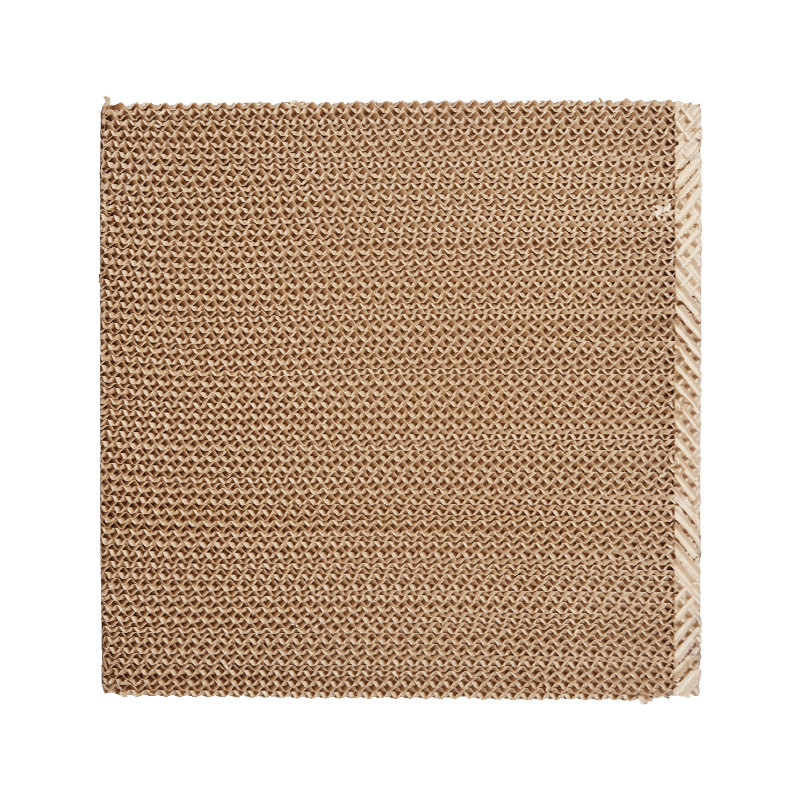 5090 Honeycomb Evaporative Cooling Pad for Industrial Cooling WallsBulk 5090 honeycomb cooling pads for industrial cooling walls; keep stacks wrapped and covered until installation to avoid dust and condensation.View Product →
Dust, Algae and Pests: The Three Quiet Failures
Dust
Dust is the slowest failure and the easiest to prevent. Leave pads in their original wrap until installation day. If you open a stack for inspection, re-cover it with sheeting that does not touch the pad face, so condensation cannot sit on the paper.
Algae and mould
Algae and mould need moisture, warmth and darkness, and a damp room without airflow supplies all three. Dry, ventilated storage below roughly 60% relative humidity removes the first condition. If you see green or black speckling, or smell mustiness when the wrap comes off, do not install that pad. Wiping the surface does not remove growth inside the flute walls.
Rodents and insects
Rodents nest inside flute openings, and chewed pads have to be scrapped. Keep stored pads away from feed, grain and waste, keep stacks off the floor, and use traps rather than fumigants near the paper, because strong vapours can leave residues in the cellulose.
How Long Pads Can Sit Before Installation
In controlled storage, three to six months is a realistic window for most honeycomb pads. Two habits make that window dependable. Inspect a sample pad every 90 days, checking for deformation, odour and brittle edges before re-wrapping it, and rotate stock so the oldest pallet goes on the wall first.
Seasonal buying is where the clock matters most. Poultry growers often order 6090 pads in early spring for a summer installation, and those pallets may sit in a farm store room where dust and ammonia are part of everyday air. Keep them in a separate, sealed, dry room rather than the barn itself.
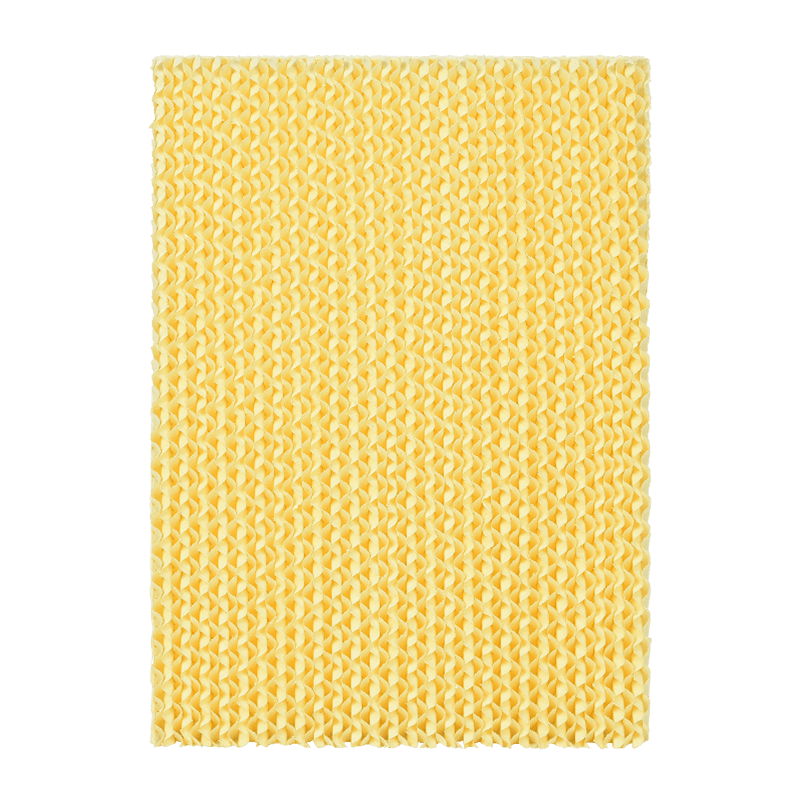 6090 Poultry Evaporative Cooling Pad for Seasonal Cooling SystemsCellulose 6090 pads for poultry cooling systems; seasonal buyers should store pallets sealed and dry away from barn dust and ammonia.View Product →
Site-Specific Storage Notes
The right routine depends on where the pads wait, not only on the pad itself.
Greenhouse and horticultural projects
Greenhouses combine high humidity with fertiliser, pesticide and occasional frost. Store 7090 greenhouse pads raised off the floor, wrapped, and away from any chemical store, and make sure roof or glazing condensation cannot drip onto the stack.
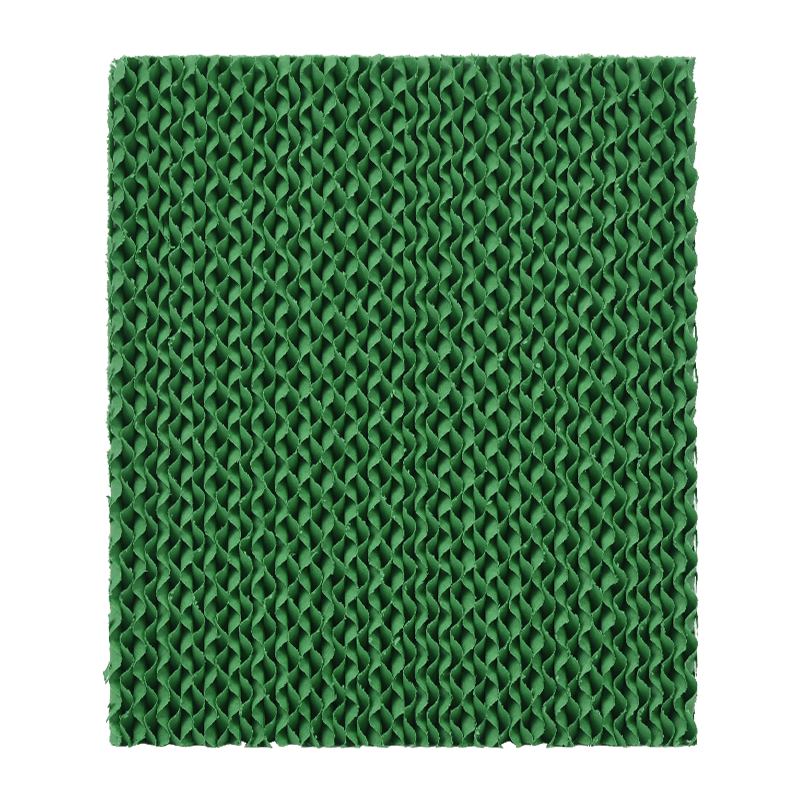 7090 Greenhouse Honeycomb Evaporative Cooling Pad for Humid Growing EnvironmentsHoneycomb 7090 pads suit greenhouse cooling; store raised, wrapped, and away from chemicals, condensation, solvents, and industrial dust before installation.View Product →
Industrial and commercial builds
On industrial sites the risks are solvent and paint vapours, forklift traffic, and dust from cutting and grinding. Keep pads in a corner away from those activities, still on their pallets and still wrapped, until the frame is ready.
Pre-Installation Inspection Checklist
Run this check before pads go into the frame. Ten minutes per pallet prevents the most expensive rework of all, tearing down a finished cooling wall.
- Look along the stack for sagging or out-of-square corners. Any pad that rocks on a flat surface is deformed.
- Hold a pad to the light or blow low-pressure air through the flutes. Blocked or partially collapsed flutes show up at once.
- Check the feel and colour of the flute edges. Chalky, bleached or crumbly edges mean UV or age damage.
- Smell the pad. A musty or chemical odour is a reason to quarantine the pallet.
- Wet a sample pad and watch how water spreads. Fast, even wicking is normal; dry patches or channelling mean the paper has lost part of its function.
If a pallet is borderline, do not guess. Contact our team with photographs, the storage history and the pad model, and we will tell you whether it can safely go on the wall.
Frequently Asked Questions
Can I store cooling pads outside under a tarp?
Only for a few days, and never in direct sun. Tarps trap condensation and block airflow, which is the combination that encourages mould, and wind abrades the top pad.
Should pads be soaked before installation?
No. Soak the cooling wall after the pads are fixed in the frame and the water distribution system has been checked. Soaking a pad outside the frame distorts it and gains nothing.
Does cold weather damage cooling pads?
Dry packs handle low temperatures well when they are supported and wrapped. The real risk is repeated freeze-thaw cycling on wet pads, which pushes flute walls apart and delaminates the edges.
Can I install a pad with light mould spots?
We would not recommend it. Surface mould usually means growth inside the flutes, and in a wet cooling wall those colonies return within weeks, along with odour and reduced airflow.
Storage is the first stage of installation, not a warehouse detail. A pad stacked six high against a damp wall in full sun still fits the frame and still looks new, and it will cool less, use more water and need replacing sooner. Flat, dry, shaded, off the floor, controlled stack height, inspected every 90 days: six rules, no equipment, and a measurable difference in the first hot week of the season.

 CONTACT US