
 EN
EN  English
 中文简体
中文简体 عربى
عربى Tiếng Việt
Content
- 1 What the Cooling Pad Frame Actually Does
- 2 Aluminum Frame: Light, Corrosion-Resistant, but Not Bulletproof
- 3 Galvanized Steel Frame: Strong, Affordable, but Coating-Dependent
- 4 Head-to-Head Comparison
- 5 Where Each Frame Makes Sense
- 6 The Cost Picture Over Five Years
- 7 Buyer Checklist Before You Order
- 8 FAQ
Last month, a poultry farm in southern Vietnam asked us to replace 12 evaporative cooling pad frames after only two summers. The frames were galvanized steel, and ammonia-rich air had eaten through the zinc coating at every cut edge and bolt hole. The replacement quote was nearly double the original install.
That story is why the aluminum frame vs galvanized steel frame cooling pad question is rarely about material preference. It is about the air, the water, and the maintenance schedule around the pad. Short answer: aluminum frames win in corrosive, wet, or ammonia-heavy environments, while galvanized steel frames win in dry, low-chemical, budget-first installations with good access for inspection. Neither is universally better.
What the Cooling Pad Frame Actually Does
A cooling pad frame is not a decorative bracket. It holds the pad at the correct angle, keeps the pad from sagging, seals the edges so air cannot bypass the wet media, and carries wind load plus the weight of a water-saturated pad. On a 1.5 m tall pad, saturated weight can exceed 20 kg per linear meter. If the frame deflects or corrodes, the pad compresses, airflow shortcuts around it, and cooling efficiency drops before anyone notices the frame.
Frame material also determines how easy the pad is to remove for cleaning or replacement. A rigid but heavy frame may need two people on a ladder. A light aluminum frame can be handled by one technician, but it needs proper support to avoid bowing under load.
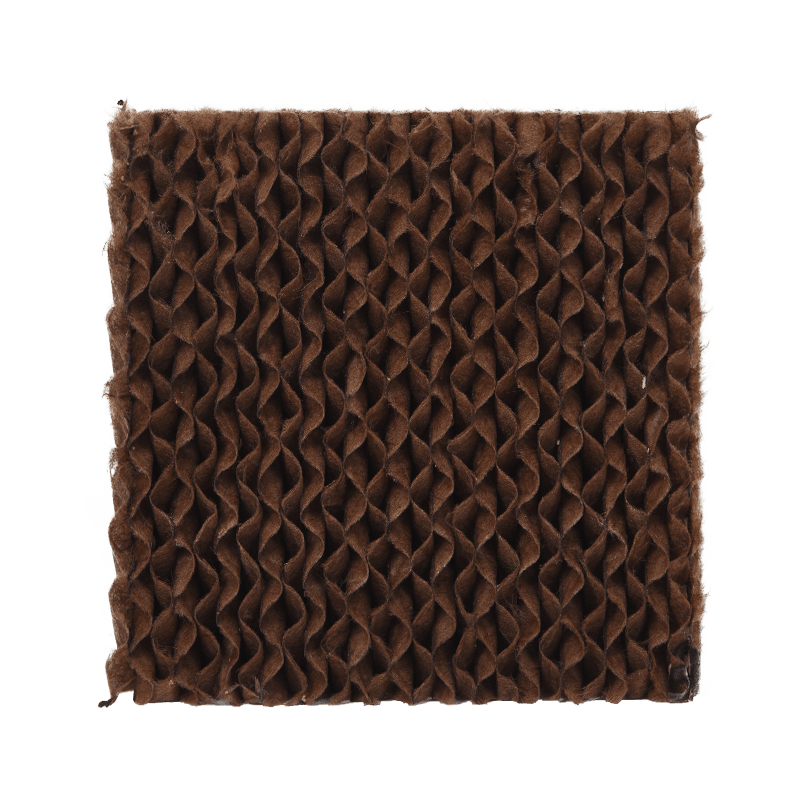 Honeycomb Type Evaporative Cooling Pad & FrameBrown Rigid Honeycomb cooling padsView Product →
Aluminum Frame: Light, Corrosion-Resistant, but Not Bulletproof
Aluminum weighs about 2.7 g/cm³, roughly one-third of steel. That matters when a cooling wall sits on a roof, a greenhouse truss, or a poultry house wall that was never designed for heavy steel. Aluminum also forms a natural oxide layer that protects it in humid air, so it does not need paint or galvanizing. In coastal greenhouses and wash-down areas, that oxide layer is a real advantage.
Where Aluminum Excels
- High humidity, frequent irrigation, and coastal salt air.
- Retrofit projects with limited structural capacity.
- Installations where the pad is removed often for cleaning.
Where Aluminum Falls Short
Aluminum is less stiff than steel. Its elastic modulus is about 69 GPa, compared with 200 GPa for steel. A long unsupported span will deflect more, so large cooling walls need deeper sections or added bracing. Aluminum also costs more per kilogram. It can suffer galvanic corrosion if it touches bare steel in a wet environment, so fasteners and isolation washers matter.
Galvanized Steel Frame: Strong, Affordable, but Coating-Dependent
Galvanized steel frames are the default in many industrial cooling pad projects because they are strong, familiar, and cheap. A hot-dip galvanized coating protects the steel by sacrificing zinc before the iron corrodes. The thicker the zinc, the longer the protection. A Z275 coating, for example, carries about 275 g/m² of zinc, while a thin electroplated coating may offer a fraction of that.
Every cut, drill hole, or weld breaks the zinc layer. If those edges are not repaired with a zinc-rich coating, corrosion starts exactly where the frame is stressed. Ammonia, manure, and acidic water accelerate the attack. In a poultry house, a galvanized frame with unsealed cut edges can show red rust within two to three years. Weight is another issue: steel is roughly three times heavier than aluminum, so installation needs more labor and stronger anchors.
Where Galvanized Steel Makes Sense
- Dry factories, warehouses, and workshops with low chemical exposure.
- Projects with tight initial budgets and accessible maintenance.
- Frames that can be inspected and recoated on a scheduled basis.
Head-to-Head Comparison
| Factor | Aluminum Frame | Galvanized Steel Frame |
|---|---|---|
| Weight | About one-third of steel | Heavy; needs more labor and stronger anchors |
| Corrosion resistance | Natural oxide layer; good in wet and coastal air | Depends on zinc thickness; cut edges need repair |
| Stiffness | Lower; long spans need deeper sections or bracing | High; resists deflection under wind and pad load |
| Initial cost | Higher per meter and per kilogram | Lower for standard hot-dip galvanized sections |
| Life in ammonia or wet areas | Usually longer if isolated from bare steel | Shorter unless coating is thick and maintained |
| Installation | Easy to carry, cut, and position | Requires more hands and lifting equipment |
| Best fit | Greenhouses, coastal sites, retrofits, poultry houses | Dry industrial halls, budget-first projects |
Where Each Frame Makes Sense
Greenhouses and Horticulture
Greenhouses run humid almost year-round. Irrigation water, condensation, and fertilizer splash all attack metal. Aluminum frames handle this without a coating, and their light weight reduces load on greenhouse structures. For a 7090 pad, a frame that keeps the pad flat and sealed is more important than raw strength.
 7090 Greenhouse honeycomb evaporative cooling padMPN KA-7090 SKU KA7090LL1 Pad Height(mm) 1,500, 1,800, 2,000 Pad Width(mm) 300, 600, 900 Pad Depth(mm) 100, 150, 200, 300 Flute Height(mm) 7 Groove Angle a 45° Groove ...View Product →
Poultry and Livestock Houses
Ammonia is the deciding factor. At 20-30 ppm, ammonia accelerates zinc corrosion and can reach steel beneath a thin coating. Aluminum frames resist better, but they still need stainless or isolated fasteners. If the budget only allows galvanized steel, specify hot-dip galvanizing with a heavy coating and plan to inspect every six months.
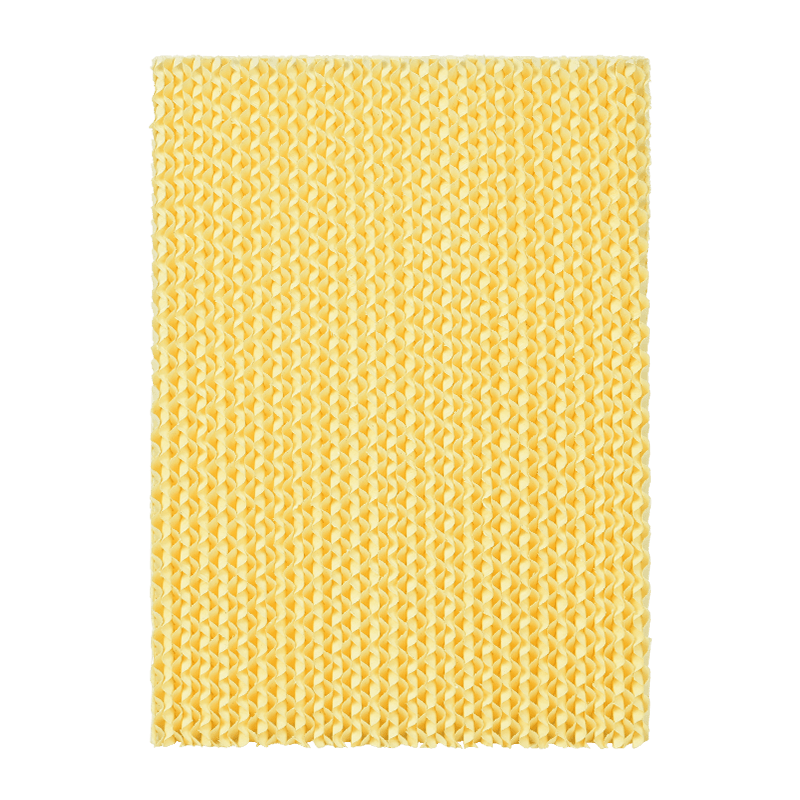 6090 Poultry Equipment Evaporative cooling PadHeight (mm): Upto 2100 mm Max Width (mm): Upto 950 mm Max Depth (mm): 50, 100, 150, 200, 300, 600mm Flute Height: 6 mm Flute Angle: 45/45View Product →
Factories, Warehouses, and Workshops
In dry, dust-controlled industrial spaces, galvanized steel is often the practical choice. The frame is not exposed to constant moisture or ammonia, and the lower initial cost lets the project spend more on pads, pumps, or controls. Use aluminum only where wash-down, humidity, or coastal air is present.
The Cost Picture Over Five Years
Initial price is only one line in the budget. A galvanized frame may cost 30-50% less on day one, but if it needs replacement in year three, the labor and downtime can erase the savings. Aluminum usually costs more upfront, yet it often survives longer in wet or ammonia-heavy sites with minimal maintenance.
The chart below uses an illustrative 100 m² cooling pad installation. It compares a typical aluminum frame with a standard galvanized steel frame in a moderately corrosive environment. Your numbers will vary with local labor rates, zinc thickness, and water quality.
The example shows a 40% lower first cost for galvanized steel, but a 20% higher five-year total once maintenance and early replacement are counted. In a dry warehouse, the galvanized bar would be shorter, and the gap would favor steel.
Buyer Checklist Before You Order
Frame failures rarely come from the base material alone. They come from fasteners, cut edges, tolerances, and water chemistry. Use this checklist before signing off on a cooling pad frame order:
- Zinc coating type and thickness. Ask for hot-dip galvanizing, not electroplating, and request the coating mass in g/m². For wet or ammonia-prone sites, specify a heavy coating and edge repair.
- Aluminum alloy and wall thickness. 6063-T5 is common for extruded frames. Check the section drawing for wall thickness and unsupported span.
- Fastener isolation. Where aluminum meets steel, use stainless steel bolts and nylon or EPDM isolation washers to stop galvanic corrosion.
- Pad-to-frame tolerance. The pad should sit snug without compression. A 2-3 mm gap can cause air bypass; an oversized frame can let the pad sag.
- Water quality. Hard water scales the pad and frame. Acidic water attacks zinc. Test pH and hardness before choosing a frame material.
- Maintenance access. Can one person remove and reinstall a pad panel? If not, the frame design will be ignored until performance drops.
For a deeper look at how pad geometry and airflow interact, see our note on how honeycomb design affects heat dissipation. If you are comparing frames for a specific building, contact our team with the pad size, water source, and air quality details.
FAQ
Which frame lasts longer, aluminum or galvanized steel?
In a wet, coastal, or ammonia-rich site, aluminum usually lasts longer because it does not rely on a sacrificial coating. In a dry, clean factory, a heavy hot-dip galvanized steel frame can last just as long at a lower initial cost.
Can I use a galvanized steel frame in a poultry house?
Yes, but specify hot-dip galvanizing with a thick coating, seal every cut edge, and inspect for white rust or red rust every six months. If ammonia levels are high, aluminum is the lower-risk choice.
Is aluminum always more expensive?
The initial cost is usually 30-80% higher per meter. Over five years, the total cost can be lower in corrosive environments because aluminum needs less replacement and maintenance.
How do I prevent galvanic corrosion between aluminum and steel?
Use stainless steel fasteners and isolate the two metals with nylon, EPDM, or plastic washers. Avoid direct contact between bare aluminum and bare steel in wet areas.
The choice between an aluminum frame and a galvanized steel frame for cooling pads comes down to three questions: How corrosive is the air and water? How much load can the structure carry? How often will someone inspect the frame? If ammonia, salt, or constant moisture is present, aluminum is usually the safer investment. If the site is dry, the budget is tight, and maintenance is realistic, a heavy hot-dip galvanized frame can do the job.
Specify the coating or alloy, isolate dissimilar metals, and check pad tolerance before the first panel goes up. That is what keeps a cooling pad system efficient after the first summer, not the label on the frame.

 CONTACT US