
 EN
EN  English
 中文简体
中文简体 عربى
عربى Tiếng Việt
Content
A cooling pad does not fail on a calendar date. In evaporative cooling, a rigid cellulose honeycomb pad usually lasts 2 to 5 years; a premium, well-maintained pad can reach 5 to 7 years; inexpensive aspen or low-density pads often last one season to 18 months. Hard water, dust, algae, and long daily runtimes push those numbers down.
The useful question is not "what is the lifespan of a cooling pad" in general, but "what is the remaining life of this pad in this system?" The answer depends on material, water chemistry, airflow, and maintenance. The sections below give practical ranges, failure signs, and a replacement schedule you can apply to a poultry house, greenhouse, workshop, or commercial air cooler.
How long do evaporative cooling pads last?
Most manufacturers group cooling pads into four material families. The chart and table below show typical service life under normal evaporative cooling conditions and best-case life with clean water, pre-filtration, and seasonal cleaning.
| Pad type | Typical lifespan | Best case with maintenance | Common failure signal |
|---|---|---|---|
| Aspen or wood wool | 1 season to 18 months | 2 years | Matting, collapse, odor |
| Synthetic fiber | 1 to 3 years | 3 to 4 years | Stiffening, scale, reduced wetting |
| Rigid cellulose | 2 to 5 years | 5 to 7 years | Sagging, salt bloom, edge separation |
| Premium honeycomb paper | 3 to 7 years | 7+ years | Delamination, uneven water film |
These ranges are not guarantees. A 100 mm thick pad in a clean greenhouse may last five years. The same pad in a dusty textile plant with hard water may need replacement in two. If you operate 24 hours a day for six months, expect the lower end of the range.
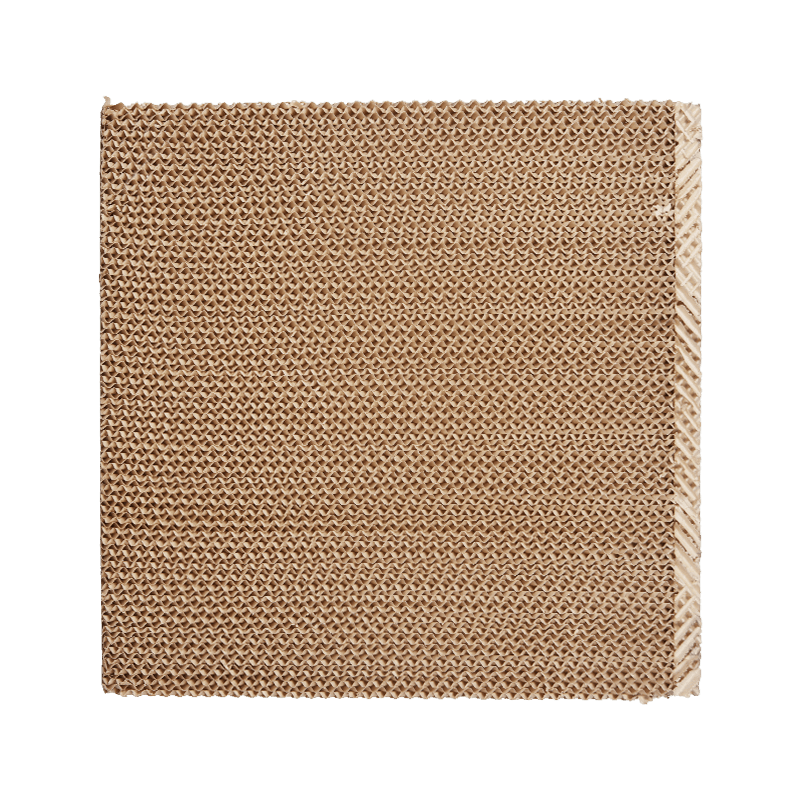 5090 Honey Comb Cooling padsPad Height(mm) As per Requirement Pad Width(mm) As per Requirement Pad Depth(mm) 50, 100, 150 Flute Height(mm) 5 Groove Angle a 45° Groove Angle b 45°View Product →
For a baseline, compare your pad to the material and thickness in our evaporative cooling pad range before assuming the whole system needs replacement.
What shortens cooling pad life?
Four problems cause most premature failures. The chart below shows the share of breakdowns seen in service calls and replacement requests; scale and minerals are usually the leading cause.
Hard water leaves calcium and magnesium behind as the pad dries. Those minerals block the open cells and reduce the water film. Dust does the same from the air side. Algae grows when the pad stays wet and dark. Poor water flow creates dry strips that overheat and crack.
- Water hardness: above 150 mg/L as calcium carbonate, scale builds faster. A water softener or reverse osmosis blend can add years.
- Dust load: pre-filters or regular outdoor coil cleaning keep solids out of the pad.
- Duty cycle: continuous operation ages a pad faster than intermittent use.
- Shutdown practice: running the fan only for 30 minutes after water stops helps the pad dry evenly.
Material and construction: the biggest lifespan lever
Material choice sets the ceiling on lifespan. Rigid cellulose pads are made from corrugated paper impregnated with resin. The cross-fluted structure gives a large surface area and a self-supporting shape. Honeycomb geometry keeps the water film stable and resists sagging better than loose fill.
Thickness matters, but not in the way many buyers expect. A thicker pad, such as 100 mm or 150 mm, holds more water and can run at higher face velocity without dry spots. That can extend life in dusty or high-airflow systems. A thin pad in the same system may dry out, scale, and fail sooner. The trade-off is static pressure and fan power.
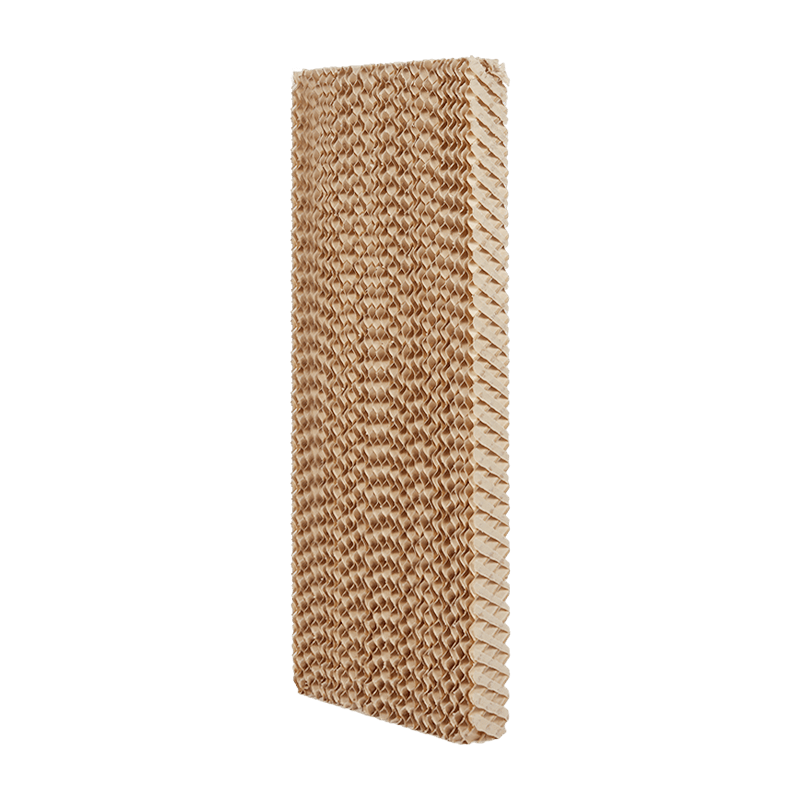 Brown Rigid Honeycomb cooling padsBasic Information Minimum Order Quantity: 40CBM Packaging Details: Carton Delivery Time: 25 days after receiving advance payment Payment Terms: L/C, T/T Supply Ability...View Product →
If you are comparing paper grades, look at resin content, edge sealing, and flute angle. Our note on honeycomb cooling pads explains how the geometry affects heat dissipation and water distribution.
Maintenance schedule that protects pad life
Maintenance is not a single annual task. A simple routine prevents most early failures and gives you a clear record for replacement planning.
- Weekly: check water distribution. Look for dry streaks, blocked holes, or overflow. Clear debris from the trough and pump strainer.
- Monthly: inspect the pad face for dust and scale. Rinse from the air side with low pressure. Do not use a high-pressure washer, which can crush the flutes.
- Seasonal start: clean the pad, check the frame, and confirm the pad sits square. Replace damaged edge gaskets.
- Seasonal end: drain the system, dry the pad, and cover the unit if it sits idle for months.
- Annual: measure cooling temperature drop. A drop of 2 to 3 degrees C lower than the first season is a sign of reduced evaporation.
Never use bleach or strong acid on cellulose pads. They break down the resin and shorten life. A mild detergent and clean water are usually enough. For biological growth, use a cooler-safe cleaner and rinse thoroughly.
Signs the pad is near the end of its life
Replace the pad when performance or structure changes, not only when it looks dirty. The following signs are reliable indicators:
- Sagging or bowing between supports.
- White mineral bloom that returns within days of cleaning.
- Black or green algae patches that survive cleaning.
- Uneven wetting: some areas stay dry while others drip.
- Crumbling edges or separation between paper layers.
- Musty odor that transfers to the air stream.
- Measured temperature drop falls below the design range.
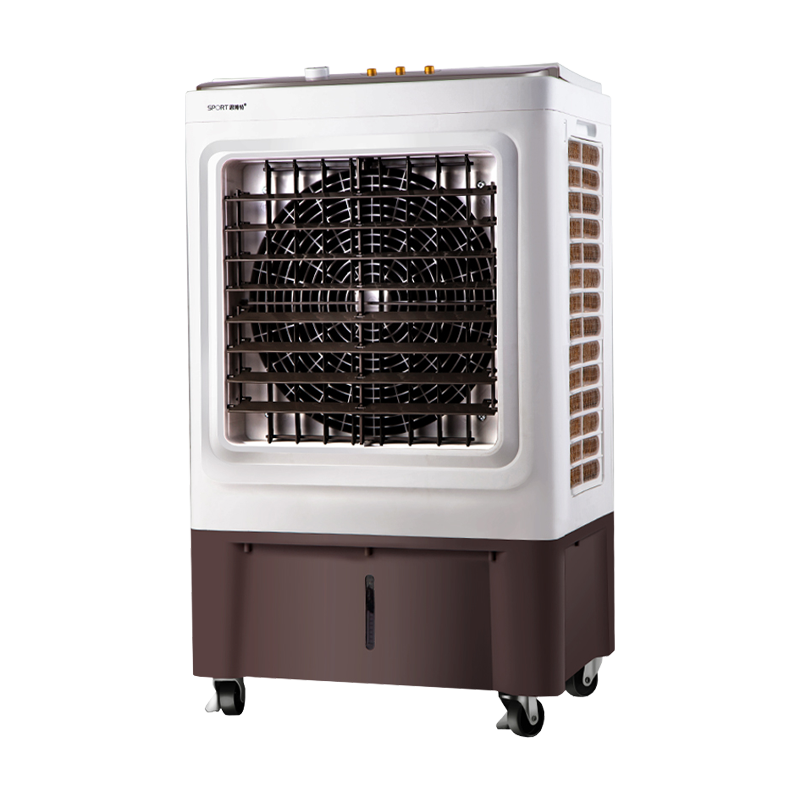
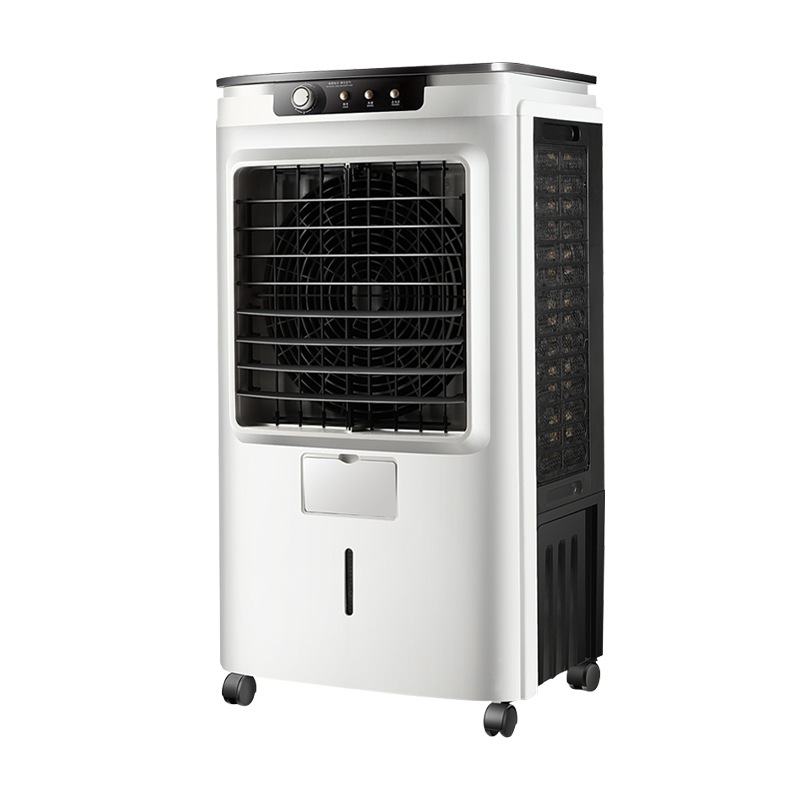
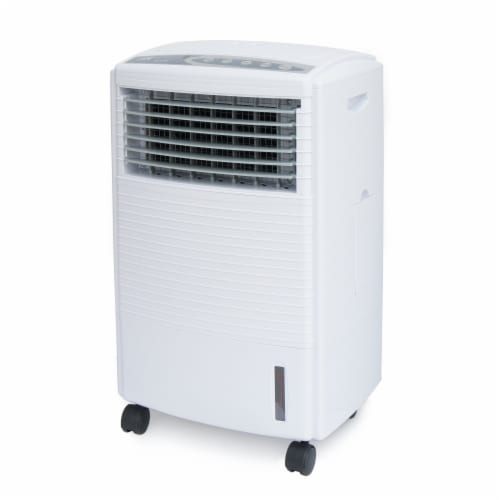 Evaporative Air Cooler with Cooling PadPowerful Cooling: Experience a noticeable drop in temperature thanks to the unique 3D honeycomb cooling pad that maximizes airflow and evaporation. It's like having a ...View Product →
If the frame, pump, and distribution pipes are still sound, replacing just the pad is the lower-cost route. If the cooler is more than eight to ten years old and has corrosion or fan motor issues, compare pad replacement against a new unit with a matched cooling pad.
How to estimate remaining life before you buy
Use a simple scorecard. Give one point for each yes: clean water, pre-filter present, pad cleaned at least twice per season, fan dry-down cycle in use, and no visible scale or algae. A pad with four or five points is likely in the upper half of its expected range. A pad with zero to two points is a candidate for early replacement.
Also check the model number and size. Pads are cut to specific heights, widths, and angles. A 5090, 6090, or 7090 designation refers to a nominal size family, but actual dimensions vary by manufacturer. Measure the old pad and the frame opening before ordering. If you are replacing pads across a poultry house or greenhouse, order the full set at once so the water distribution stays balanced.
For a quick bench check, weigh a dry sample or compare the stiffness of a new pad with the old one. A soft, floppy pad that no longer holds its shape will not maintain an even water film, even if it still cools for a few weeks.
FAQ
Is three years a good lifespan for a cooling pad?
Yes, for many rigid cellulose pads in normal seasonal use, three years is reasonable. Premium honeycomb pads with clean water and regular cleaning can reach five to seven years.
Can I clean a cooling pad with bleach?
No. Bleach and strong acids attack the resin and paper fibers. Use a mild detergent, a cooler-safe cleaner, and plenty of clean water.
How often should I replace pads in a poultry house?
In high-dust poultry houses, inspect every flock cycle and expect replacement every one to three years. Pre-filtration and water treatment can extend that range.
Does a thicker pad last longer?
Often yes, because it holds more water and resists dry spots. But it also increases static pressure, so the fan must be sized for the added resistance.
Does this apply to a laptop cooling pad?
No. A laptop cooling pad is an electronic accessory with fans and a USB connection. Its practical life is usually two to five years, depending on bearing quality and dust. The lifespan rules in this article apply to evaporative cooling pads used with air coolers, swamp coolers, and ventilation systems.
Final takeaway
For evaporative cooling pads, plan on two to five years for rigid cellulose, three to seven years for premium honeycomb paper, and one to three years for synthetic or aspen pads. The pad itself is not the only variable. Water quality, dust control, airflow, and seasonal cleaning decide whether you get the low or high end of that range.
Inspect the pad before each cooling season, measure the temperature drop, and replace it when wetting becomes uneven or the structure softens. That approach protects cooling capacity, avoids emergency shutdowns, and keeps replacement cost predictable.
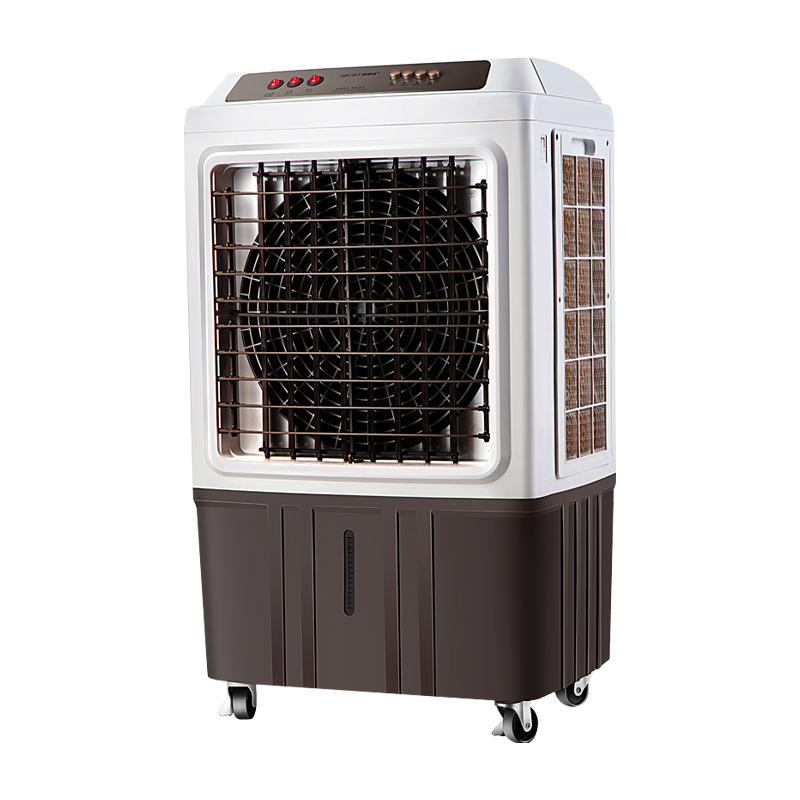

 CONTACT US