
 EN
EN  English
 中文简体
中文简体 عربى
عربى Tiếng Việt
Content
Direct answer: for most evaporative cooling installations, a 15° flute angle offers the best balance between cooling efficiency and pressure drop. Choose 8° when you run tunnel-ventilation fans at 2 m/s or higher in poultry or livestock buildings, and treat 5° as a niche specification for ultra-high-velocity or dusty systems where static pressure is the limiting factor.
That conclusion is easy to state but hard to trust without numbers. Here is one: at a face velocity of 2 m/s, a 100 mm thick pad with a 15° flute angle develops roughly 84 Pa of resistance, while an 8° pad of the same thickness develops about 55 Pa. On a typical poultry house fan, a 30 Pa reduction in static pressure can raise airflow by 10-15%, which is why flute angle is a system design parameter, not just a product detail.
This guide compares the three commonly offered shallow flute angles, explains what the measurement means on a data sheet, and gives a practical selection rule for each major application. You will also find a pressure-drop chart and an efficiency chart that you can use when talking to suppliers.
What Exactly Is a Flute Angle in a Cooling Pad?
An evaporative cooling pad is built from alternating layers of corrugated paper sheets bonded together. The channels created by those corrugations are called flutes, and the flute angle is the angle at which those channels travel relative to the face of the pad where air enters.
In a single-angle pad, all flutes share the same orientation. In a two-angle pad, the two bonded sheets run at different angles, which is why data sheets list values such as 45/15 or 30/30. For this article, 5°, 8°, and 15° refer to single-angle designs where the air path is relatively straight compared with steeper 30° or 45° designs.
A steeper flute angle forces air to change direction more sharply, increasing the contact time between the air and the wet surface. The trade-off is that the same geometry raises pressure drop. Flute angle is one of the main structural variables behind how honeycomb cooling pad design affects heat dissipation; small angles behave almost like straight ducts, while large angles start to resemble a labyrinth.
Flute Angle Comparison: 5° vs 8° vs 15°
The table below compares the three angles on the characteristics that matter most for fan selection and cooling performance. Figures are typical values for clean 100 mm media at 2 m/s face velocity.
| Characteristic | 5° flute | 8° flute | 15° flute |
|---|---|---|---|
| Air contact time | Lowest | Moderate | Highest |
| Pressure drop at 2 m/s | ~35 Pa | ~55 Pa | ~84 Pa |
| Evaporation efficiency | 65-70% | 75-80% | 85-90% |
| Water carryover risk | Low | Low | Moderate |
| Best suited for | Ultra-high-velocity systems, dusty environments | Poultry and livestock tunnel ventilation | Residential coolers, greenhouses, commercial spaces |
Efficiency and pressure-drop figures are illustrative typical values measured on clean media at nominal velocity. Actual results depend on pad thickness, flute spacing, and the fan curve of your system.
What the Performance Data Shows
The trade-off between airflow resistance and cooling efficiency becomes clear when you plot both on graphs. The charts below use typical values for a 100 mm thick pad.
Pressure drop vs face velocity
A shallower flute keeps pressure low at high velocity, but it also shortens the air-to-water contact path.
Evaporation efficiency at nominal velocity
The 15° angle converts extra static pressure into meaningful cooling output, which is why it is the default for most pad systems.
Typical flute angle selection by application segment
- 15° - residential / greenhouse 55%
- 8° - poultry / livestock 30%
- 5° - high-velocity industrial 15%
Choosing the Right Flute Angle for Your Application
There is no universal best angle; the correct choice depends on the air velocity your fans produce and how much static pressure they can overcome. The following recommendations reflect typical field practice and match the main industries and scenarios where evaporative cooler pads are used.
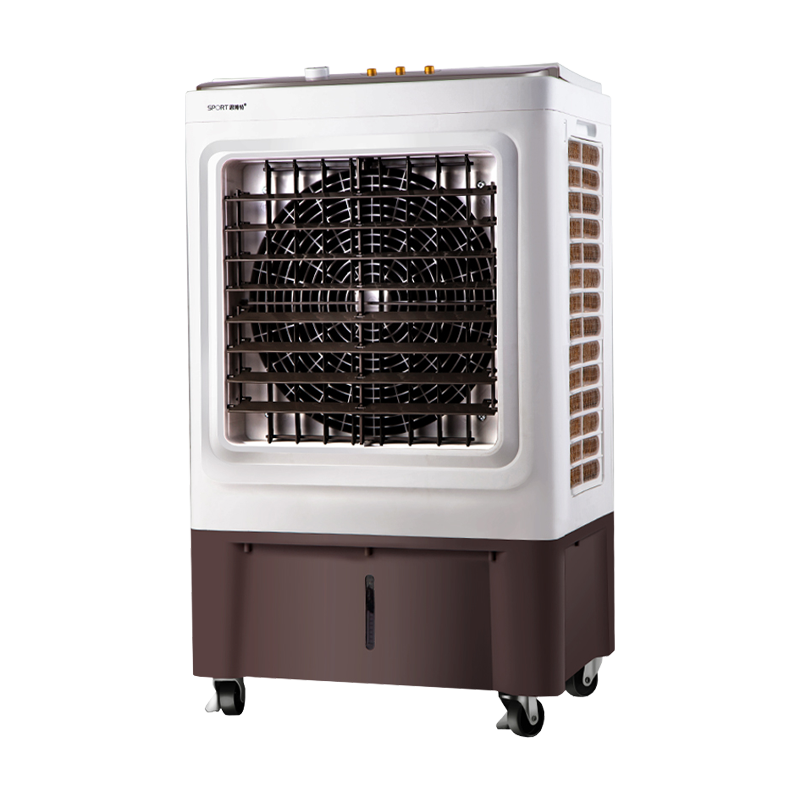
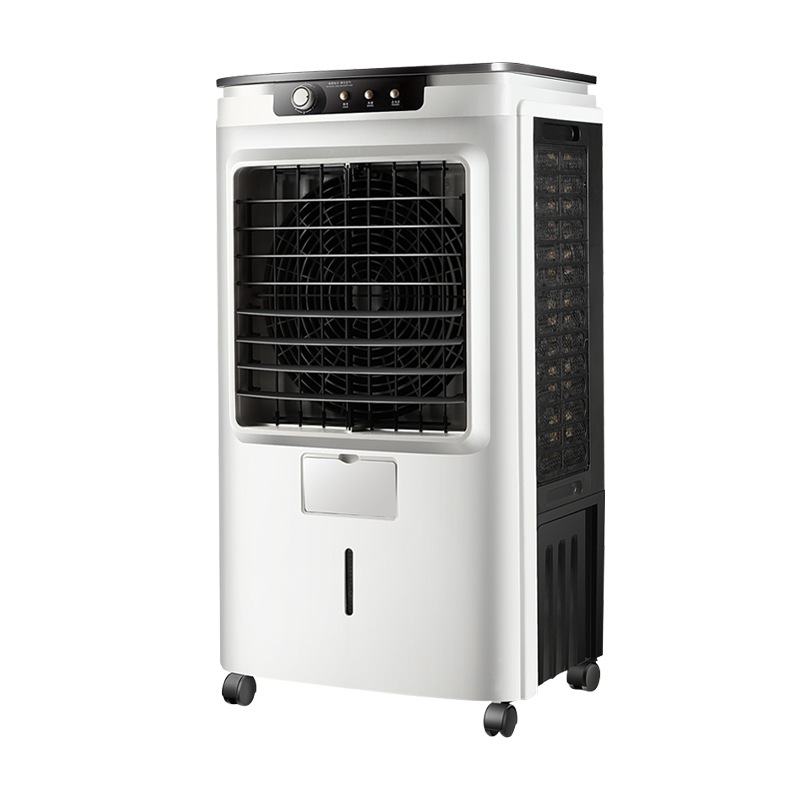
Residential evaporative coolers and small portable units
Choose 15°. Residential units use low-to-mid pressure blowers and the priority is maximum saturation efficiency. The extra 25-30 Pa of pressure drop compared with an 8° pad is easily handled by a well-matched blower, and the higher contact time translates directly into lower outlet air temperature. The Blue OxyAir pad series is one example of a 15° media designed for this duty.
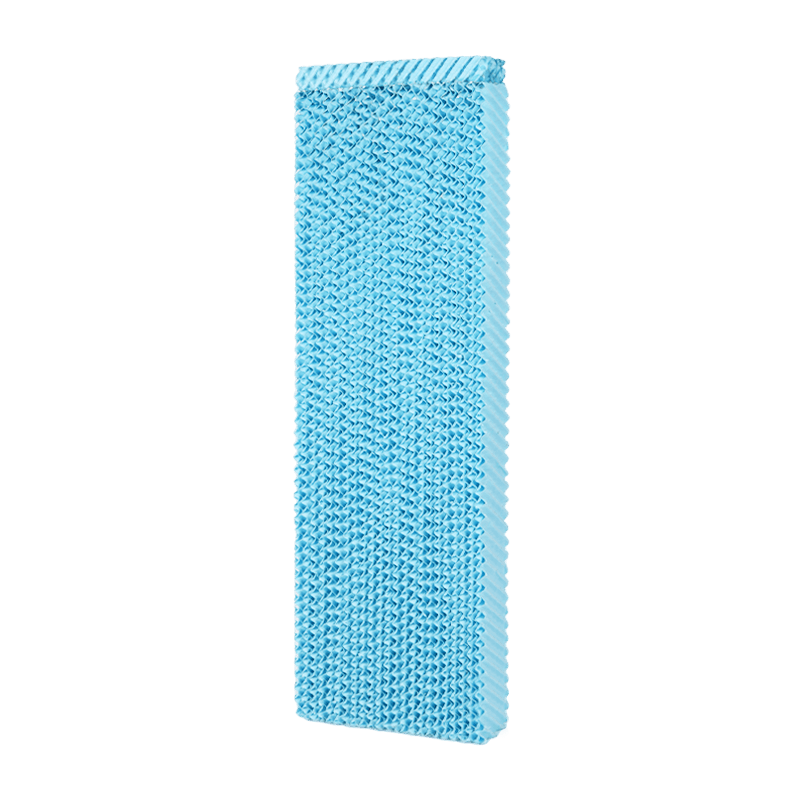 Blue Evaporative Cooling Pad with 15° Flute DesignThis blue fiber pad suits residential evaporative coolers, offering high saturation efficiency with low-to-mid pressure blowers. Its 15° flute increases contact time, lowering outlet air temperature effectively.View Product →
Poultry and livestock tunnel ventilation
Choose 8°. At a typical tunnel velocity of 2 m/s, a 100 mm 15° pad consumes roughly 84 Pa while an 8° pad consumes about 55 Pa. In a poultry house where fans run at 3 m/s to keep birds alive on a hot afternoon, that difference can determine whether total airflow keeps up with heat gains. The 6090 poultry pad is a common choice here because its stiffer sheet holds up to daily wet-dry cycling.
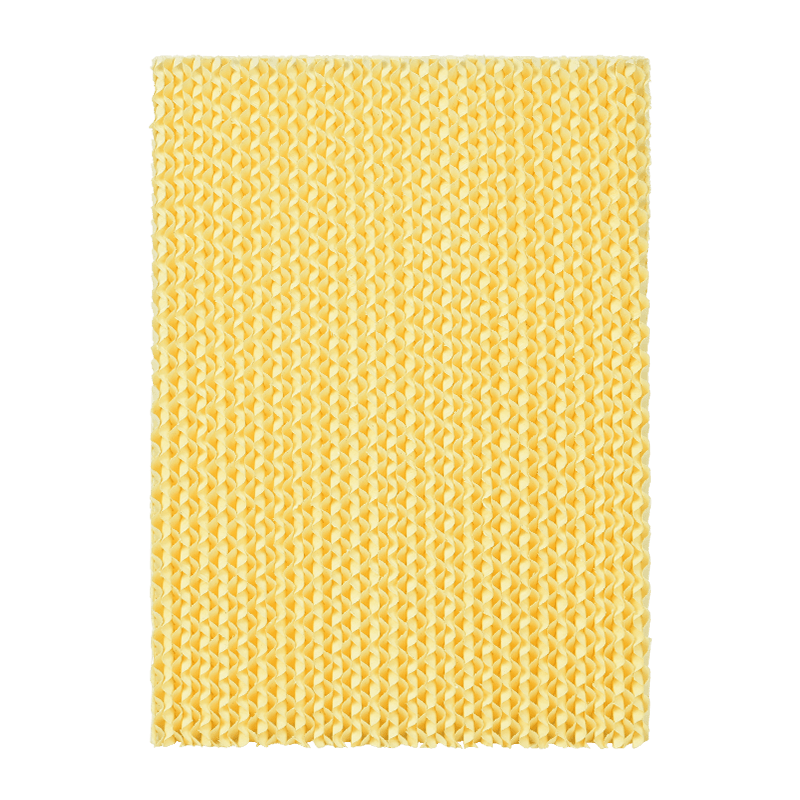 6090 Poultry Evaporative Cooling Pad for High-Velocity TunnelsBuilt with a stiffer sheet for daily wet-dry cycling, this 8° flute pad reduces pressure drop at tunnel velocities, helping poultry houses maintain airflow during peak heat loads.View Product →
Greenhouse cooling
Choose 15° for standard greenhouse fan-and-pad systems, or 8° if you run higher-velocity extractors or very long pad banks. A 15° flute distributes water more evenly over the paper surface, which helps keep the whole pad face wet and avoids dry streaks. Where the static pressure budget is tight, an 8° pad mounted in the same frame is an acceptable compromise. The 7090 greenhouse honeycomb pad is manufactured for this balance of wetted area and airflow.
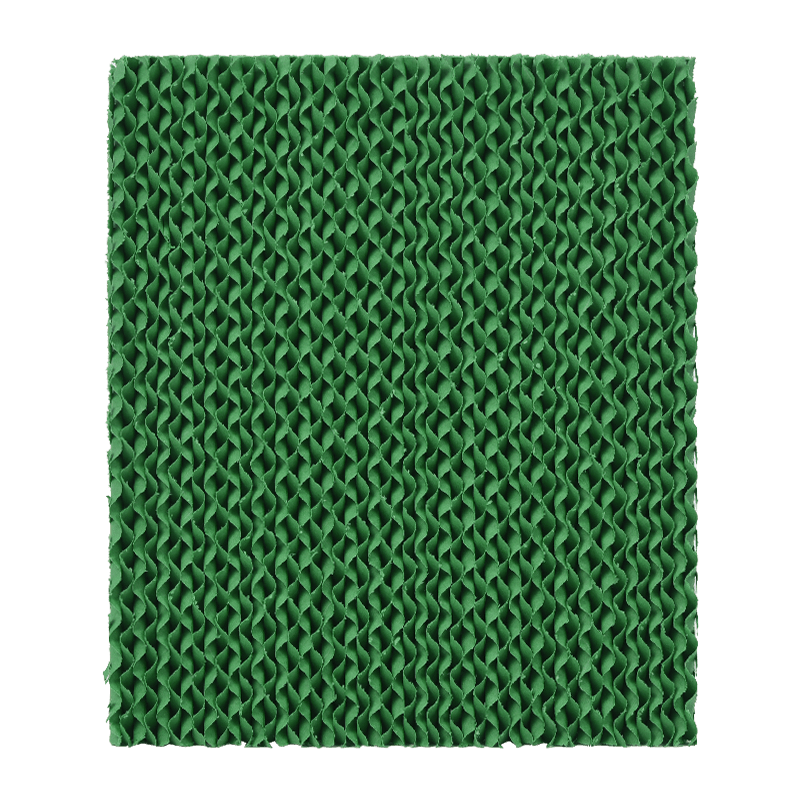 7090 Greenhouse Honeycomb Evaporative Cooling PadDesigned for greenhouse fan-and-pad systems, this pad balances wetted area and airflow. Its 15° flute distributes water evenly, or an 8° option suits tighter static pressure budgets.View Product →
Industrial spaces with dust or particulate loading
Choose 8° or 5° when cooling a factory or warehouse where fans create high face velocity or where dust could clog a steeper flute. A shallower channel is easier to flush clean and keeps velocity high without demanding a bigger motor. A 5° pad makes sense only when the system is designed specifically around a low static pressure budget, not as a casual upgrade to an existing 15° system.
Other Pad Specifications That Matter Just as Much
Flute angle is important, but it is not the only specification that decides performance. Before you order, confirm these four items with your supplier.
- Pad thickness. A 150 mm pad with a shallower angle can outperform a 100 mm pad with a steeper angle because the total air path is longer. Match thickness to your existing frame depth.
- Flute spacing. Tighter flute spacing increases surface area per cubic meter, but it also increases clogging risk. Wide-pitch flutes are safer in dusty environments.
- Sheet material and rigidity. Resin-coated or bleached paper keeps its dimensions longer in hard water. A pad that softens and collapses a few millimetres loses its rated angle.
- Anti-algae and anti-mold treatment. The treatment determines whether the pad surface stays hydrophilic for a full season. Cooling performance drops sharply once dry spots form.
Frequently Asked Questions on Flute Angles
Is a 5° flute angle ever the best choice?
Yes, but only in narrow cases: systems that run at constant high face velocity with limited fan capacity, or installations where airborne dust and lint make wide, shallow flutes necessary to keep the pad clean. In a standard fan-and-pad setup, the lower evaporation efficiency of a 5° pad costs more cooling than the reduced static pressure saves on energy.
What does a "45/15" specification on a data sheet mean?
It indicates a two-angle pad: one layer runs at 45° and the other at 15° relative to the pad face. This asymmetric pattern is used to spread water across the thickness of the pad while keeping pressure drop moderate, and it is common in 150 mm media. A single-number designation such as 15° means every layer uses the same flute angle.
Can I replace my current pads with a different flute angle?
Mechanically yes, because pads with the same thickness fit the same frame, but you must re-check fan performance. Switching from 15° to 8° lowers pressure drop and usually increases airflow, which can help an undersized fan system. Switching the other way can starve the fans and create hot zones near the air inlet.
How do I measure the flute angle of an existing pad?
Look at the cut edge of the pad where the flutes are visible as waves. Use a protractor to measure the angle between the direction of one flute and the vertical face of the pad. If you see two alternating wave directions, it is a two-angle pad, and you should record both angles.
Bottom line: for a residential air cooler, a greenhouse, or a commercial space, start with a 15° flute angle - it gives the highest evaporation efficiency and adds only manageable pressure drop. For poultry and livestock buildings running tunnel ventilation at 2 m/s or above, use 8° to protect airflow and reduce fan load. Treat 5° as a niche product for special high-velocity or dusty conditions, not as a general-purpose upgrade.
When you order replacement pads, confirm not just the flute angle but also the thickness, flute spacing, and surface treatment with your supplier. The right combination of these variables will deliver the saturation efficiency your system was designed around and keep it working through the hottest weeks of the season.

 CONTACT US