
 EN
EN  English
 中文简体
中文简体 عربى
عربى Tiếng Việt
Content
- 1 Wet-Bulb Temperature Sets the Ceiling, Not Humidity Alone
- 2 How Much Cooling Is Left as Humidity Climbs
- 3 Where Cooling Pads Still Earn Their Place in Humid Air
- 4 Design Choices That Improve Humid-Climate Performance
- 5 When Evaporative Cooling Is the Wrong Tool
- 6 A Pre-Purchase Checklist for Humid Sites
- 7 Frequently Asked Questions
- 8 Bottom Line
Short answer: yes, but not the way most buyers expect. A poultry farm in southern Vietnam runs a 100 mm honeycomb pad wall behind negative-pressure fans. On a July afternoon the barn sits at 33 °C and 78% relative humidity, and the pads deliver roughly 4 °C of cooling. The same pad, installed in a greenhouse outside Cairo at 38 °C and 22% humidity, delivers 14 °C. Same product, same fan curve, completely different result. The pad is not failing in the humid air. The climate is simply lowering the ceiling on what evaporation can physically do.
Wet-Bulb Temperature Sets the Ceiling, Not Humidity Alone
Every evaporative cooling calculation starts with the wet-bulb temperature, the lowest temperature air can reach when water evaporates into it at constant pressure. A pad with 80% saturation efficiency converts that limit into real supply air:
Supply air = dry-bulb − 0.80 × (dry-bulb − wet-bulb)
Relative humidity by itself is a poor guide. 70% RH at 24 °C is a mild morning; 70% RH at 34 °C is a heat-stress emergency. Dubai at 40 °C and 25% RH has a wet-bulb near 23 °C, so a pad wall has up to 17 °C of theoretical headroom. Guangzhou at 33 °C and 75% RH has a wet-bulb near 29 °C, leaving roughly 4 °C. That single number explains almost every complaint about pads "not working" in humid weather.
| Relative humidity | Wet-bulb (approx.) | Supply air at 80% efficiency | Practical effect |
|---|---|---|---|
| 20% | 19.5 °C | 22.6 °C | Strong cooling, 15 °C of range |
| 40% | 23.5 °C | 25.8 °C | Good cooling, comfortable supply air |
| 60% | 26.5 °C | 28.2 °C | Modest cooling, airflow does most of the work |
| 80% | 30.0 °C | 31.0 °C | Barely noticeable as temperature drop |
If you want the full mechanics of the process, this explanation of how water evaporation actually drives the cooling process walks through the energy exchange step by step.
How Much Cooling Is Left as Humidity Climbs
At a fixed 35 °C dry-bulb, the available temperature drop collapses from about 15.5 °C at 20% RH to roughly 5 °C at 80% RH. The curve is not linear, and the steepest losses happen between 50% and 75% RH — exactly the band where many subtropical and coastal markets sit for weeks at a time.
Below 5 °C of temperature drop, the value of the pad shifts from "making air colder" to "moving a lot of air over people, animals, or machines." That is still useful — just not the same product promise.
Where Cooling Pads Still Earn Their Place in Humid Air
Specifiers keep using evaporative pads in humid regions for four reasons: high air-exchange rates, direct convective cooling of bodies and equipment, humidity tolerance in specific processes, and much lower running cost than mechanical refrigeration.
In poultry and livestock houses, the combination of 1.5–2.5 m/s air speed across the animals and 3–5 °C of temperature reduction is enough to cut heat-stress mortality, even at 75% RH. In greenhouses, evaporative pads add humidity while lowering temperature, which suits crops that struggle in dry heat. In textile, hardware, and foundry workshops, pads remove machine heat from large open volumes where sealing the building is impractical.
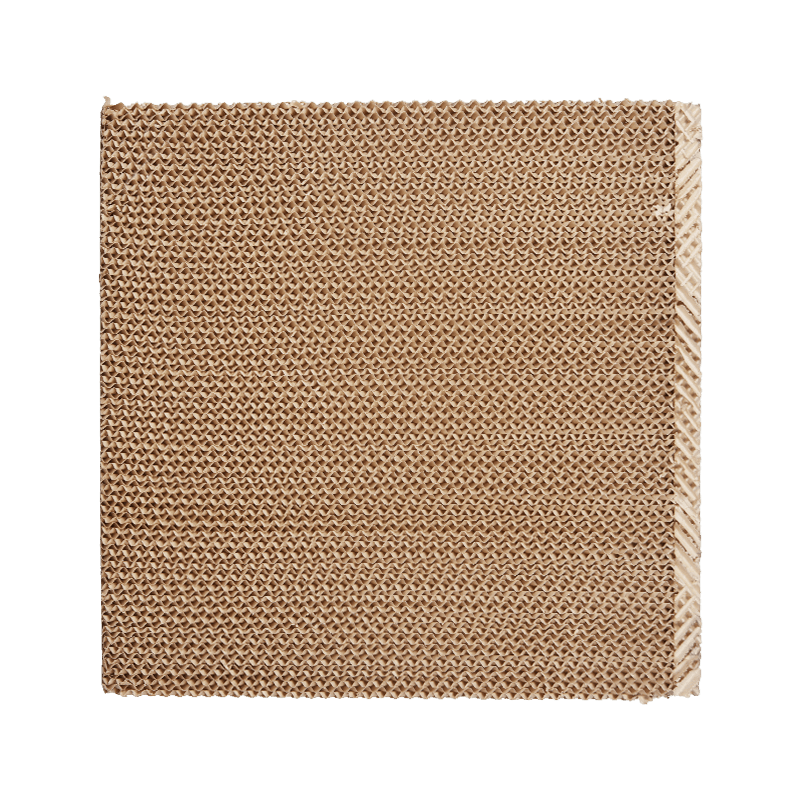 5090 Honeycomb Evaporative Cooling Pad for Humid-Region Cooling SystemsWorth viewing where humid-region poultry, greenhouse, or workshop cooling needs a 50–150 mm honeycomb pad with treated materials and 45° flute geometry.View Product →
The application mix below is a typical humid-region specification pattern rather than a measured statistic, but it reflects how the technology is usually deployed when the air is already wet.
- Poultry and livestock housing — 35%
- Greenhouse and horticulture — 25%
- Industrial workshops — 25%
- Commercial and residential — 15%
Design Choices That Improve Humid-Climate Performance
Slow the air down
Standard practice for a 100 mm pad is a face velocity of 2.0–2.5 m/s. In humid conditions, dropping to 1.5 m/s lengthens contact time between air and wet surface, which can recover 1–2 °C. The trade-off is a wider pad wall for the same airflow, so it has to be designed in, not retrofitted.
Use a thicker, rigid pad
Moving from 100 mm to 150 mm thickness lifts saturation efficiency from roughly 75% to 85%. Rigid honeycomb media also holds its flute geometry under constant wetting, so the efficiency you specified is the efficiency you keep after two seasons.
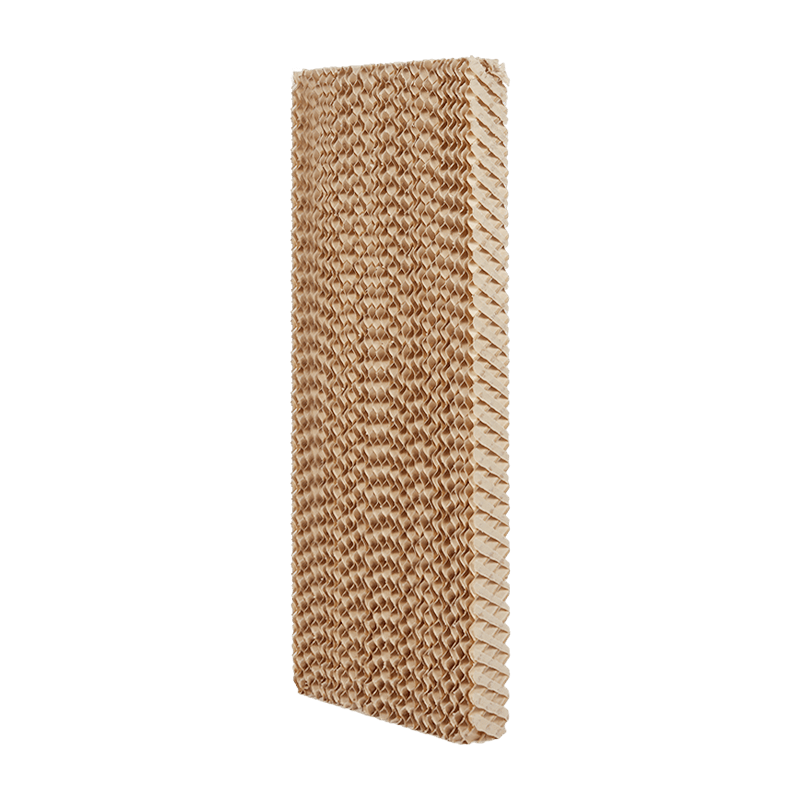 Brown Rigid Honeycomb Cooling Pads for Evaporative Cooling SystemsView these imported-kraft-paper pads where 100–150 mm thickness, anti-mildew rigidity, and two-stage wet-climate cooling demand stable flute geometry and higher saturation efficiency.View Product →
Consider a two-stage design
An indirect stage pre-cools the primary air stream without adding moisture, then a direct stage finishes the job. In 70% RH conditions, a two-stage system can deliver 8–10 °C where a single-stage unit manages 4–5 °C. It costs more, but it is the only evaporative route that behaves like real air conditioning in a wet climate.
Match the pad to the unit
Pad thickness, flute angle, and water distribution have to match the fan curve and cabinet geometry. A mismatched pad either starves the airflow or floods, and both outcomes destroy the efficiency numbers on the datasheet.
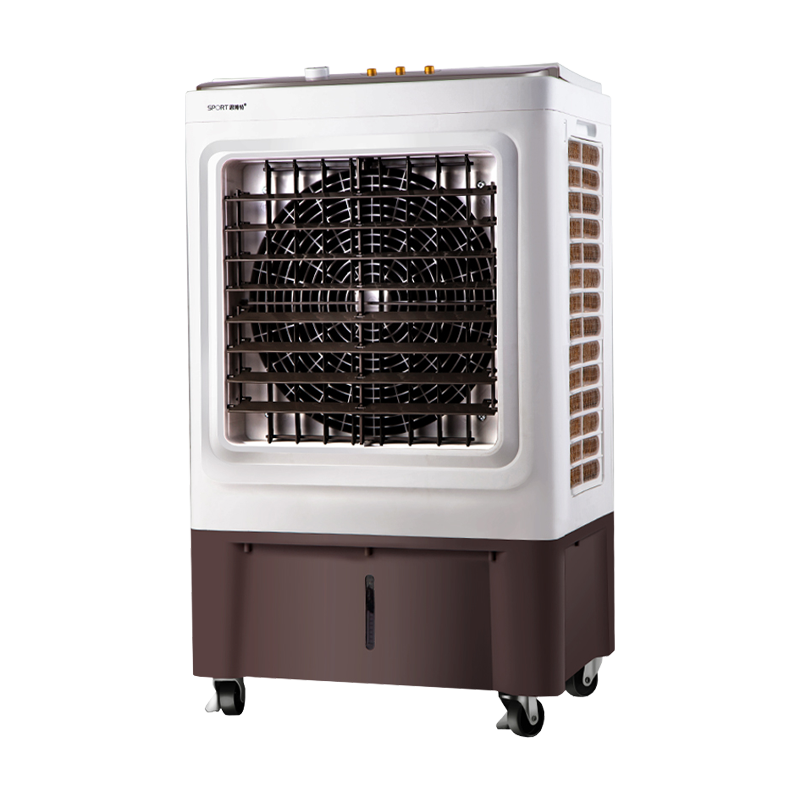
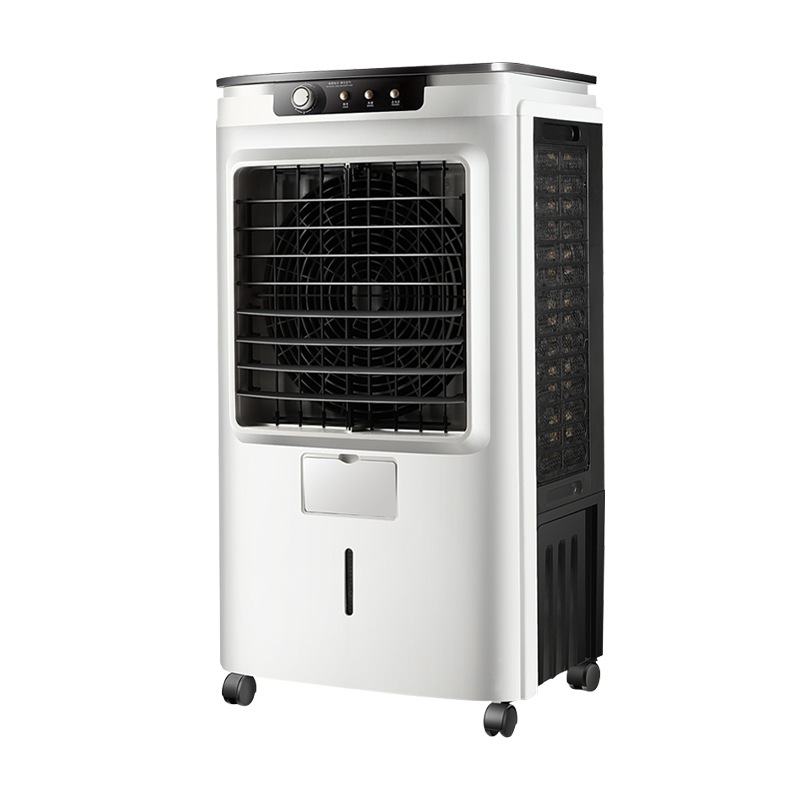
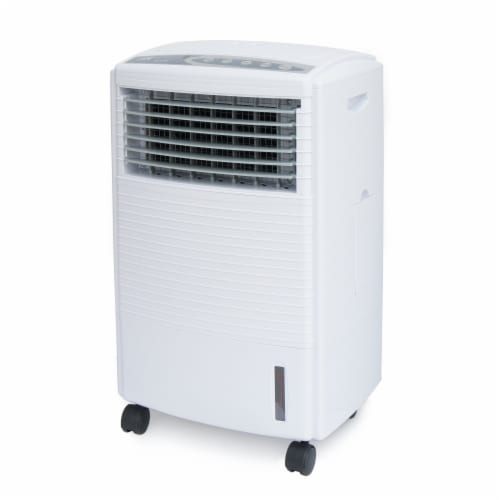 Portable Evaporative Air Cooler with 3D Honeycomb Cooling PadWorth viewing for portable cooling where an integrated 3D honeycomb pad, 10 L tank, and 65 W operation support indoor comfort and dry-season humidification.View Product →
When Evaporative Cooling Is the Wrong Tool
There are situations where no pad specification will save the project, and it is better to say so early:
- Sealed rooms that must hold below 25 °C regardless of outdoor conditions
- Sites where summer RH stays above 75–80% for weeks and no exhaust path exists
- Data rooms, laboratories, pharmaceutical storage, and printing plants with strict humidity control
- Buildings where added moisture would damage stored materials, paper, or metal parts
In those cases, mechanical refrigeration, or dehumidification followed by cooling, is the correct answer. Pre-drying the air does make evaporative pads work again, but only if the dehumidification energy cost still beats the alternative.
A Pre-Purchase Checklist for Humid Sites
- Get the design-day dry-bulb and wet-bulb for your location — not just the monthly average humidity.
- Calculate the realistic drop: efficiency × (dry-bulb − wet-bulb). If it comes out under 4 °C, redefine the goal as ventilation and heat removal.
- Confirm a real exhaust path. Pads only work when the humid air leaves the building.
- Size the pad wall for 1.5–2.0 m/s face velocity in humid conditions.
- Plan water quality and cleaning. Scale and algae cut efficiency faster in warm, wet climates.
- Compare five-year running cost against mechanical cooling, including water treatment and pad replacement.
Frequently Asked Questions
Can evaporative cooling pads be used in humid climates at all?
Yes. They still lower air temperature by 3–5 °C at 70–80% RH and they still move large volumes of air. What changes is the expectation: you are buying ventilation plus modest cooling, not air conditioning.
What humidity level is too high for a swamp cooler?
There is no single line. Above roughly 70% RH at a 35 °C dry-bulb, the temperature drop usually falls under 5 °C, which most comfort applications find disappointing. Livestock, greenhouse, and industrial ventilation applications often remain viable well beyond that point.
Does a thicker cooling pad work better in humid air?
Yes. Increasing pad thickness from 100 mm to 150 mm raises saturation efficiency, which matters more when the wet-bulb is close to the dry-bulb. The penalty is higher static pressure and a larger pad footprint.
Is two-stage evaporative cooling worth it in humid regions?
For comfort cooling in a humid climate, it is often the only evaporative option that delivers a noticeable result. For ventilation-driven applications such as barns, a single-stage system is usually the better economic choice.
How do I check my wet-bulb temperature?
Use a sling psychrometer, a wet-bulb sensor, or published design-day data for your region. Do not estimate from relative humidity alone — the same RH figure means very different wet-bulbs at different dry-bulb temperatures.
Bottom Line
Evaporative cooling pads can be used in humid climates, and they are used every day in barns, greenhouses, and workshops where airflow matters as much as temperature. What they cannot do is behave like a compressor-based air conditioner in air that is already near saturation. Check the wet-bulb, size for slower face velocity, choose a thicker rigid pad, and set the performance expectation before the equipment arrives.
If you are specifying pads for a specific site, send us your design-day dry-bulb and wet-bulb figures and we will help you work out the realistic cooling range and the right pad thickness.
Contact our team

 CONTACT US