
 EN
EN  English
 中文简体
中文简体 عربى
عربى Tiếng Việt
Content
Cooling Pad Sizing for a Flower Greenhouse: The Short Answer
If your flower greenhouse touches 35 °C on a July afternoon and the roses are dropping petals two days early, a bigger fan is usually the wrong purchase. For a 500 m² Venlo house needing roughly 30,000 m³/h of ventilation air, a 100–150 mm cross-fluted cellulose cooling pad sized at about 4.5–5.5 m² of face area, running at 1.6–2.0 m/s face velocity and fed with low-hardness water, will pull 6–9 °C out of the incoming air and hold humidity inside the band that cut flowers tolerate. Pad brand is the third decision. Sizing and water chemistry are the first two.
The rest of this page explains where those numbers come from, what changes when a grower gets them wrong, and which details are worth writing into a purchase order.
- Face velocity decides whether the pad wets evenly. Push air through too fast and the water film breaks into dry vertical stripes; run it too slow and you have paid for pad area the fan never uses.
- Pad thickness decides how close to saturation the air gets, and how much static pressure you spend getting there.
- Water chemistry decides how long any of it lasts. Scale and algae retire more pad walls than mechanical wear does.
Why 5090, 6090 and 7090 Pads Behave Differently
Pad codes vary between factories, but they almost always describe the same two things: flute height (the depth of the corrugations, commonly 5, 7 or 9 mm) and the angle at which the two corrugated sheets cross each other. That geometry controls how long the air stays in contact with the wet film, how much turbulence the flutes create, and how much static pressure the fan must overcome.
Cross-fluting matters more than most growers expect. Shallow, near-parallel corrugations let air slide through in a straight line; angled flutes keep forcing it to change direction, so the boundary layer breaks repeatedly and the air keeps meeting fresh water. The same geometry that raises saturation efficiency also raises pressure drop. A deeper pad at a steeper angle can cool 3–4 °C more than a flatter one in theory, and still deliver less total cooling in practice if the fan cannot move its rated airflow through it. The heat-transfer reasoning behind that trade-off is covered in this note on how the honeycomb flute design affects heat dissipation.
| Geometry tendency | Typical flute height and angle | Pressure drop | Saturation efficiency | Where it fits in flower production |
|---|---|---|---|---|
| Fine, steep flutes | About 5 mm, steeper crossing angle | Highest | Roughly 85–90% | Filtered air, propagation houses and tunnels with tight climate control |
| Balanced cross-fluted | About 7 mm, near 45° crossing | Medium | Roughly 80–85% | Most cut-flower and pot-plant greenhouses with clean make-up air |
| Open, shallow flutes | About 9 mm, flatter crossing | Lowest | Roughly 70–80% | Dusty sites and retrofits where existing fans have little pressure to spare |
Choose by dust load and fan curve, not by code alone. If the intake sits beside an unpaved service road, the open flute profile usually outperforms a finer pad over a full season because it keeps its airflow instead of clogging. If the house is sealed, filtered and humidity-controlled for gerbera or lisianthus, the finer profile earns its extra pressure cost.
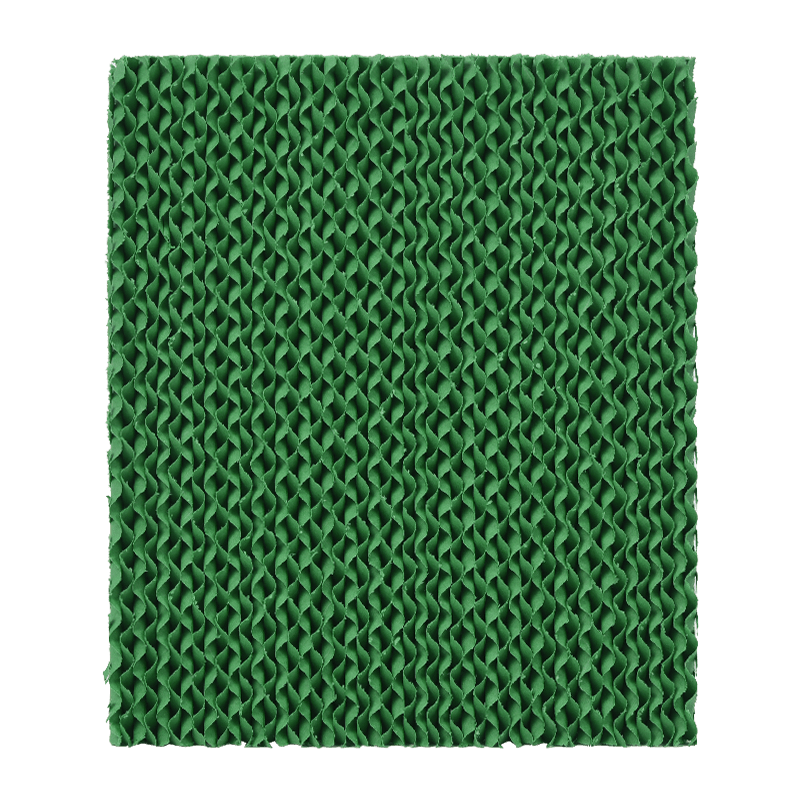 7090 Honeycomb Evaporative Cooling Pad for Greenhouse CoolingHoneycomb pad with 7 mm flute and multiple height, width, and depth options, treated for durability in greenhouse and evaporative cooling applications.View Product →
Sizing the Pad: Airflow First, Square Metres Second
Work in this order: required airflow, then face area, then thickness, then frame. The formula is simple enough to do on a phone: pad face area in square metres equals airflow in m³/h divided by 3600, then divided again by face velocity in metres per second.
A house needing 30,000 m³/h at 1.8 m/s therefore needs 30,000 ÷ 3600 ÷ 1.8, which is about 4.6 m² of wetted face. Round up, never down. As pads collect dust, resistance rises and the fan delivers less air than the datasheet promises, so a little spare area is cheap insurance. Keep face velocity between 1.5 and 2.0 m/s for a 100 mm pad, and up to roughly 2.5 m/s for a 150 mm pad. Beyond that, droplets get carried off the pad and onto the crop, and leaf spotting costs marketable stems at exactly the wrong moment.
Thickness is a footprint trade. A 100 mm pad reaches about 80% saturation efficiency; a 150 mm pad reaches 85–90% but demands more static pressure and a longer wall. On a short gable end, a 150 mm pad running at the lower end of its velocity range will almost always beat a 100 mm pad pushed hard.
Two placement details quietly decide results. First, mount pads on the gable opposite the exhaust fans so air crosses the whole canopy at roughly 0.3–0.5 m/s rather than short-circuiting down one aisle. Second, shade the intake. Air drawn across hot concrete or a sun-baked roof slab enters the pad already warmed, and no pad geometry can undo that. When pads are needed as components rather than a full wall, the evaporative cooler pad range covers the common flute profiles, frames and thicknesses used in greenhouse and equipment builds.
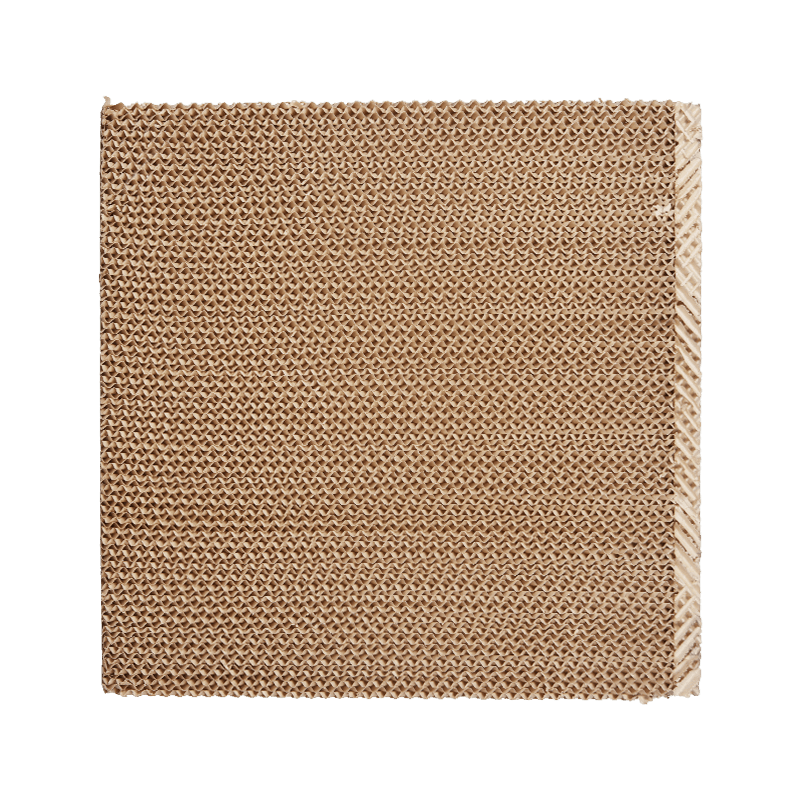 5090 Honeycomb Evaporative Cooling Pads for Wholesale and OEM Builds5 mm flute pads with 50–150 mm depth options, treated for durability; suited to evaporative cooling, greenhouse, and equipment builds.View Product →
Water Quality: The Line Item Nobody Budgets For
Cellulose pads rarely wear out. They scale up or they go green. Where carbonate hardness is high, calcium precipitates on the flute surfaces, the water film thins, and airflow drops in patches that no amount of hosing restores. Most suppliers suggest keeping carbonate hardness below roughly 10 °dH, or about 180 mg/L as calcium carbonate. Above that, a softener or a blended reverse-osmosis feed pays for itself within a few seasons.
Algae is the second failure mode, and light is the cause. A covered tank, a flush cycle that empties and refills rather than recirculating stale water, and a bleed-off of about 10–20% of circulating flow will keep biological growth thin. Fit a 50–100 µm pre-filter ahead of the distribution pipe; grit settling in the top header blocks spreader holes and produces dry vertical stripes that growers often misdiagnose as a fan problem.
- Daily: check water level, pump operation and that the pad is wet across its full height.
- Weekly: inspect for dry stripes at the top edge, clean the pre-filter, and confirm bleed-off is running.
- Monthly: flush the sump, check for scale crust and remove debris from the drip tray.
- Seasonally: verify pad squareness in the frame, check for soft spots, and rotate or replace blocks that no longer hold their flute shape.
What to Write Into the Purchase Order
Most cooling pad complaints trace back to what was left out of the order rather than the pad itself. Pads are often quoted by volume or by nominal height, which hides the variables that matter in a greenhouse.
- State flute height, pad thickness, and the exact block dimensions after framing, not simply the pad family code.
- Ask for a thickness tolerance of ±1 mm or tighter across the block. Thin corners dry out first and stay dry.
- Request a soaked-and-dried sample to test the glue lines. Pads that delaminate after a few wet–dry cycles shed sheets into the airflow and block the header.
- Confirm UV stabilization and edge protection. Sun on the exposed upper edge degrades cellulose faster than any other part of the wall.
- Specify packing. Pads ship dry and are hygroscopic; a container that sweats in transit arrives with softened edges and mould spots. Ask for moisture-proof wrapping and a moisture content figure on the packing list.
Questions Flower Growers Ask Before Buying
Can a pad wall replace fogging?
They do different jobs. Pads cool a large volume of air and are the cheaper way to remove 6–9 °C when outside air is dry. Fogging gives finer humidity control in a closed or semi-closed house but needs high-pressure nozzles and demineralised water. Many cut-flower operations run pads for bulk cooling with roof vents and keep fogging for humidity pulses during propagation.
How much cooling should I expect on a humid day?
The ceiling is the wet-bulb depression. On a dry 35 °C afternoon at 30% relative humidity, a well-maintained pad can deliver air around 24–25 °C. At 80% relative humidity the same pad may only give 3–4 °C. Size for the worst week of your local summer, and choose crops for the climate you actually have.
How long does a pad last in a greenhouse?
Two to five years is the common range. Hard water, dust from unpaved roads and running the pump dry shorten it fastest. A pad that has lost its flute definition, feels soft under hand pressure, or shows white crust along the top edge should be replaced as a full set rather than patched.
Can the pad push humidity too high for flowers?
Yes. A pad raises relative humidity by roughly the amount it cools the air. In a closed glasshouse that extra moisture encourages Botrytis on gerbera and rose. Run pads with venting so humid air leaves the canopy, and stop the pump before sunset; a pad left wet overnight is an open invitation to fungal disease.
Start with three measurements before you spend anything: the airflow your fans actually move, the wetted area your gable can accept, and a water analysis. Those three numbers decide pad thickness, flute profile and the maintenance schedule you can realistically keep. Everything else, including the code printed on the carton, is a detail that follows.
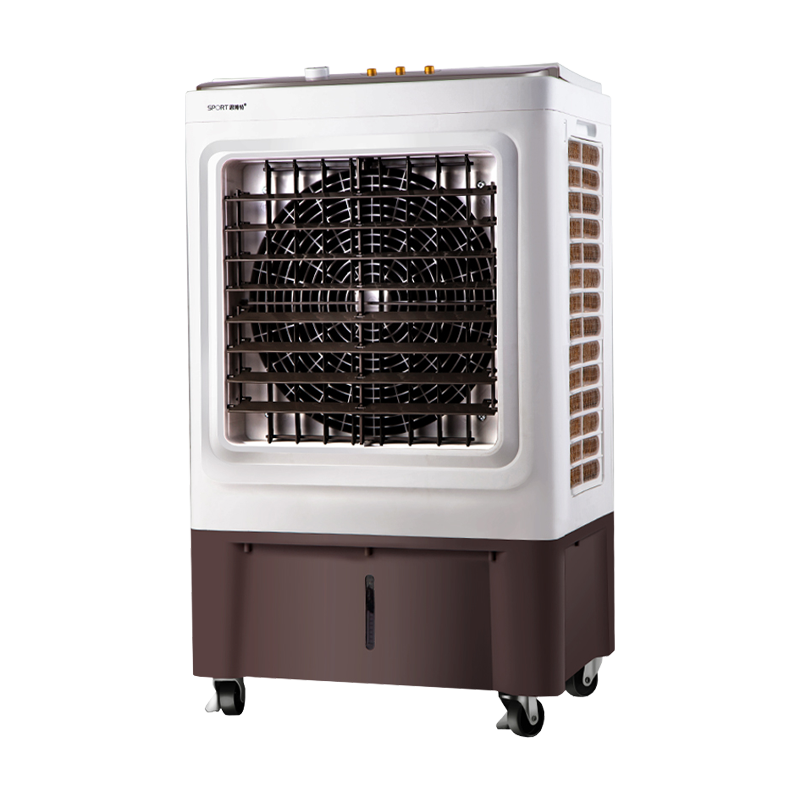
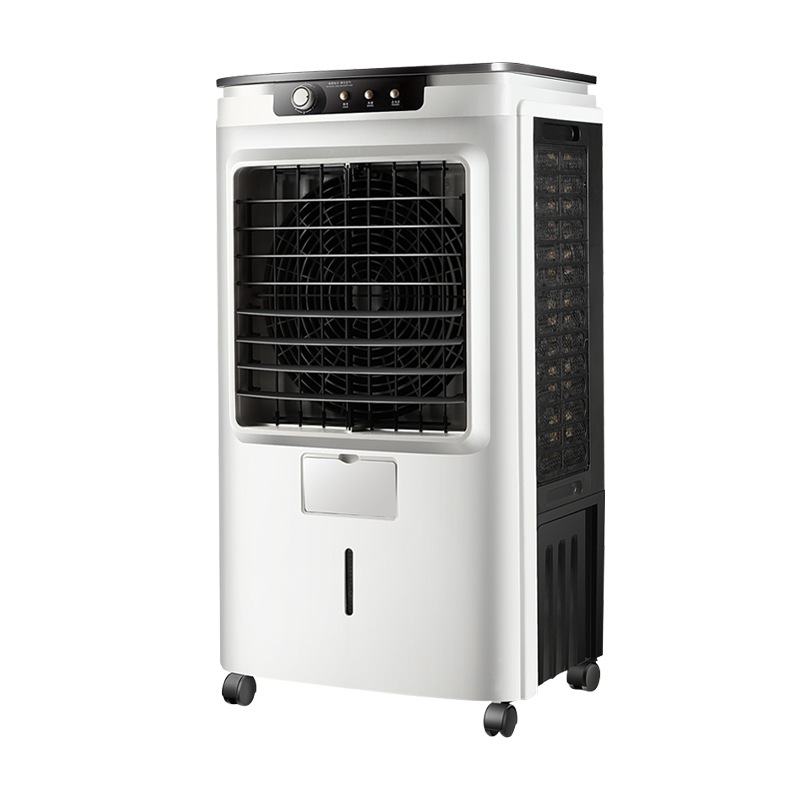
Where a full pad wall does not fit, a packaged evaporative air cooler with its own pad inside does the same job on a smaller footprint.
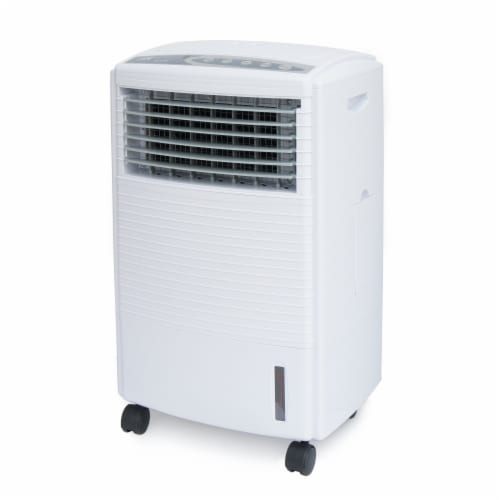 Portable Evaporative Air Cooler with 3D Honeycomb Cooling PadPortable 65W cooler with 10L tank, 3-speed fan, ETL certification, and 3D honeycomb pad for cooling or humidifying smaller spaces.View Product →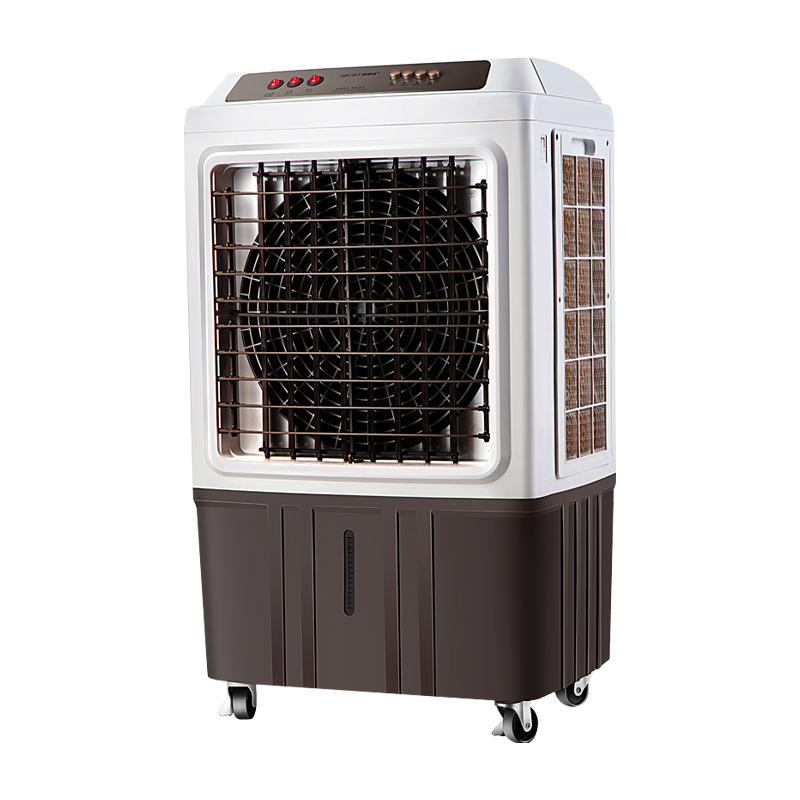

 CONTACT US