
 EN
 English
 中文简体
 عربى
 Tiếng Việt
Content
- 1 Pad water use at a glance
- 2 Why a wet pad uses water even when it recirculates
- 3 What changes water use in a cooling pad
- 4 How to estimate water use for your pad or cooler
- 5 Water use versus cooling output
- 6 Signs the pad is using too much water
- 7 How to reduce water use without losing cooling
- 8 FAQ: evaporative cooling pad water use
- 9 Need help matching pad grade to water use?
A 1 m² face of evaporative cooling pad will typically consume about 0.1–0.3 L/min of water—roughly 6–18 L/h—while it is wet and air is moving through it. A complete portable evaporative cooler often lands at 10–30 L/h, and a large ducted whole-home cooler can use 60–130 L/h. The pad is not the whole story: water leaves as vapor, bleed-off, and drift, so the real figure depends on pad area, airflow, weather, and water-system settings.
Pad water use at a glance
Use the ranges below for early planning, then confirm the exact figure with the cooler or pad specification for the model you are buying.
| Application | Typical water use | What the number includes |
|---|---|---|
| Pad media only, per 1 m² face area | 0.1–0.3 L/min (6–18 L/h) | Evaporation from a wet pad; published pad tests report about 0.19 L/min per m². |
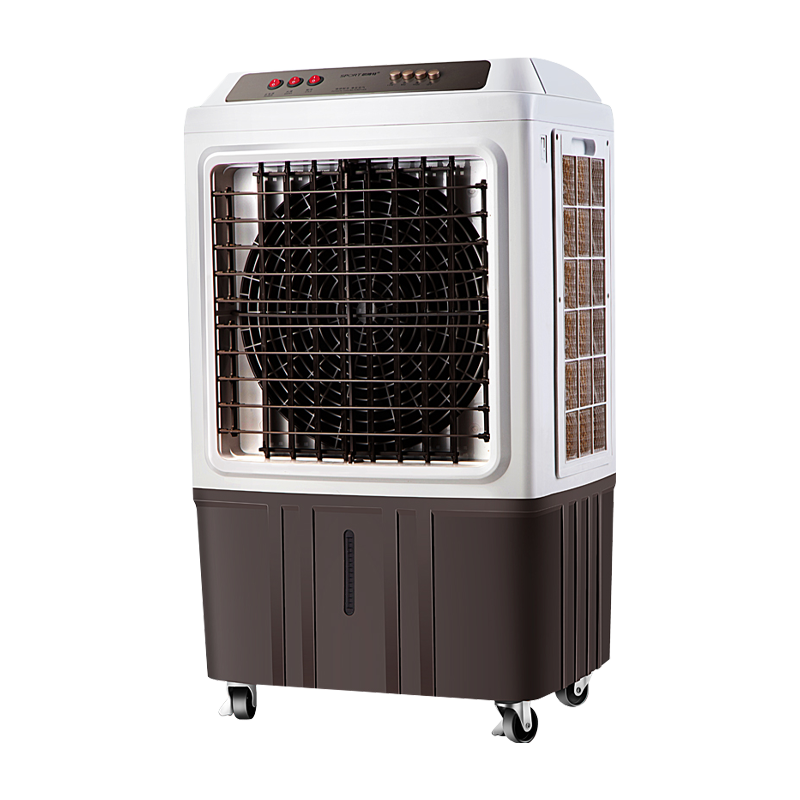
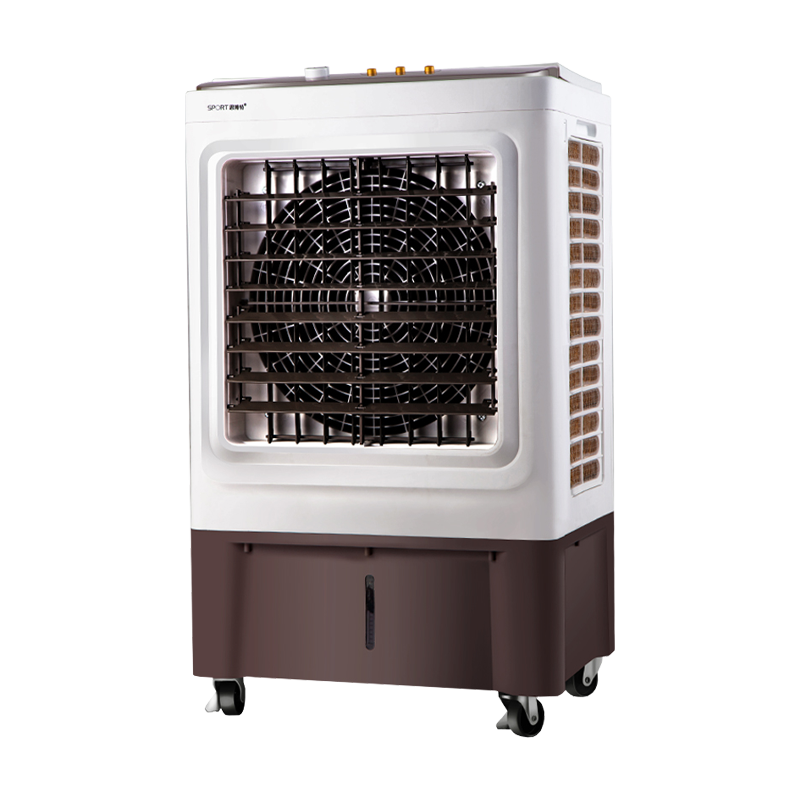
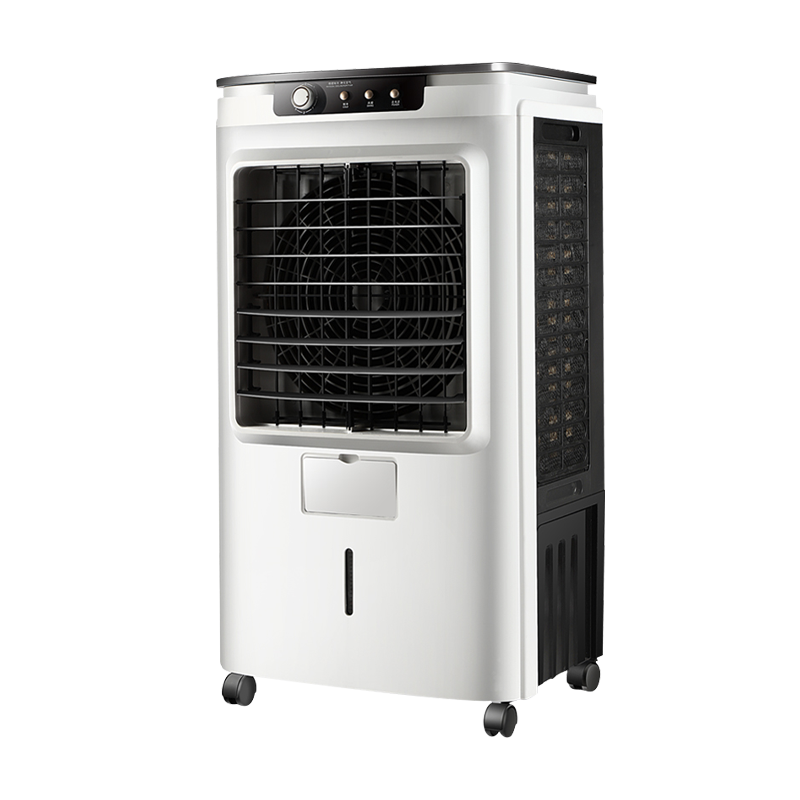
| Small portable cooler (150–450 W) | 10–30 L/h | Pump flow, evaporation, and normal bleed; tank size changes run time, not consumption. |
| Whole-home ducted cooler | 60–130 L/h | High airflow, large pad area, and bleed; hot dry weather pushes use upward. |
| Code-based ceiling | Up to 13.2 L per ton-hour of cooling | 3.5 gal/ton-hour limit in some codes when controls allow maximum water use. |
Why a wet pad uses water even when it recirculates
The pump recirculates most of the water, but recirculation is not a closed loop. Cooling happens because water evaporates into the air stream, and that vapor leaves the space. A smaller amount leaves through bleed-off—water deliberately drained to control mineral buildup—and through drift or carryover. Those losses are the real consumption.
In a well-set system, evaporation is the useful part. Bleed is a water-quality cost, not a cooling cost. If a pad uses far more water than the cooling output suggests, check bleed rate, water distribution, scale, and whether the pump runs when the fan is off.
What changes water use in a cooling pad
Two pads with the same face area can use different amounts of water. The main variables are:
- Pad area and thickness: more wet surface and deeper media expose more surface to the air, which can raise evaporation and improve cooling per pass.
- Air velocity: higher airflow pushes more air through the pad and usually increases evaporation, but past a point it can raise drift and reduce contact time.
- Dry-bulb temperature and humidity: hot, dry air creates the strongest evaporation drive. Humid air lowers water use but also lowers the cooling effect.
- Water quality and bleed: hard water needs more bleed to control scale; too little bleed causes crusting, while too much wastes water.
- Pad geometry: flute angle, corrugation pattern, and thickness affect contact time and water distribution. The honeycomb design and heat dissipation are not cosmetic details.
- Control settings: continuous pump operation, dump cycles, and fan-only modes all change daily consumption.
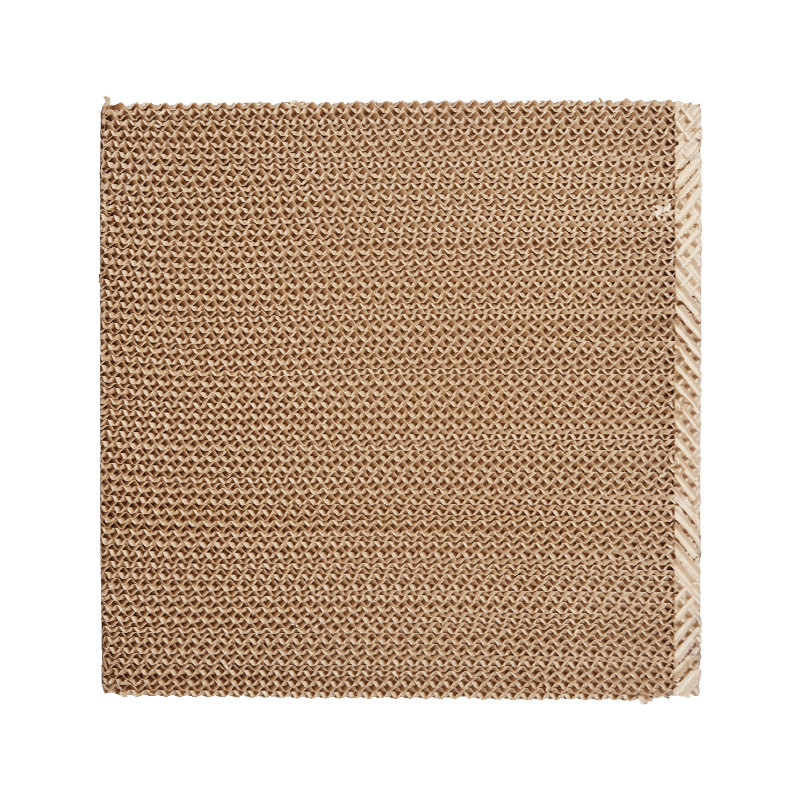 5090 Honeycomb Evaporative Cooling PadA 5090 honeycomb pad with 50–150 mm depth options and 5 mm flute height, suited to matching pad grade to cooler airflow and application needs.View Product →
Pad codes such as 5090, 6090, and 7090 are chosen for different airflow and application targets. Match the grade to the unit, not just the opening size.
How to estimate water use for your pad or cooler
Start with the simplest number you can trust: the manufacturer’s water-use specification for the complete cooler. If that is not available, use the pad face area and the 0.19 L/min per m² midpoint for a rough estimate, then add bleed and check it against tank size and run time.
- Measure the wet pad face area in square metres. Multiply length by height; count only the face that air passes through.
- Multiply by 0.1–0.3 L/min per m². The midpoint, 0.19 L/min per m², is a useful planning figure.
- Convert to L/h by multiplying by 60. For example, 2 m² × 0.19 L/min/m² = 0.38 L/min, or 22.8 L/h.
- Add bleed. In hard water, a bleed rate of roughly 10–20% of evaporation is a common starting point, but follow the cooler maker’s setting.
- Multiply by daily run hours. The 2 m² example with 15% bleed is about 26 L/h, or about 210 L over an 8-hour day.
For a portable cooler, the tank tells you run time, not consumption. A 45 L tank feeding a 15 L/h load lasts about three hours; the same tank at 10 L/h lasts about four and a half hours.
 Blue Air Cooler Evaporative Cooling PadA blue 17-1/4 in. x 12 in. evaporative cooler pad with water absorption and ventilation, relevant when matching replacement media dimensions and layout.View Product →
When replacing media, match height, thickness, flute direction, and water-channel layout. A pad that is close but not correct can reduce airflow or leave dry strips, lowering cooling without lowering water use.
Water use versus cooling output
Water use is only a problem when it is out of proportion to cooling. Evaporating water absorbs a large amount of heat: in theory, 1 m³ of water can provide up to about 695 kWh of cooling as it evaporates. Real systems do not reach that ideal, but the principle matters. A pad that consumes 20 L/h and delivers a useful temperature drop is doing different work from a pad that consumes 20 L/h and mostly wets the floor.
The code-style limit of 13.2 L per ton-hour of cooling is a useful sanity check for large systems. If a unit is far above that, look for excess bleed, overflow, a stuck float valve, or water running through the pad faster than it can evaporate. If it is far below and cooling is poor, look for dry spots, blocked water holes, or a pad that is scaled or collapsed.
Signs the pad is using too much water
- Water runs continuously from the drain or overflow even when the pad looks evenly wet.
- The pad stays soaked and airflow drops, which can cause carryover and wet ductwork.
- White scale, algae, or slime appears within days; this usually means bleed or water treatment is wrong.
- The pump runs when the fan is off, or the system dumps and refills more often than the maker specifies.
- Water use rises sharply after a pad change, often because the new pad is too dense or the distribution holes do not match.
How to reduce water use without losing cooling
First, set bleed correctly. Too little bleed saves water today and costs cooling later through scale. Too much bleed keeps the pad clean but sends usable water down the drain. Use the maker’s bleed setting, then adjust for local water hardness and observed scaling.
- Keep the pad clean and free of dust, leaves, and scale so water spreads evenly.
- Use a pre-filter or screen on the water supply if debris is a recurring problem.
- Run the pump only while the fan is running, unless the control sequence requires pre-wetting.
- Repair float valves, pumps, and distribution pipes that overflow or leak.
- Match pad thickness and flute pattern to the airflow; a denser pad is not automatically better.
- In greenhouses and poultry houses, use the correct pad grade and height so the system can run at a lower face velocity without drying out.
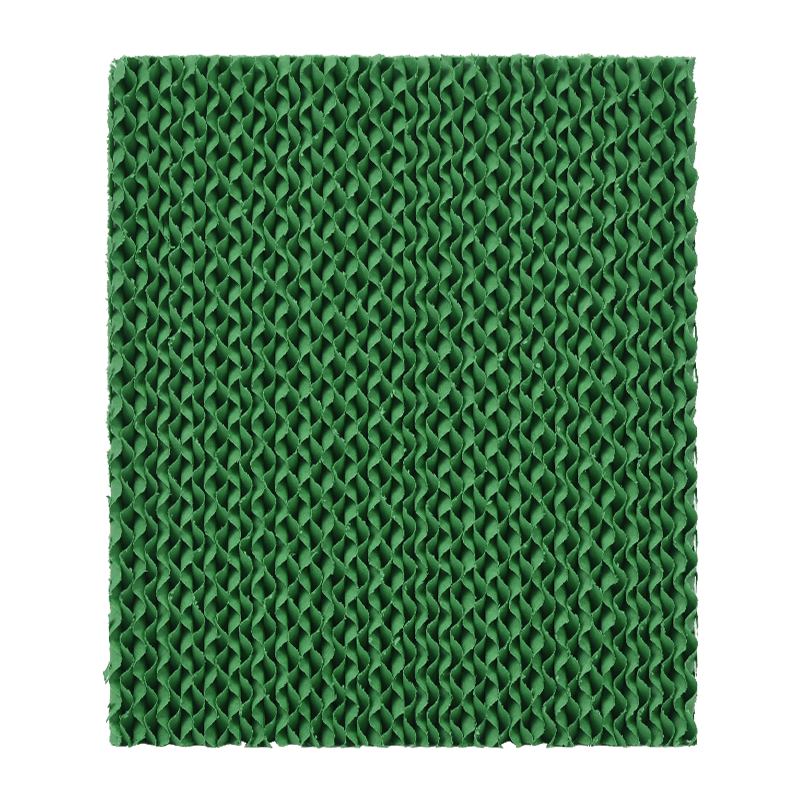 7090 Greenhouse Honeycomb Evaporative Cooling PadA 7090 greenhouse pad with 100–300 mm depth options and 7 mm flute height, relevant where deeper media and even wetting must suit house design.View Product →
For greenhouse or livestock installations, the 7090 pad format is one option where greater pad depth and a suitable flute pattern are needed to combine airflow with even wetting. The right choice still depends on house design, fan capacity, and water quality.
FAQ: evaporative cooling pad water use
Does an evaporative cooling pad use water all the time?
Only while the pump is wetting the pad and air is moving. When the system is off, the pad should not consume water, but standing water in the sump can still cause odor and scale if it is not drained or treated.
How much water does a 5090 pad use per hour?
It depends on face area and airflow. As a planning figure, 1 m² of pad face at 0.19 L/min uses about 11.4 L/h. A larger 5090 installation can use far more, so calculate from actual pad face area and add bleed.
Is water use higher in dry or humid weather?
Dry weather usually increases evaporation and water use because dry air can take up more moisture. Humid weather reduces evaporation and water use, but it also reduces the cooling effect.
Will a bigger water tank reduce consumption?
No. A bigger tank extends run time between refills. Consumption is set by evaporation, bleed, drift, and run hours, not by tank capacity.
How often should the system dump or bleed water?
Follow the cooler manufacturer’s setting. Continuous bleed is used to control mineral concentration, while periodic dump cycles are used in some smaller units. Hard water usually needs more bleed than soft water.
Need help matching pad grade to water use?
If you are specifying a pad for a portable cooler, greenhouse, poultry house, or industrial ventilation system, check the water-use target against pad area, airflow, water hardness, and bleed control. Share your pad size, airflow, and water conditions, and we can help narrow the pad grade and configuration. Contact us with your specification.

 CONTACT US