
 EN
EN  English
 中文简体
中文简体 عربى
عربى Tiếng Việt
Content
How Air Coolers Work: Evaporative Cooling Explained
An air cooler operates on the principle of evaporative cooling, a natural process that lowers air temperature by converting liquid water into water vapor. Unlike air conditioners that use refrigerants and compressors to cool air, air coolers are energy-efficient devices that rely solely on water evaporation and airflow circulation.
The Core Mechanism
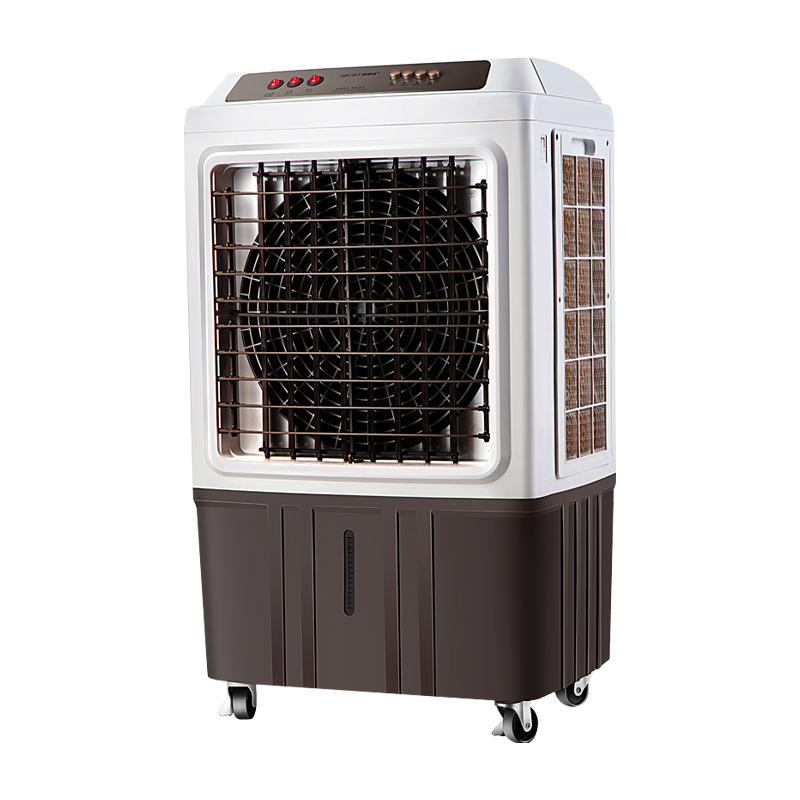
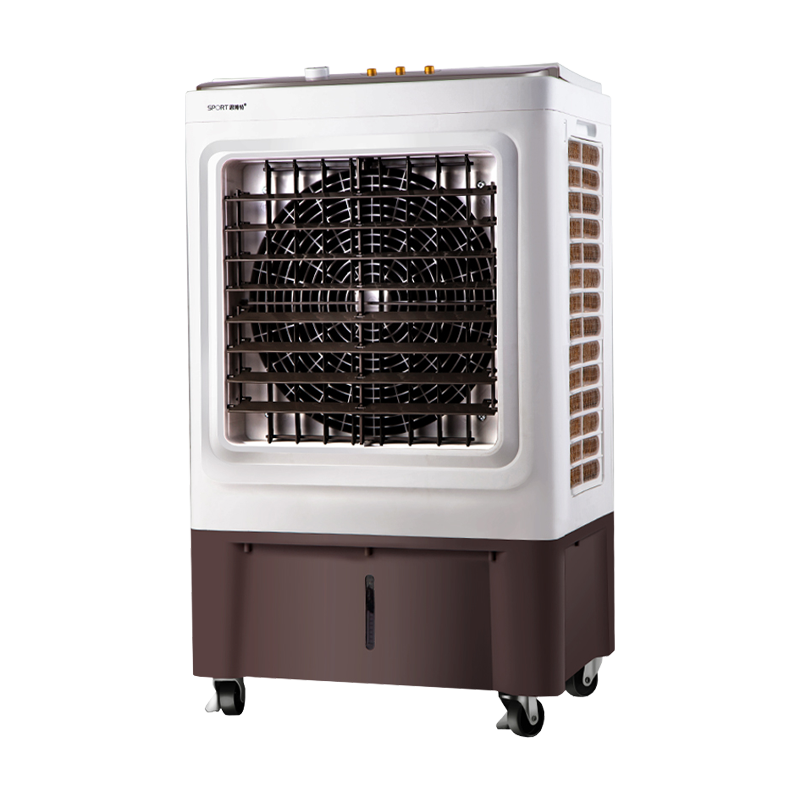
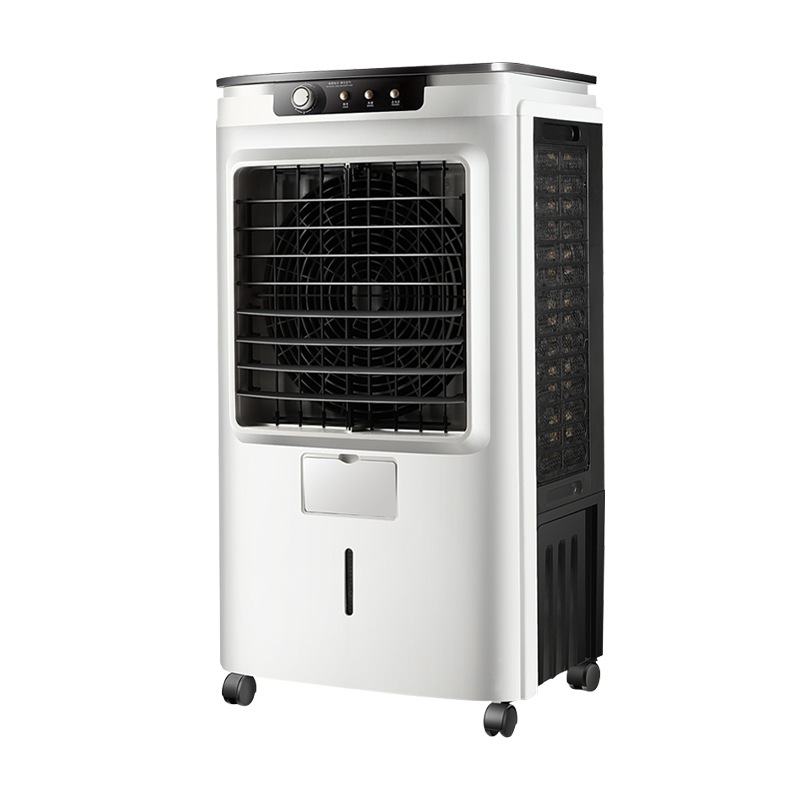
Inside every air cooler is a water tank, a pump, and cooling pads (typically made of cellulose or honeycomb material). The pump circulates water from the tank to saturate these pads. A fan then draws warm ambient air through the wet pads. As the hot air passes through, water molecules on the pad surface absorb heat from the air and evaporate. This phase change removes thermal energy from the air stream, reducing its temperature by 5°C to 15°C depending on humidity levels and airflow speed.
Key Components and Their Functions
- Water Tank: Stores the water supply; larger tanks (15-50 liters) allow longer continuous operation without refilling.
- Cooling Pads: Provide a large surface area for water-air contact; honeycomb designs are more durable and efficient than wood wool.
- Water Pump: Ensures consistent water flow to keep pads saturated; some models include adjustable pump speeds.
- Fan/Blower: Moves air through the pads and distributes cooled air into the room; axial fans are quieter, while blowers provide stronger airflow.
- Air Filter: Prevents dust and debris from entering the cooling pads, maintaining efficiency.
Performance Factors
Air coolers perform best in dry climates where relative humidity is below 60%. In humid conditions, the air already holds significant moisture, reducing evaporation rates and cooling efficiency. For optimal results, place the unit near an open window or door to allow cross-ventilation and prevent humidity buildup indoors.
Main Types of Air Purifiers and Their Technologies
Air purifiers use different filtration and purification technologies to remove airborne contaminants. Understanding these types helps you select a device that matches your specific indoor air quality needs.
HEPA Filter Air Purifiers
HEPA (High Efficiency Particulate Air) purifiers are the most common and trusted type. They use dense fiber filters to physically trap airborne particles. True HEPA filters must meet strict standards: they capture 99.97% of particles as small as 0.3 microns in diameter, which is considered the Most Penetrating Particle Size (MPPS) [^500^]. These units excel at removing dust, pollen, pet dander, mold spores, and smoke particles. However, HEPA filters alone cannot remove gases, odors, or volatile organic compounds (VOCs) [^500^].
Activated Carbon Filter Purifiers
These purifiers use activated carbon or charcoal filters with millions of tiny pores that adsorb gas molecules and odors [^493^]. They are specifically designed to tackle smells from cooking, tobacco smoke, pet odors, and chemical vapors from paints or cleaning products. Activated carbon filters work through a process called adsorption, where gas molecules stick to the carbon surface. For comprehensive purification, activated carbon is almost always paired with HEPA filtration, as carbon alone cannot capture solid particles [^493^].
UV-C Light Purifiers
UV-C purifiers use ultraviolet light to inactivate microorganisms such as bacteria, viruses, and mold spores by damaging their DNA [^493^]. While effective for germ control, UV-C technology does not remove dust, allergens, or physical particles from the air. It is typically used as a supplementary feature in combination with HEPA and carbon filtration systems.
Electrostatic and Ionizer Purifiers
These devices charge airborne particles electrically and collect them on oppositely charged plates or surfaces. Some models release negative ions into the air, causing particles to clump together and fall out of the air. While they can capture fine particles and feature washable collection plates, they may produce trace amounts of ozone as a byproduct, which can be a concern for respiratory health [^493^].
Smart and Multi-Stage Purifiers
Modern smart purifiers integrate multiple technologies—HEPA, activated carbon, UV-C, and air quality sensors—into one unit [^493^]. They use real-time sensors to detect pollutant levels and automatically adjust fan speeds. WiFi connectivity allows remote monitoring and control via smartphone apps, making them ideal for offices, schools, and large living spaces.
What Is a HEPA Filter and Why Does It Matter?
A HEPA filter is a mechanical air filter constructed from densely packed layers of glass fibers arranged in a pleated formation. To qualify as True HEPA, a filter must remove 99.97% of particles measuring 0.3 microns or larger [^500^]. Some advanced H13 filters can even capture particles as small as 0.1 microns with 99.9% efficiency [^503^].
Filtration Mechanisms
HEPA filters employ three primary mechanisms to trap particles:
- Interception: Larger particles traveling with the airflow collide with filter fibers and stick to them.
- Impaction: Heavier particles cannot navigate the air stream's twists and crash directly into fibers.
- Diffusion: Ultra-small particles move randomly (Brownian motion) and collide with fibers, getting trapped.
What HEPA Filters Capture
True HEPA filters effectively capture dust mites, pollen grains, pet dander, mold spores, smoke particles, and even some bacteria and viruses [^500^]. The Centers for Disease Control and Prevention (CDC) specifically recommends HEPA filtration for higher-risk areas such as medical buildings and doctor's offices [^501^]. Be cautious of products labeled "HEPA-type" or "HEPA-style," as these do not meet the same rigorous standards and may only capture 85-90% of particles [^501^].
The Function of Activated Carbon Filters
Activated carbon filters serve a complementary but distinct role compared to HEPA filters. While HEPA captures solid particles, activated carbon specializes in removing gaseous pollutants, odors, and volatile organic compounds (VOCs) [^493^].
How Activated Carbon Works
Activated carbon is processed to create an extremely porous structure with millions of microscopic pores. One gram of activated carbon can have a surface area of 500 to 1,500 square meters. This vast surface area allows carbon to adsorb (not absorb) gas molecules—meaning pollutants chemically bond to the carbon surface rather than being soaked up like a sponge [^493^].
Common Applications
Activated carbon filters are essential for removing cooking odors, cigarette smoke smells, pet odors, chemical fumes from paints and solvents, and VOCs emitted by furniture and flooring [^493^]. Many modern air purifiers use honeycomb-structured activated carbon filters to maximize contact time between air and carbon, improving adsorption efficiency [^497^].
Limitations and Maintenance
Once the carbon surface becomes saturated with adsorbed molecules, the filter loses effectiveness and must be replaced. Carbon filters cannot remove particulate matter, which is why they are almost always combined with HEPA filters in quality air purifiers for comprehensive protection [^499^].
How to Choose an Air Purifier Suitable for Your Room
Selecting the right air purifier requires matching the device's capacity to your room size, understanding your specific pollution concerns, and evaluating practical features like noise and maintenance costs.
Match CADR to Room Size
The most critical specification is the Clean Air Delivery Rate (CADR), which measures how quickly the purifier can filter specific pollutants (dust, pollen, smoke) in cubic feet per minute (CFM) or cubic meters per hour. For effective purification, choose a purifier with a CADR rating that matches or exceeds your room's square footage [^495^]. A general rule: the CADR should be at least two-thirds of the room's area in square feet. For example, a 300 sq ft room needs a CADR of at least 200.
| Room Size (sq ft) | Minimum CADR (Smoke/Dust/Pollen) | Suggested Purifier Type |
|---|---|---|
| 100 - 150 | 100+ | Desktop or small room unit |
| 150 - 300 | 200+ | Medium room purifier (HEPA + Carbon) |
| 300 - 500 | 300+ | Large room or whole-house unit |
| 500+ | 400+ | High-capacity or multiple units |
Identify Your Primary Concerns
If you suffer from allergies or asthma, prioritize a True HEPA filter [^498^]. For homes with smokers, pets, or strong cooking odors, ensure the purifier includes a substantial activated carbon filter. If germ control is a priority, look for units with UV-C light or plasma filtration as a secondary stage [^499^].
Consider Noise Levels
For bedrooms or study areas, select models with decibel (dB) ratings of 50 dB or lower on their lowest settings [^495^]. Many manufacturers provide sleep modes that dim lights and reduce fan speed for quiet nighttime operation.
Evaluate Maintenance and Operating Costs
Factor in the cost and frequency of filter replacements. HEPA filters typically need replacement every 6 to 12 months, while activated carbon filters may require changing every 3 to 6 months depending on usage and pollution levels [^500^]. Some advanced models feature filter change indicators to remind you when maintenance is due [^504^].
Placement for Maximum Efficiency
Position the purifier near your breathing zone—such as a nightstand in the bedroom—while keeping it at least 1-2 feet away from walls and furniture to ensure unrestricted airflow [^496^]. Avoid placing units directly next to windows or doors where outdoor air can dilute the purification effect.
FAQ About Air Coolers
Can air coolers work in humid climates?
Air coolers are less effective in high-humidity environments (above 60% relative humidity) because the air already holds significant moisture, slowing evaporation. In such climates, the temperature drop may be minimal, making air conditioners a better choice.
How much water does an air cooler use?
Water consumption varies by model and usage, but typical residential air coolers use between 3 to 15 liters of water per hour. Larger industrial units may consume significantly more. Regular refilling is necessary for continuous operation.
Do air coolers purify the air?
Basic air coolers provide minimal air purification through their dust filters, but they are not designed to remove allergens, bacteria, or fine particles. For air purification, a dedicated HEPA air purifier is required.
Are air coolers energy-efficient compared to air conditioners?
Yes. Air coolers consume 75% to 90% less electricity than conventional air conditioners because they lack compressors and refrigerant systems. A typical air cooler uses 100-200 watts, while an AC unit uses 1,000-2,500 watts.
How often should cooling pads be replaced?
Cooling pads should be inspected every season and replaced every 1 to 3 years depending on water quality and usage frequency. Hard water can cause mineral buildup, reducing pad efficiency and lifespan.
Can I add ice to the water tank for better cooling?
Adding ice can provide a temporary boost in cooling performance by lowering the water temperature, but the effect is modest and short-lived. Some modern coolers include dedicated ice compartments for this purpose.

 CONTACT US