
 EN
EN  English
 中文简体
中文简体 عربى
عربى Tiếng Việt
Content
- 1 How the Two Names Diverged Across Markets
- 2 Core Components Shared by Every Evaporative Cooling Unit
- 3 Direct Versus Indirect Systems: A Distinction That Matters More Than the Name
- 4 Evaporative Air Cooler Product Range
- 5 Climate Conditions That Determine Real-World Performance
- 6 Sizing for Farms, Workshops and Factory Ventilation
- 7 Maintenance, Pad Life and Water Quality
- 8 Swamp Cooler or Evaporative Air Cooler: How to Choose the Right Term and Product
Swamp coolers and evaporative air coolers are the same core technology described with two different names. "Swamp cooler" is the informal, mostly North American term, while "evaporative air cooler" is the technical and commercial name used across manufacturing catalogs, greenhouses, and industrial ventilation projects worldwide. Both rely on water passing across a wetted pad while a fan pulls warm air through it, lowering the air temperature through evaporation rather than mechanical refrigeration.
How the Two Names Diverged Across Markets
The nickname "swamp cooler" comes from the humid, musty smell early units produced when pads were poorly maintained or made from straw and burlap. As the equipment moved from backyard use into farms, workshops and factories, manufacturers began marketing the same devices as evaporative air coolers or environmentally friendly air conditioning cooling units, since the term sounded more suited to commercial specification sheets and export documentation. In China, Southeast Asia, the Middle East and parts of Europe, "evaporative air cooler" is almost always the term used in product listings, while residential users in the United States and Australia still commonly say swamp cooler for the exact same appliance.
Regardless of what a supplier calls the product, the internal architecture barely changes. A water reservoir feeds a pump, the pump wets a cellulose or honeycomb paper pad, and a fan draws air through the moistened surface before releasing cooled air into the room or building. The table below lists the shared components found in nearly every unit on the market.
| Component | Function | Common Material |
| Cooling pad | Absorbs and holds water for evaporation | Honeycomb paper, cellulose fiber |
| Water pump | Circulates water evenly across the pad | Submersible plastic pump |
| Fan or blower | Pulls warm air through the wet pad | Axial or centrifugal blade |
| Water tank | Stores water for extended runtime | 30 to 75 liter reservoirs on most portable units |
| Control panel | Adjusts fan speed, timers, remote functions | Mechanical dial or digital remote |
Direct Versus Indirect Systems: A Distinction That Matters More Than the Name
The label swamp cooler or evaporative air cooler tells you nothing about how the airflow is engineered, and that distinction matters more than the terminology itself.
- Direct evaporative coolers pass air straight through the wet pad, cooling and humidifying it at the same time. This is the design used in almost all portable and window swamp coolers, and it works as both a humidification curtain and a cooling stage in one pass.
- Indirect evaporative coolers use a heat exchanger so the cooled, moist air never mixes with the air delivered to the room. These units are less common in residential settings but appear in some industrial ventilation and workshop cooling systems where humidity control is a priority.
Evaporative Air Cooler Product Range
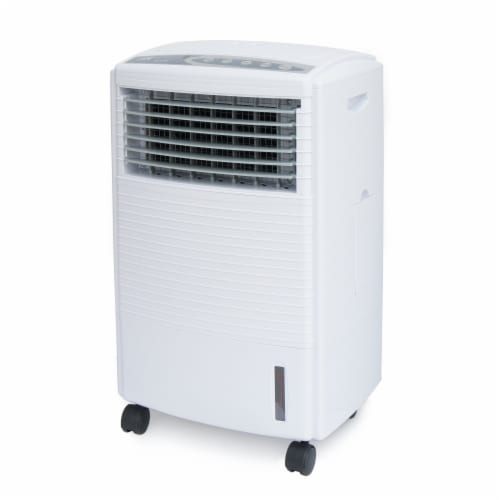
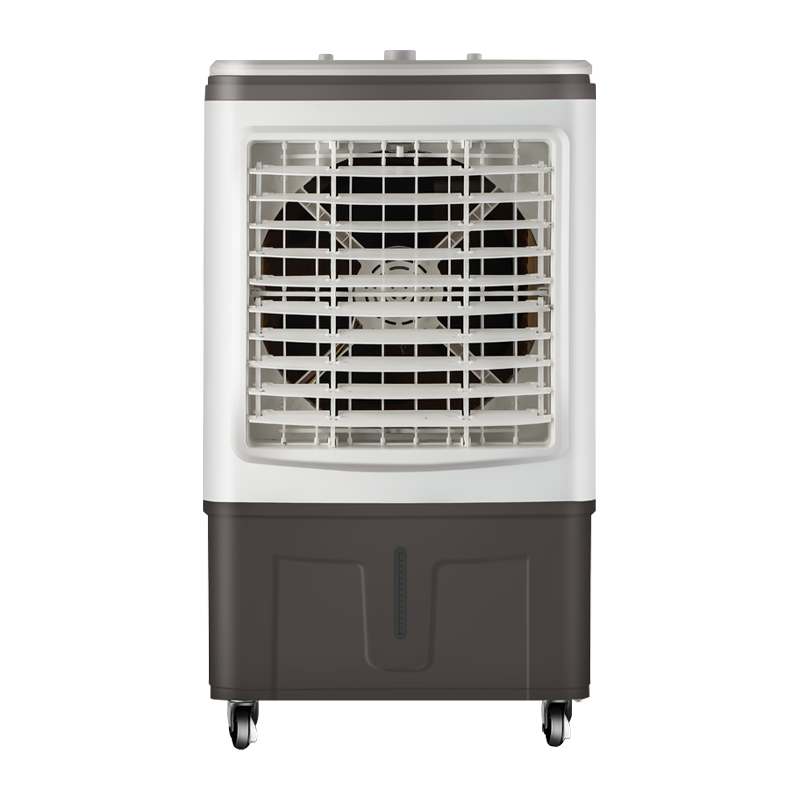
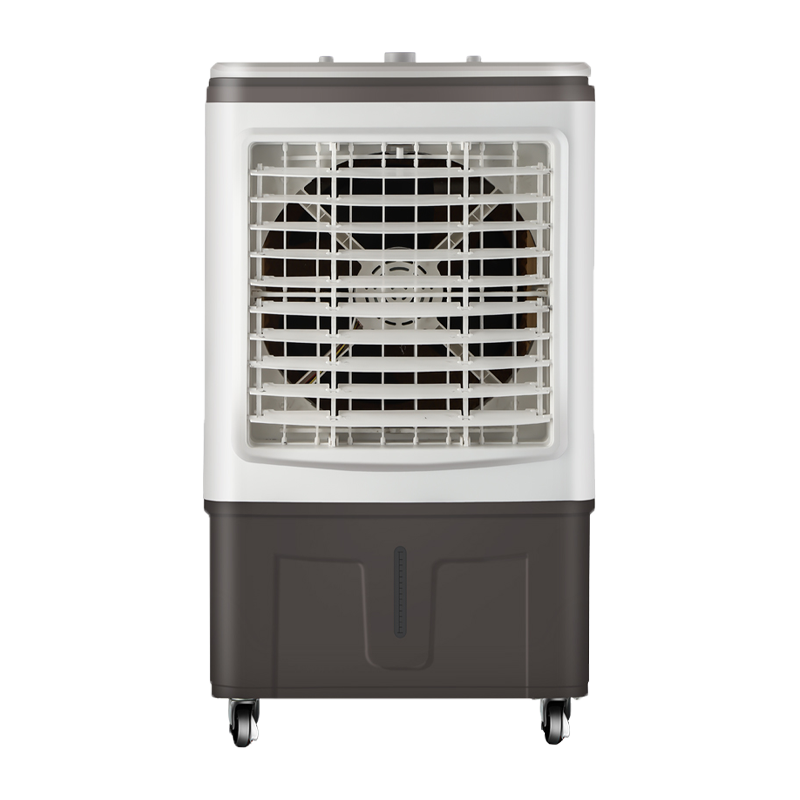
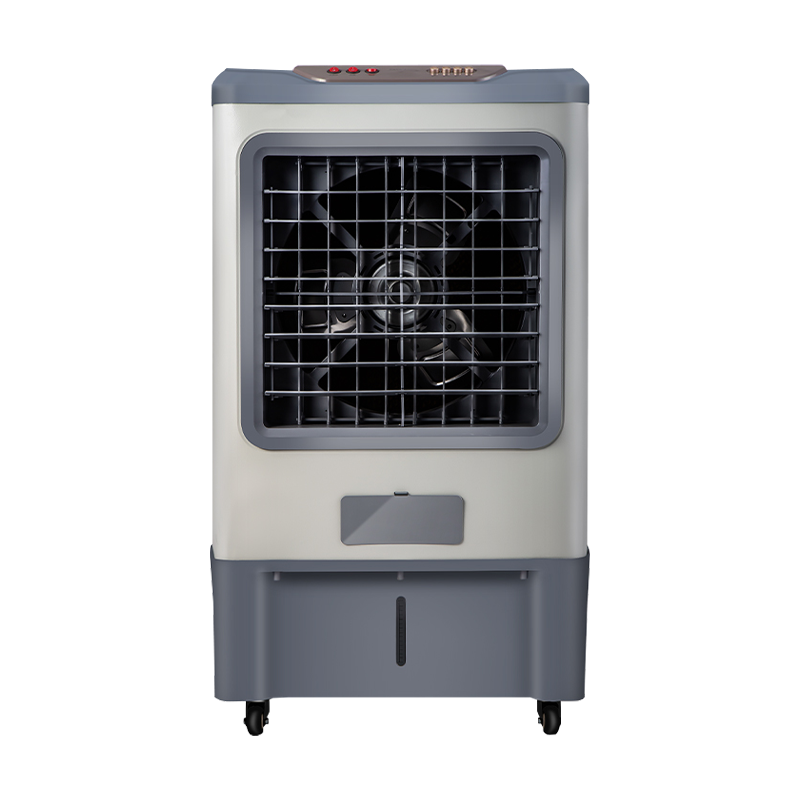
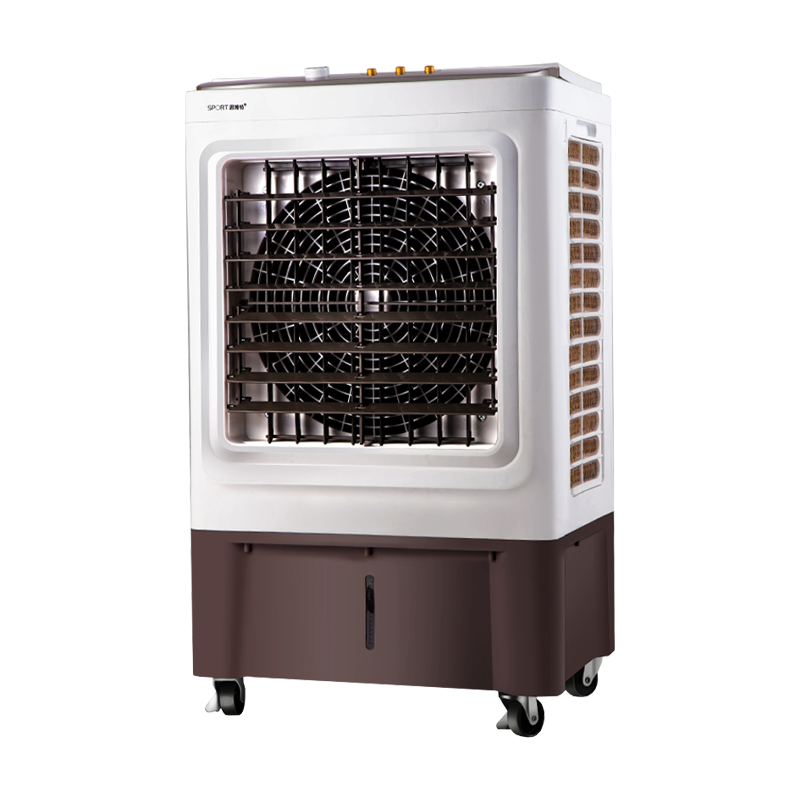
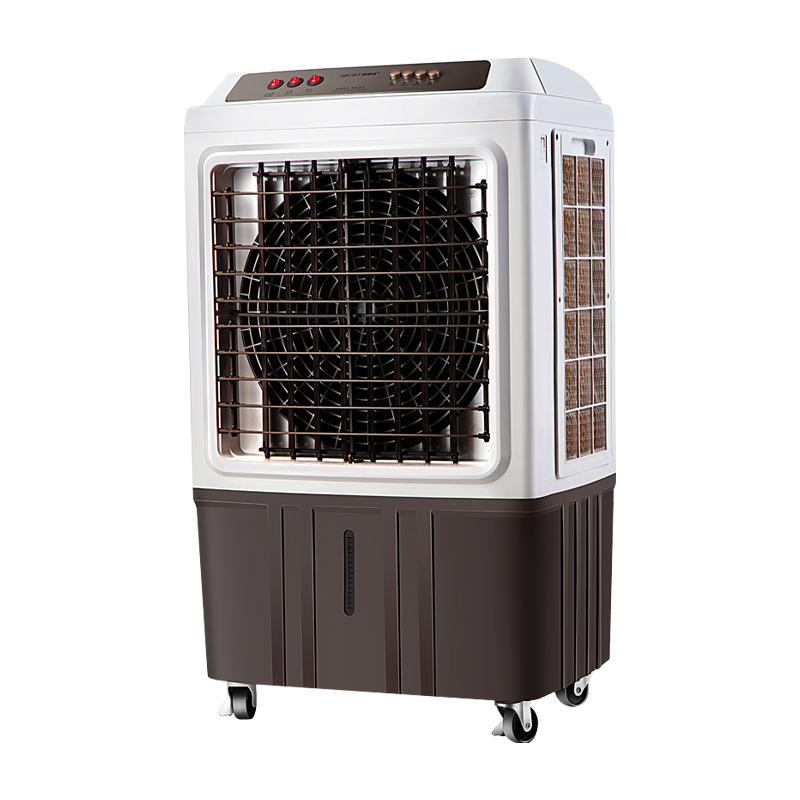
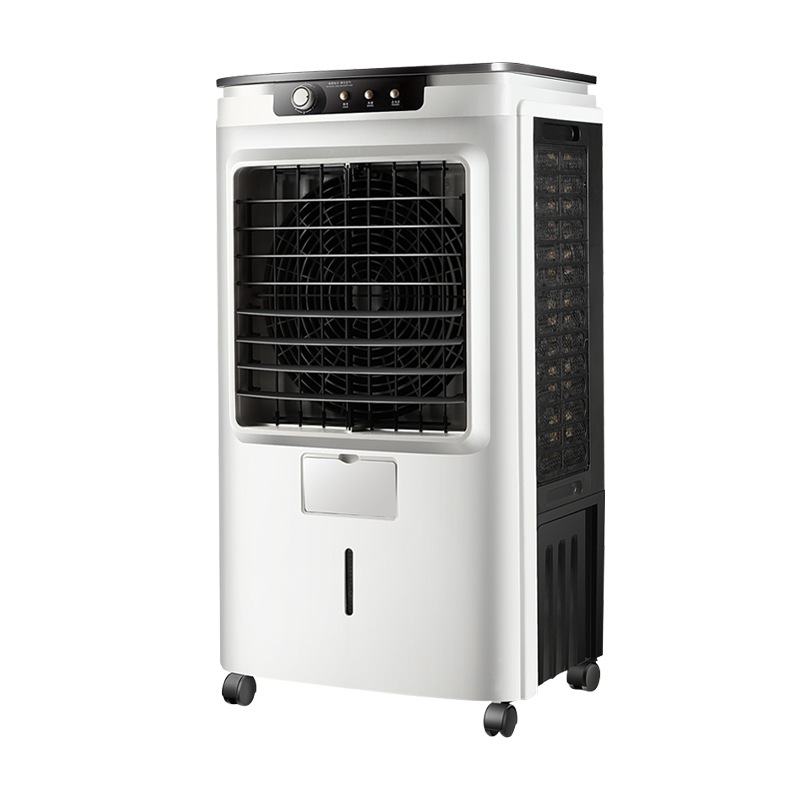
The units below show how the same evaporative technology scales from compact portable coolers to higher-capacity chillers built for farm ventilation and cooling, workshop cooling, and factory ventilation projects.
Climate Conditions That Determine Real-World Performance
Naming aside, both swamp coolers and evaporative air coolers depend on the same physics, which means the same climate rules apply to every unit. Evaporative cooling performs best when relative humidity stays under about 60 percent, since drier air can absorb more moisture and drop in temperature more sharply. In arid and semi-arid regions where summer temperatures regularly pass 35 degrees Celsius, a well-sized unit can lower supply air temperature by 8 to 15 degrees Celsius. In humid coastal climates, the same equipment struggles because the air is already close to saturation, so the water curtain cannot evaporate efficiently and cooling output drops sharply.
| Relative Humidity | Expected Cooling Effect | Best Use Case |
| Below 30 percent | Strong, fast temperature drop | Greenhouse cooling, open workshops |
| 30 to 60 percent | Moderate, reliable cooling | Homes, offices, factory floors |
| Above 60 percent | Weak, may only add humidity | Not recommended without indirect design |
Sizing for Farms, Workshops and Factory Ventilation
Once a unit moves beyond home use, capacity is usually described in tank size and motor power rather than in brand terminology. A 45-liter tank paired with a 250 to 450 watt motor is common for workshop cooling and small commercial spaces, giving continuous runtime through a full shift without refilling. Larger installations, such as farm ventilation and cooling systems for livestock housing or plant nurseries, typically link several evaporative units to a shared wet curtain wall built from honeycomb paper panels, so an entire building draws cooled air from one continuous evaporative surface instead of many separate small coolers.
- Small rooms and offices: 25 to 30 liter tank, single-speed or three-speed fan
- Workshops and retail spaces: 45 liter tank, 250 to 450 watt motor, remote control
- Greenhouses and livestock barns: wet curtain wall panels combined with negative pressure fans
Maintenance, Pad Life and Water Quality
Whether the label on the box says swamp cooler or industrial humidifier, upkeep follows the same schedule. Cooling pads should be rinsed regularly to prevent mineral scale, and most standard cellulose pads need replacement every one to two years, while industrial-grade honeycomb paper pads with reinforced coating can last three to five years when the water supply is treated. Hard water accelerates mineral buildup on the wet curtain surface, which reduces airflow and lowers the evaporation rate, so many commercial operators use pretreated or softened water to extend pad life and keep energy efficiency stable.
Swamp Cooler or Evaporative Air Cooler: How to Choose the Right Term and Product
If a listing uses the word swamp cooler, it is almost always describing a small direct evaporative unit meant for a single room. If a listing uses evaporative air cooler, industrial humidifier, or environmentally friendly air conditioning cooling, it usually points to the same underlying technology scaled for commercial or agricultural use, often built around a wet curtain paper manufacturer's honeycomb pad system. The comparison below summarizes what buyers should actually check instead of relying on the name alone.
| What to Check | Why It Matters |
| Tank capacity | Determines continuous runtime before refilling |
| Pad material | Honeycomb paper generally outlasts basic cellulose media |
| Motor power | Higher wattage supports larger spaces and faster rapid cooling |
| Local humidity | Sets the realistic upper limit of cooling performance |

 CONTACT US