
 EN
EN  English
 中文简体
中文简体 عربى
عربى Tiếng Việt
Content
Cellulose cooling pads and plastic cooling pads differ mainly in three ways: cooling efficiency, service life and upfront cost. Cellulose pads, made from treated honeycomb paper, absorb water faster and cool air by roughly 70 to 85 percent of the wet-bulb depression, making them the preferred choice for greenhouse cooling, farm ventilation and factory ventilation. Plastic pads, usually built from polypropylene or PVC mesh, absorb less water and typically deliver only 50 to 65 percent cooling efficiency, but they resist mold, algae and mineral corrosion for a longer period. For most industrial humidifier systems and workshop cooling projects, cellulose honeycomb paper remains the standard, while plastic pads are chosen mainly for harsh water conditions or long-term outdoor exposure.
Material Composition and Manufacturing
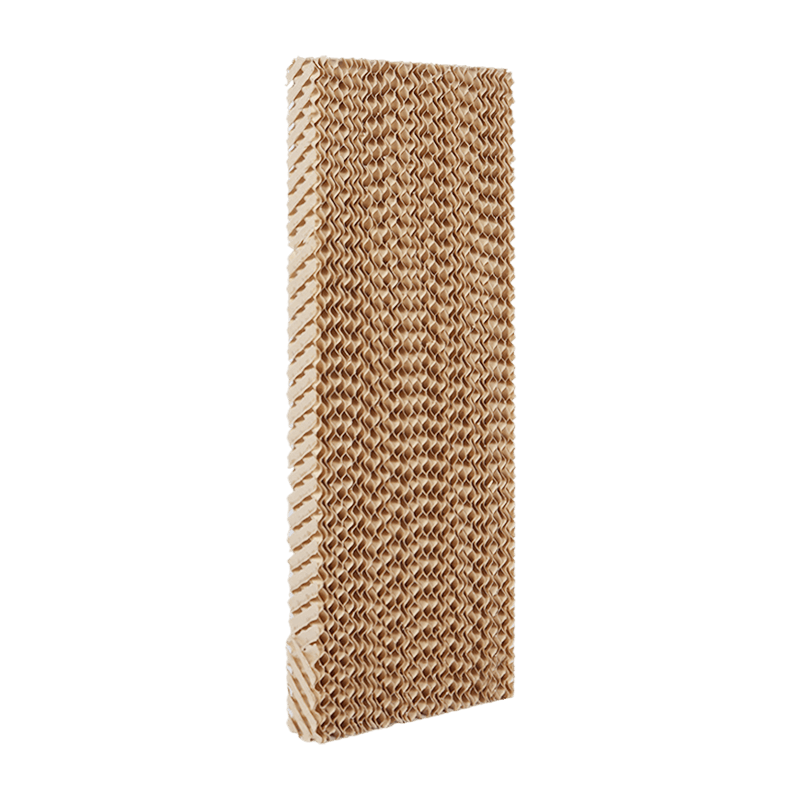
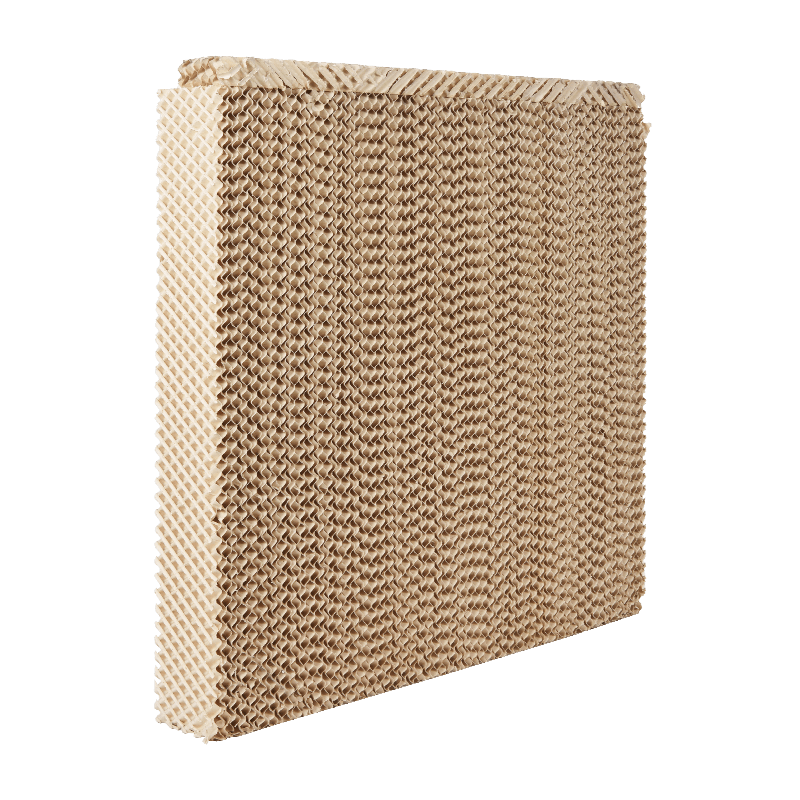
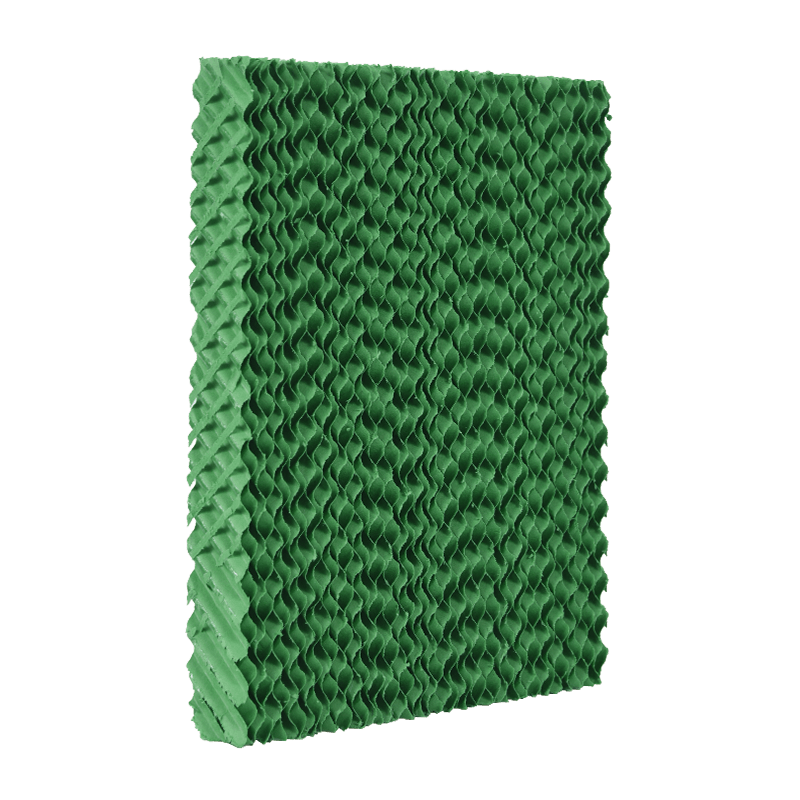
Cellulose cooling pads are produced from specially treated kraft paper that is corrugated into a honeycomb structure and glued in an alternating pattern to form air channels. A wet curtain paper manufacturer typically treats each sheet with hardeners, anti-fungal agents and water-absorption chemicals so the paper resists disintegration even after months of continuous soaking. This treated evaporative cooling paper is the core material behind most water curtain and wet curtain wall systems used in agricultural and industrial cooling.
Plastic cooling pads, by contrast, are extruded or molded from polypropylene, PVC or similar synthetic fibers formed into a corrugated or mesh structure. Because plastic does not absorb water into its own fiber structure, water simply flows across the surface rather than being drawn into the material. This changes how the pad interacts with airflow and directly affects cooling output.
Cooling Performance Comparison
The difference in water absorption behavior is the single biggest factor separating the two materials. Cellulose fibers pull water in through capillary action, creating a consistently wet surface across the entire pad thickness. Plastic surfaces rely on gravity-fed water films, which tend to be thinner and less uniform, especially near the top of taller pads.
| Comparison Factor | Cellulose Honeycomb Pads | Plastic Cooling Pads |
| Saturation Efficiency | 70 to 85 percent | 50 to 65 percent |
| Water Absorption | High, drawn into fiber | Low, surface film only |
| Typical Lifespan | 1 to 3 seasons | 3 to 6 seasons |
| Resistance to Mineral Buildup | Moderate, needs flushing | High |
| Relative Cost per Unit Area | Lower initial cost | Higher initial cost |
For a typical greenhouse cooling installation running at 35 degrees Celsius with 30 percent relative humidity, a 150 mm thick cellulose pad can drop incoming air temperature by roughly 8 to 10 degrees, while a plastic pad of the same thickness under identical conditions usually manages 5 to 7 degrees. This gap is one reason cellulose remains dominant in poultry housing, textile workshops and other spaces that depend on rapid cooling during peak heat hours.
Airflow Resistance and Fan Load
Honeycomb paper pads are engineered with a 45/45 degree flute angle that channels air in a straight, low-resistance path. This design keeps static pressure low, which matters directly to fan energy consumption. Plastic mesh pads, especially thicker ones designed for durability, often create more turbulent airflow, forcing fans to work harder to push the same volume of air. In large-scale factory ventilation systems, this difference can add measurably to electricity costs over a cooling season.
Featured Cooling Pad Products
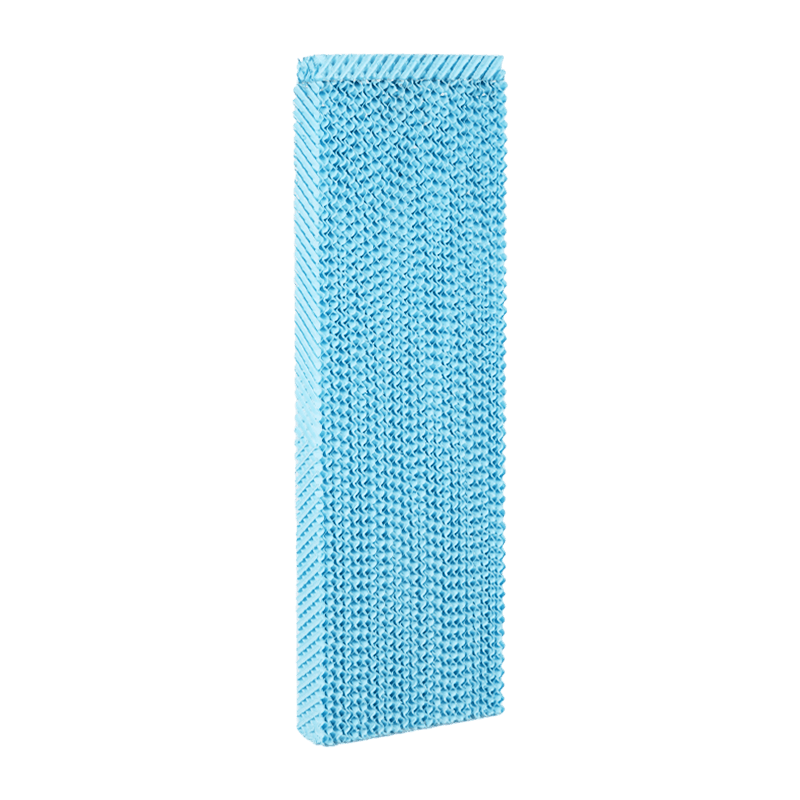
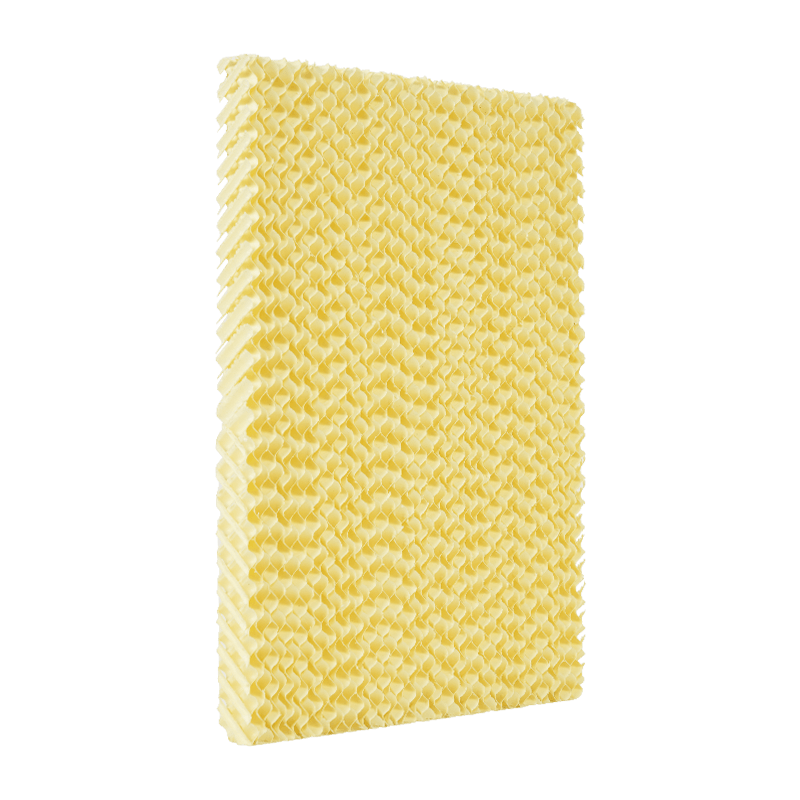
Below is a selection of evaporative cooling paper and honeycomb pads commonly used across humidification curtain systems, greenhouse cooling walls and industrial ventilation projects. Each pad is built for a specific flute size and application.
Durability, Water Quality and Maintenance
Water hardness is the deciding factor in how long either material actually lasts. In regions with hard water, mineral deposits accumulate on both cellulose and plastic surfaces, but cellulose fiber traps these deposits internally, which gradually stiffens the pad and reduces absorption. Plastic surfaces shed minerals more easily during rinsing, which is why some homemade wet curtain paper setups in low-budget farm ventilation and cooling projects eventually switch to plastic once water quality becomes a persistent problem.
- Flush cellulose pads with clean water every two to four weeks during peak season to prevent salt crystallization.
- Inspect plastic pads for algae film buildup, which can still occur even though the material itself resists rot.
- Replace cellulose pads once water absorption visibly slows or the honeycomb structure begins to sag.
- Check frame seals on both pad types, since gaps around the wet curtain wall reduce overall cooling capacity regardless of material.
Cost Over the System Lifetime
Cellulose pads cost less to purchase but need replacement more frequently, generally every one to three years depending on usage intensity and water quality. Plastic pads cost more upfront, sometimes 40 to 60 percent higher per square meter, but can remain functional for three to six years in moderate conditions. For a workshop cooling installation running seasonally rather than year-round, cellulose usually works out cheaper over a five-year period because the pads are only active for a few months annually. For continuous industrial humidifier operation in hot climates, the longer plastic lifespan can offset the higher initial price.
Choosing Between the Two for Your Application
Cellulose honeycomb pads remain the standard recommendation for greenhouse cooling, poultry housing, textile plants and other settings where cooling output matters more than pad longevity. Environmentally friendly air conditioning cooling systems built around cellulose media also consume less electricity than mechanical air conditioning, since the process relies on water evaporation rather than compressors. Plastic pads make more sense in coastal or industrial areas with aggressive water chemistry, or in applications where replacement access is difficult and a longer service interval outweighs the efficiency gap.
In practice, many facilities settle the decision by testing local water hardness first, then matching pad material to replacement schedule and available maintenance labor rather than choosing based on price alone.

 CONTACT US