
 EN
EN  English
 中文简体
中文简体 عربى
عربى Tiếng Việt
Content
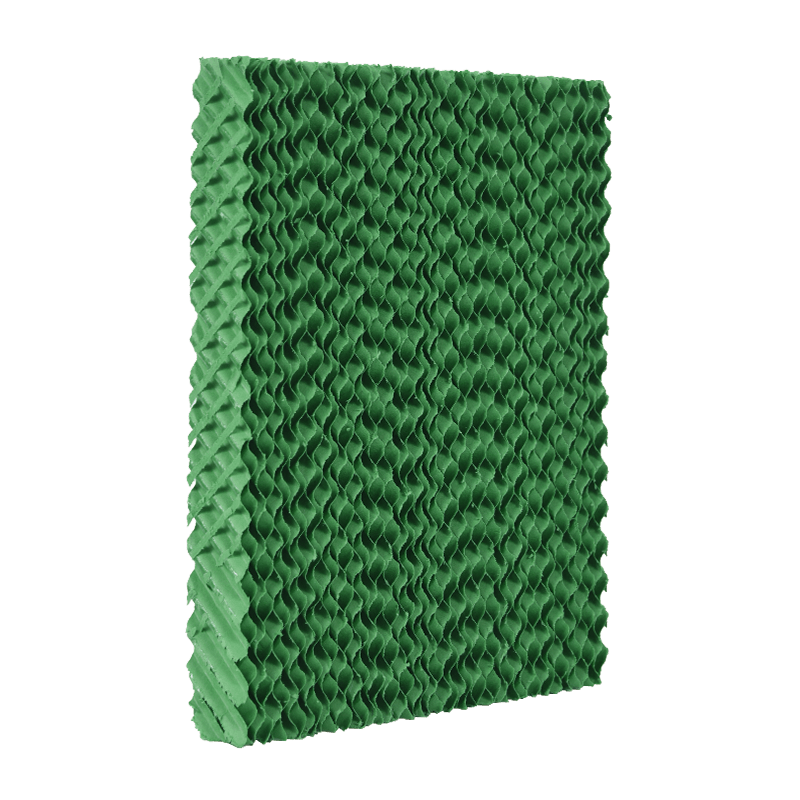
Cellulose honeycomb pads made from treated kraft paper deliver the strongest overall cooling performance for most greenhouse, livestock and industrial ventilation systems, reaching saturation efficiencies in the 80 to 90 percent range. Synthetic polypropylene pads trade some of that raw cooling power for longer service life and better resistance to mineral buildup, which makes them the smarter pick where water quality is poor. The right material ultimately depends on flute size, water hardness and how the pad will be used, and the sections below break each of these factors down with real specifications.
How the Three Main Pad Materials Compare
Evaporative cooler pads are built from one of three base materials, and each one behaves differently once it is wetted, exposed to airflow and left to age inside a wet curtain wall system.
| Material | Cooling Efficiency | Typical Lifespan | Best Fit |
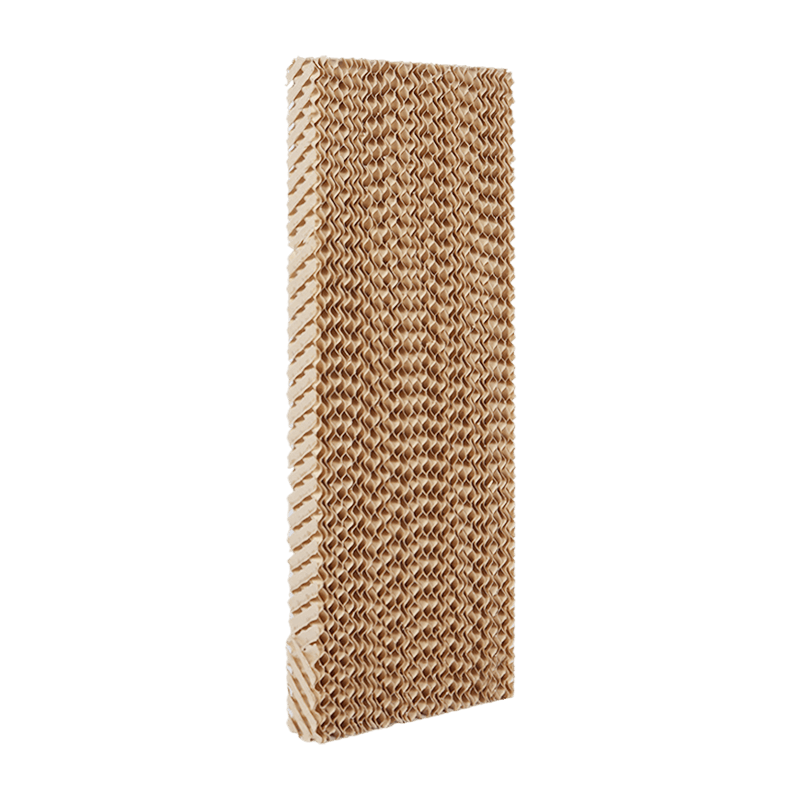
| Cellulose honeycomb paper | High, strong water absorption | 1 to 3 seasons | Greenhouse cooling, farm ventilation, factory ventilation |
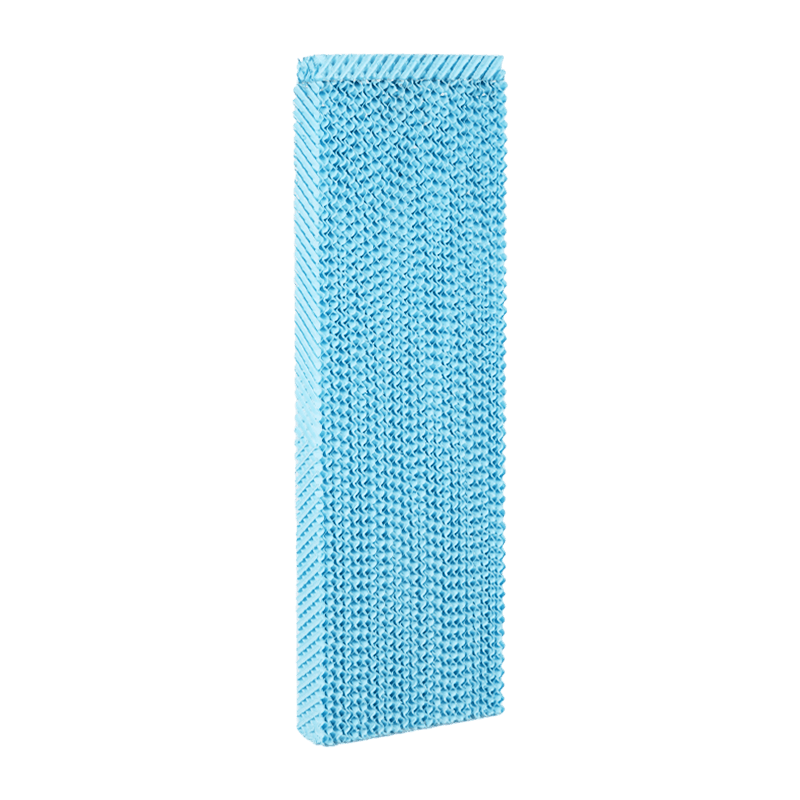
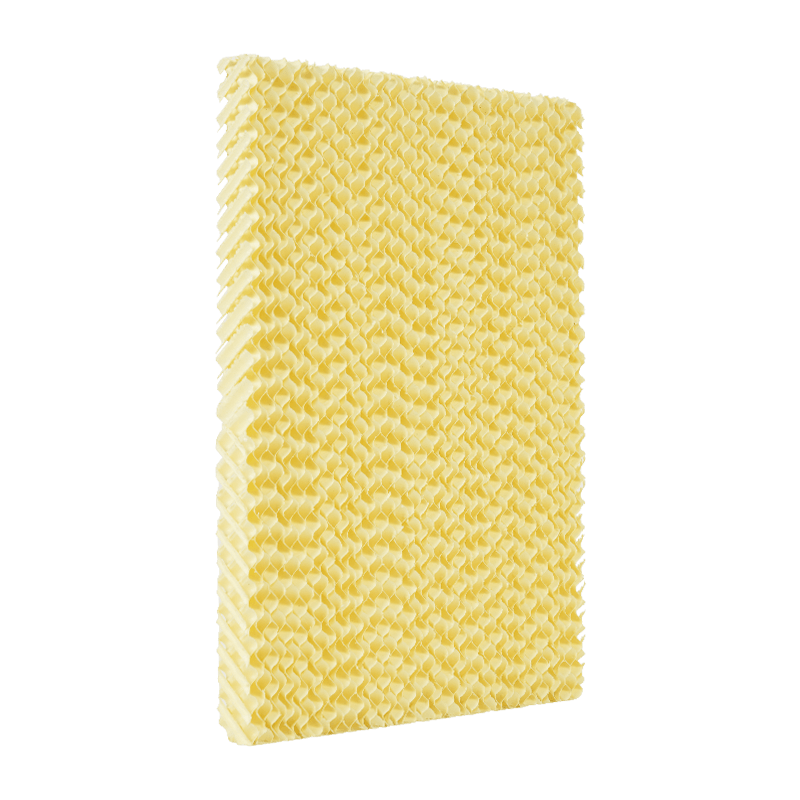
| Synthetic (polypropylene) | Moderate, steadier over time | 3 to 6 seasons or longer | Hard water areas, humidification curtain systems needing fewer replacements |
| Aluminum mesh | Moderate, fast heat transfer | Long, but niche use | Specialized industrial humidifier setups |
Cellulose honeycomb paper remains the default choice across greenhouse cooling and workshop cooling projects because its fibrous structure holds more water film per square centimeter, which directly increases evaporation surface area and rapid cooling response when a fan first switches on. Synthetic pads close that gap over time since they will not degrade from mold or mineral crusting the way paper can, so total cost of ownership can favor synthetic media even though day-one cooling numbers are lower.
Why Flute Size Changes Cooling Output
Within cellulose honeycomb paper, the corrugation or flute height is the second variable that decides how much a pad will cool, and how much resistance it puts in front of the fan.
Tightest channel spacing, maximum surface contact between air and water film. Delivers the highest cooling drop per pass but also the highest static pressure, so it suits smaller greenhouse cooling zones and enclosed workshop cooling rooms where fan capacity is not the limiting factor.
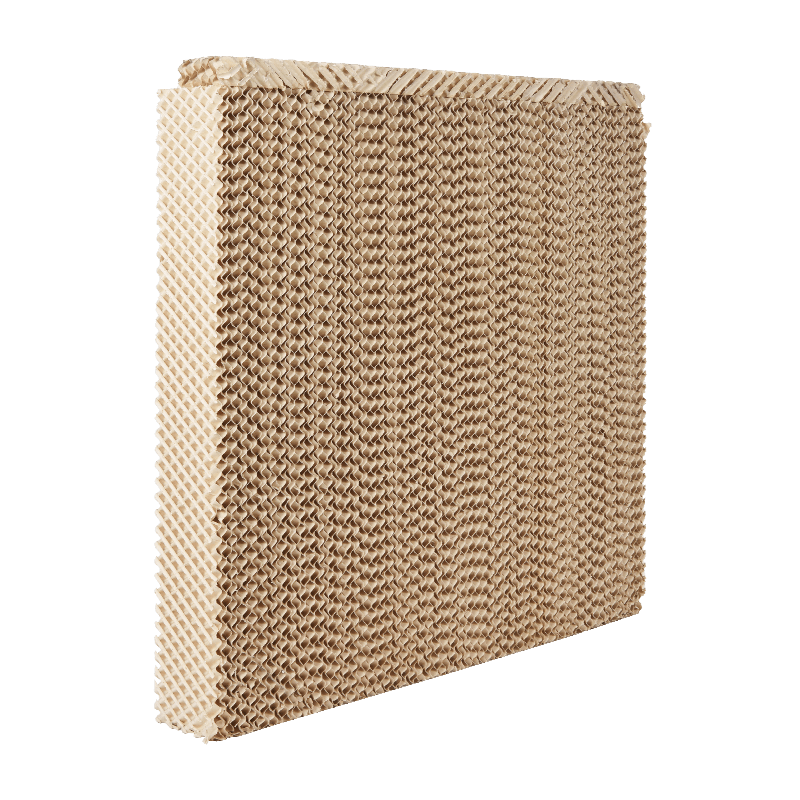
A balance point used widely in poultry houses and livestock buildings. Depth options run from 50mm up to 600mm, with pad height up to 2100mm, giving strong water absorption while keeping wind resistance manageable for farm ventilation and cooling systems that run long hours.
Wider channels lower airflow resistance, which suits larger greenhouse cooling paper installations and factory ventilation where high fan volume matters more than the last few percentage points of cooling depth. Available in heights from 1500mm to 2000mm and depths from 100mm to 300mm.
As a rule, a smaller flute number means more water contact area and a stronger cooling drop, while a larger flute number means easier airflow and lower long-term energy draw on the fan motor. Matching flute size to fan power is usually more important than picking the single highest-rated material.
Evaporative Cooler Pad Product Range
Each pad below is built from treated cellulose or synthetic-coated honeycomb paper, chemically hardened against mold and algae, and sized to fit standard evaporative air cooler and wet curtain wall frames.
Matching Material to Application
Pad selection should follow the environment first, and the material rating second. The list below reflects how the three materials are actually deployed across common cooling setups.
Greenhouse cooling
5mm or 6mm cellulose honeycomb paper is standard, since greenhouses need the strongest possible temperature drop and humidity lift for plant growth, and water can be filtered before it reaches the humidification curtain.
Farm ventilation and cooling
6mm flute pads are common in poultry and livestock housing because they balance strong water absorption with lower wind resistance for the long, continuous fan runtimes these buildings need.
Factory ventilation and workshop cooling
7mm flute or synthetic pads suit large open industrial spaces, since airflow volume across a wide wet curtain wall matters more than squeezing out the last few degrees of cooling depth.
Industrial humidifier and environmentally friendly air conditioning cooling
Synthetic pads are often preferred in commercial buildings, shopping malls and internet cafes, because they resist mold in continuous indoor humidification duty and need replacement less often.
Water Quality and Maintenance Effects on Pad Life
Material choice only tells part of the story. Water hardness, cleaning frequency and airflow direction all shape how long a pad actually performs at its rated cooling efficiency.
| Factor | Impact on Performance | Recommended Action |
| Hard water | Mineral scale builds up in the flute channels, blocking water film and cutting cooling output | Use treated or softened water, flush the system on a set schedule |
| Humidity above 60% | Evaporation rate slows regardless of pad material, reducing cooling drop | Reserve evaporative systems for dry or semi-arid climate zones |
| Irregular cleaning | Algae and mold accumulate, especially on cellulose media, shortening lifespan | Rinse pads periodically and inspect for discoloration each season |
Some smaller operations attempt homemade wet curtain paper as a low cost substitute for manufactured honeycomb pads. This can work for short term or temporary cooling, but homemade paper generally lacks the chemical hardening and algae resistant treatment applied during factory production, so it degrades faster and delivers a less consistent cooling curve across a full season.
Choosing the Right Pad Material for Your System
A simple decision path covers most situations: start with your water quality, then match flute size to your fan capacity, and finally weigh upfront cost against replacement frequency.

 CONTACT US