
 EN
EN  English
 中文简体
中文简体 عربى
عربى Tiếng Việt
-
 Industry News
How to Clean and Maintain Evaporative Cooling Pads for Maximum Performance
After a hot week in July, a poultry farm manager notices the indoor temperature creeping up even though the evaporative cooler is running at full speed. The airflow at the outlet feels weaker, and a musty smell hangs around the intake side. The fault is almost always the evaporative cooling pad, the corrugated cellulose media that does the actual ...
 Aug 28, 2026
 -
 Industry News
How to Calculate Greenhouse Cooling Pad Size: 2026 Step-by-Step Formula
By 11 a.m. on a clear July day, the temperature inside a 40 x 100 ft greenhouse can climb past 38°C even with side vents open. After installing exhaust fans and an evaporative cooling pad, a grower expects the incoming air to drop to around 27°C. When that does not happen, the common response is to add another fan. In most real cases, the problem...
Aug 21, 2026 -
Industry News
Greenhouse Cooling System Guide: Evaporative Cooling Pads, Fans & Ventilation
At 2:00 p.m. in July, the air inside a polyethylene greenhouse can climb above 45°C even when the outside temperature is 36°C. Tomato leaves curl, flowers abort, and fruit set stops for weeks. The cause is not a broken fan; it is solar gain amplified by the cladding. The most reliable fix for most dry and moderately humid climates is an evaporati...
Aug 14, 2026 -
 Industry News
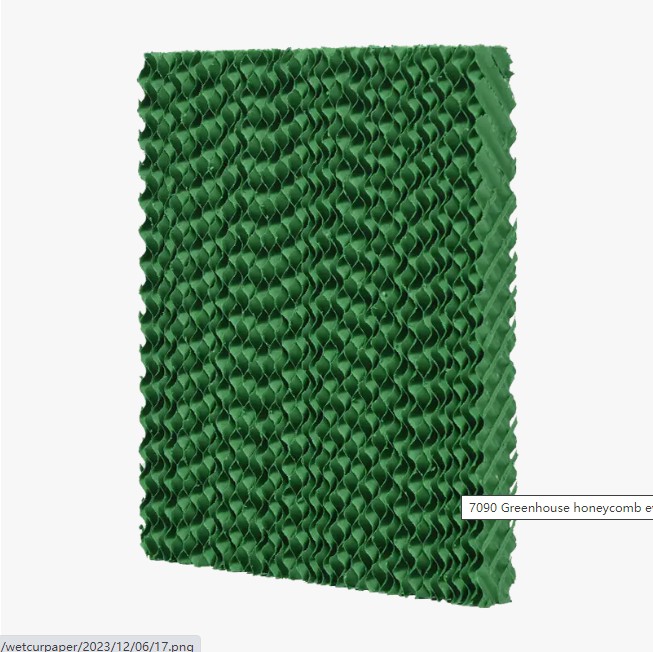
Wet Curtain Paper Guide: Rapid Cooling for Factories and Farms
Honeycomb wet curtain paper cools air by forcing hot, dry air through a water-saturated cellulose core, dropping the air temperature by roughly 4 to 15 degrees Celsius before it enters a building. This single mechanism is why the material now sits at the center of industrial humidifiers, greenhouse cooling systems, farm ventilation setups, and en...
Aug 07, 2026
If you are interested in our products, please consult us
CONTACT DETAILS
- Address: Weiyi Road, Fanshi Industrial Zone, Longshan Town, Cixi City, Zhejiang Province, China
- TEL: 86-0574-63936881
QUICK LINK
NEWS CENTER
MOBILE TREMIAL

 CONTACT US