
 EN
EN  English
 中文简体
中文简体 عربى
عربى Tiếng Việt
Content
- 1 How Honeycomb Wet Curtain Paper Creates Rapid Cooling
- 2 Matching Cooling Pad Types to Farm, Factory and Greenhouse Needs
- 3 Evaporative Cooling Pad Product Range
- 4 Manufactured Wet Curtain Paper vs Homemade and Synthetic Options
- 5 Energy Savings Compared With Environmentally Friendly Air Conditioning
- 6 Keeping a Wet Curtain Wall System Running at Full Efficiency
Honeycomb wet curtain paper cools air by forcing hot, dry air through a water-saturated cellulose core, dropping the air temperature by roughly 4 to 15 degrees Celsius before it enters a building. This single mechanism is why the material now sits at the center of industrial humidifiers, greenhouse cooling systems, farm ventilation setups, and environmentally friendly air conditioning cooling units across hot climates.
The sections below break down how the paper achieves this, where different pad types perform best, how to judge a wet curtain paper manufacturer, and what it takes to keep a wet curtain wall running at full capacity for years rather than months.
How Honeycomb Wet Curtain Paper Creates Rapid Cooling
Wet curtain paper is built from treated kraft cellulose sheets glued together in an offset pattern, forming diagonal flutes set at 45 and 45 degrees. Water is pumped over the top edge and flows down through the flutes by gravity, keeping the entire surface wet. A fan on the opposite side pulls hot outdoor air through this wet surface. As the water evaporates, it absorbs latent heat directly from the passing air stream, which is what produces rapid cooling without any refrigerant or compressor.
Flute height, pad depth, and airflow speed together decide how much cooling a curtain wall delivers. Thicker pads and slower airflow raise the saturation efficiency, while thinner pads trade some cooling power for lower air resistance and energy use.
Highest airflow, common in dense poultry and workshop ventilation lines.
Balances water retention and airflow resistance for general farm ventilation.
Deeper water channel, favored for greenhouse cooling over large spans.
| Pad Depth | Saturation Efficiency | Typical Use |
| 50mm | 68 to 74 percent | Small workshop cooling units |
| 100mm | 80 to 92 percent | Factory ventilation, evaporative air coolers |
| 150mm | 88 to 94 percent | Poultry housing, livestock barns |
| 200 to 300mm | 90 to 95 percent | Large greenhouse cooling walls |
Matching Cooling Pad Types to Farm, Factory and Greenhouse Needs
Wet curtain paper performs differently depending on building size, heat load, and humidity, so the application should drive the pad choice rather than the other way around.
Greenhouse Cooling
Deep 150 to 300mm pads paired with a humidification curtain keep large glasshouses within a stable range even when outdoor temperatures pass 35 degrees Celsius.
Farm Ventilation and Cooling
Poultry and livestock houses rely on 6mm flute pads to hold heat stress down during peak afternoon hours while resisting ammonia and moisture damage.
Factory Ventilation
100mm pads installed as a wet curtain wall handle high-temperature workshop cooling for stamping, welding, and textile production lines.
Industrial Humidifier Use
Printing, textile, and electronics facilities use wet curtain paper inside industrial humidifiers to add moisture without wetting the floor or equipment.
Saturation Efficiency by Pad Thickness
Evaporative Cooling Pad Product Range
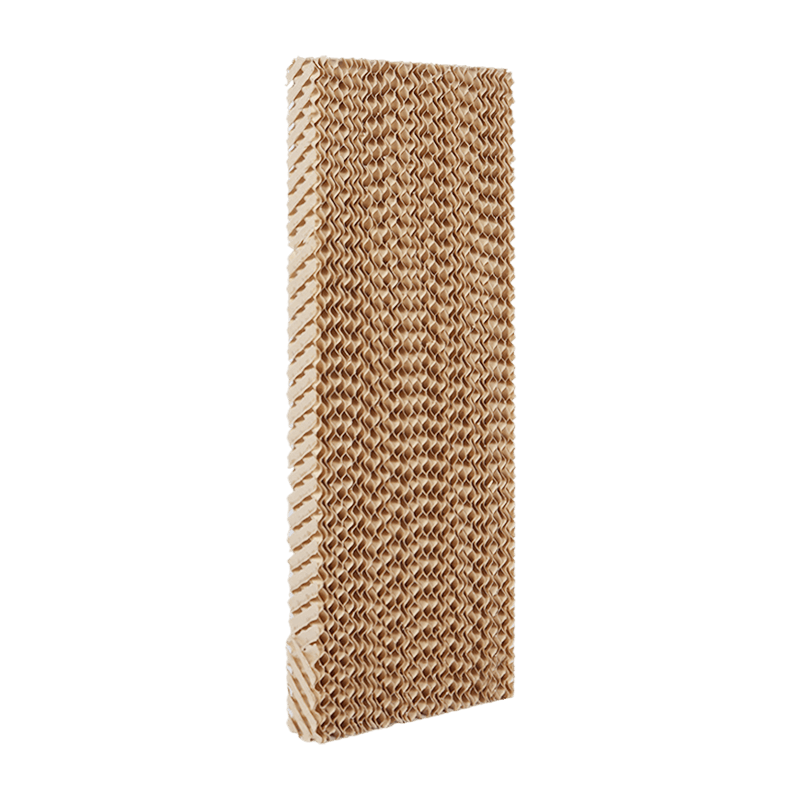
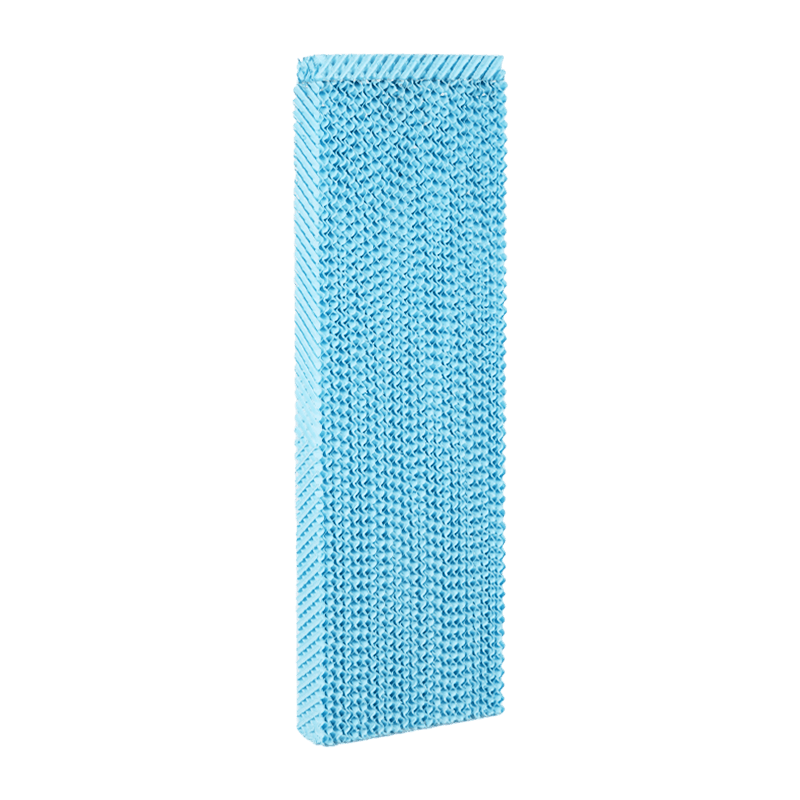
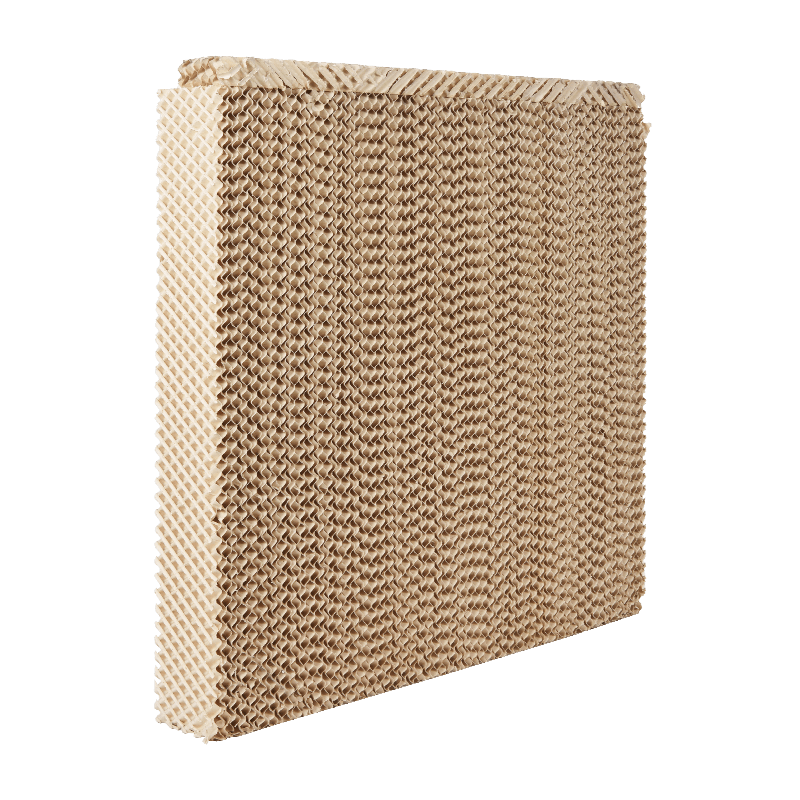
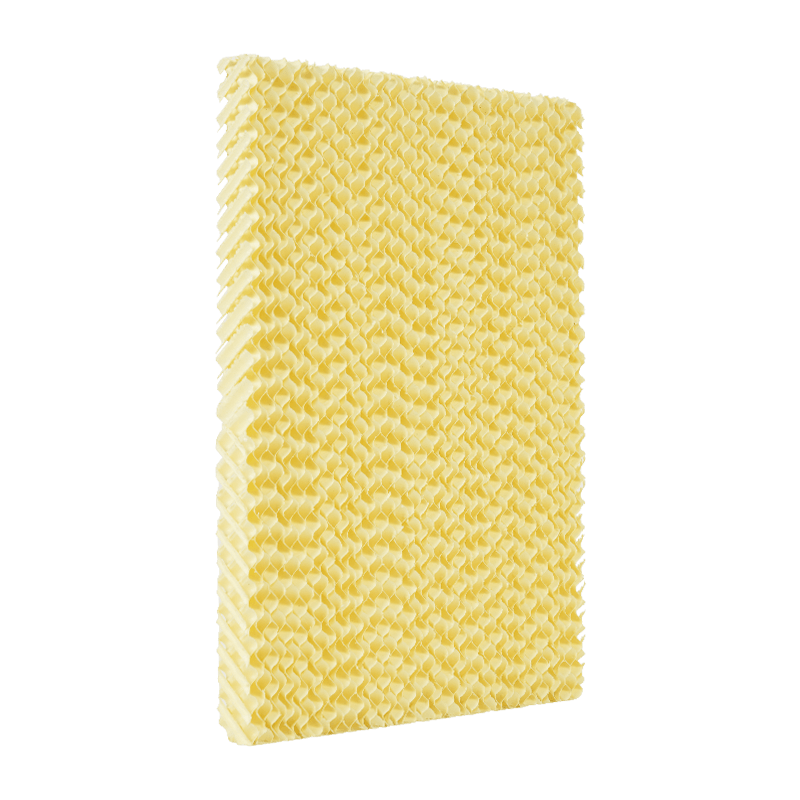
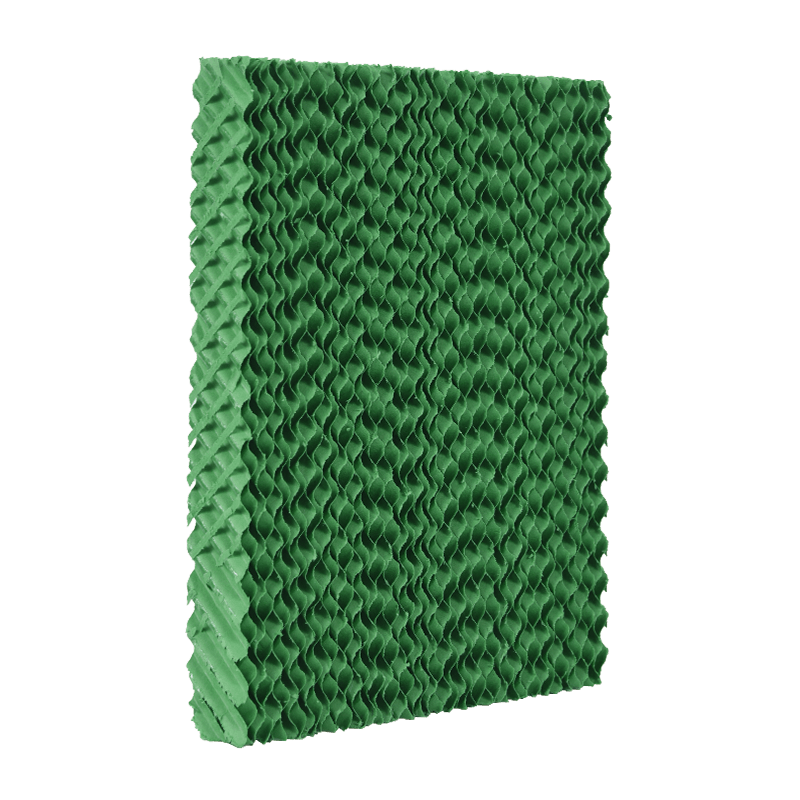
A snapshot of the honeycomb cooling pads produced for greenhouse cooling, farm ventilation, and factory ventilation projects, sized and colored to match different water quality and airflow conditions.
Manufactured Wet Curtain Paper vs Homemade and Synthetic Options
Buyers sourcing from a wet curtain paper manufacturer are usually comparing three material routes: treated cellulose honeycomb paper, synthetic plastic pads, and homemade wet curtain paper assembled from untreated cardboard.
Cellulose Honeycomb Paper
- Highest cooling efficiency per pad thickness
- Chemically treated against mold, algae, and softening
- Typical service life of one to two full cooling seasons
Synthetic Pads
- Better resistance to hard water and chemical buildup
- Longer service life, often several seasons
- Lower peak cooling efficiency than treated cellulose
Homemade Wet Curtain Paper
- Lowest upfront cost, built from raw cardboard
- Breaks down within weeks without hardener treatment
- Best suited to short-term or one-off cooling needs
Material Share in Commercial Wet Curtain Installations
Cellulose honeycomb paper - approximately 68 percent
Synthetic plastic pads - approximately 24 percent
Aluminum and other materials - approximately 8 percent
Energy Savings Compared With Environmentally Friendly Air Conditioning
Because evaporative cooling paper moves heat through evaporation rather than compression, an evaporative air cooler typically draws a fraction of the electricity that a compressor-based air conditioner needs to cool the same floor area, which is why the equipment is often marketed as environmentally friendly air conditioning cooling for large open spaces.
Cooling Drop Achieved at Different Outdoor Temperatures
Dry climate, relative humidity below 40 percent
Humid climate, relative humidity 60 to 75 percent
The pattern is consistent across installations: the hotter and drier the incoming air, the larger the temperature drop a wet curtain wall can deliver, while humid conditions push the same system closer to acting as a simple ventilation fan.
Keeping a Wet Curtain Wall System Running at Full Efficiency
Cooling pads lose efficiency gradually rather than failing all at once, so a short maintenance routine protects most of the original cooling output.
Daily
Let the fan run for five to ten minutes after the water pump shuts off so the pad dries and resists mold growth overnight.
Weekly
Rinse the pad face with a low-pressure hose to clear dust and pollen before mineral buildup sets in.
Seasonal
Replace cellulose honeycomb paper once flow becomes uneven or the flutes visibly sag, typically after one to two cooling seasons of heavy use.
Whichever setting the cooling pad serves, from a greenhouse wall to a workshop humidifier, the same rule holds: pad depth and flute size should match the heat load, water quality should be kept clean, and a treated honeycomb paper from a qualified wet curtain paper manufacturer will consistently outperform an untreated homemade substitute over a full season.

 CONTACT US