
 EN
EN  English
 中文简体
中文简体 عربى
عربى Tiếng Việt
Content
- 1 Why a Greenhouse Turns Into a Solar Furnace
- 2 The Four Main Ways to Cool a Greenhouse
- 3 Evaporative Pad-and-Fan: The Workhorse of Summer Cooling
- 4 Sizing an Evaporative Greenhouse Cooling System
- 5 Portable Coolers for Small Houses and Spot Cooling
- 6 Maintenance: The Difference Between 2 and 5 Years of Pad Life
- 7 Greenhouse Cooling System FAQ
- 8 The Bottom Line
At 2:00 p.m. in July, the air inside a polyethylene greenhouse can climb above 45°C even when the outside temperature is 36°C. Tomato leaves curl, flowers abort, and fruit set stops for weeks. The cause is not a broken fan; it is solar gain amplified by the cladding. The most reliable fix for most dry and moderately humid climates is an evaporative greenhouse cooling system: a wall of wetted honeycomb pads on one end, exhaust fans on the other, and a recirculating pump in between. In normal summer conditions, that simple loop can hold peak temperatures 8–12°C below the outside shade temperature while adding the humidity that many crops actually appreciate.
Before comparing equipment options, the short answer: if your summer relative humidity stays below 60%, evaporative pad-and-fan cooling is usually the highest-value investment you can make. It delivers the largest temperature drop per unit of electricity, and it can be retrofitted into an existing greenhouse without major structural changes. This guide explains how these systems work, where they fall short, and how to size one honestly.
Why a Greenhouse Turns Into a Solar Furnace
Short-wave sunlight passes through the cladding and warms the soil, benches, and canopy. Plants re-emit that energy as long-wave radiation, which the cladding traps. At the same time, natural ventilation only works when outside air is cooler than interior air, so during peak solar hours a passively vented house often cannot remove heat as fast as it arrives. The structure becomes a solar collector with no relief valve.
The practical consequences begin earlier than most growers expect. Photosynthesis in many leafy and fruiting crops slows above 30–32°C, pollen viability drops, and respiration outpaces carbon fixation, meaning the plant burns sugars it should be investing in fruit. A few consecutive hot afternoons is enough to knock a week of production off a tomato or pepper crop.
Figure 1 — Typical afternoon temperature profile on a clear 38°C day in a 40% RH climate.
The conclusion is straightforward: if you sell produce through the summer, a cooling system is a productivity investment, not an optional comfort feature. Fans alone rarely keep up on severe afternoons, and shade cloth alone sacrifices the light that pays the bills.
The Four Main Ways to Cool a Greenhouse
Most operations combine several methods, and each has a climate where it shines. The table below summarizes the trade-offs so you can see where evaporative cooling fits.
| Method | How it works | Best climate | Typical peak drop | Running cost |
|---|---|---|---|---|
| Shade cloth | Blocks 30–70% of solar radiation before it enters the house | Sunny areas, low-light crops, or as a complement | 2–5°C | Low |
| Ventilation (natural or fan) | Replaces hot interior air with cooler outside air | Temperate, low-humidity, breezy sites | 0–4°C above ambient | Low–medium |
| Fog or misting | Atomized water evaporates inside the air column | Dry climates, used as a booster | 3–6°C | Medium |
| Evaporative pad-and-fan | Air is drawn through wetted honeycomb pads by exhaust fans | Dry to moderate humidity (RH below 60%) | 8–12°C | Medium |
Evaporative pad-and-fan produces the deepest temperature drop per unit of electricity, which is why large commercial greenhouses in arid regions use it almost exclusively. The rest of this guide focuses on how to make that approach work reliably.
Evaporative Pad-and-Fan: The Workhorse of Summer Cooling
How the Honeycomb Pad Works
The heart of the system is a cellulose or kraft-paper pad with a honeycomb structure. Water is pumped to the top of the pad and trickles down through thousands of small vertical channels. Exhaust fans on the opposite wall draw air sideways through the pad, and as the air meets the wet surface, water evaporates. That phase change absorbs latent heat, lowering air temperature and raising humidity in one step.
Cooling efficiency depends heavily on internal geometry: the honeycomb design of honey-comb cooling pads determines how much wetted surface area is packed into each cubic meter of media. More surface area means more evaporation and a deeper temperature drop. For a new installation, a 7090 greenhouse honeycomb evaporative cooling pad is a common starting point for poly-tunnel and gutter-connected houses because its channel size balances airflow resistance against water retention.
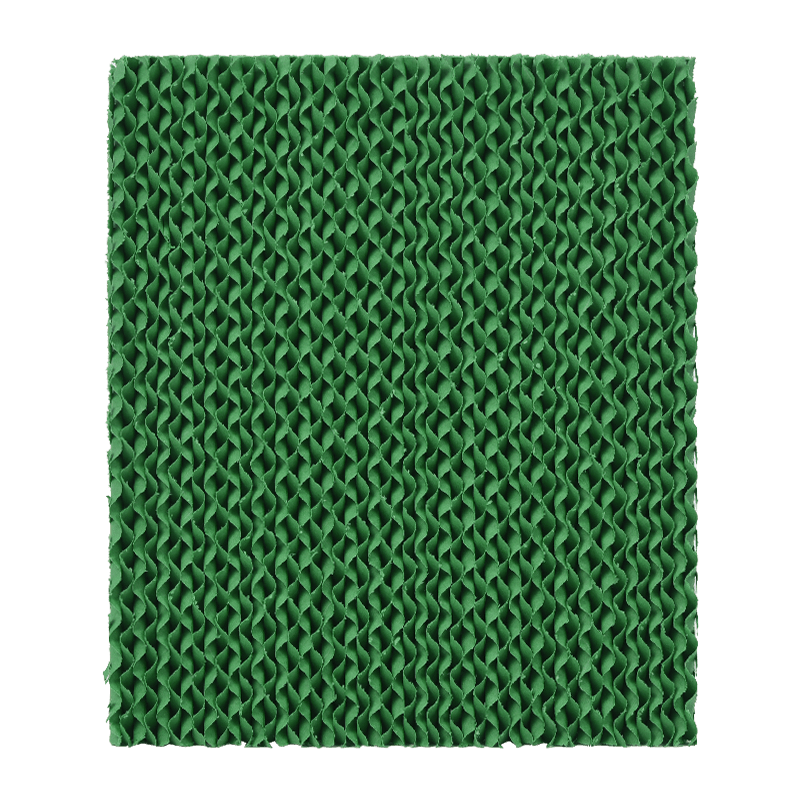 Wholesale 7090 Greenhouse honeycomb evaporative cooling pad Suppliers, OEM/ODM CQisheng Paper Products Co., Ltd is China OEM/ODM 7090 Greenhouse honeycomb evaporative cooling pad suppliers and 7090 Greenhouse honeycom...View Product →
Humidity Sets the Ceiling
Evaporative cooling is physically limited by the wet-bulb temperature of the outdoor air. The drier the air, the more water it can absorb, and the colder the pad surface can get. At 40% relative humidity, a well-designed pad can deliver a 9–12°C drop; at 80% RH, the same system might manage only 2–4°C.
Figure 2 — Temperature drop delivered by a honeycomb pad at different humidity levels, assuming 35°C intake air.
This is also where pad geometry matters on a smaller scale. As shown in our comparison of the staggered corrugated design of cooling pads versus traditional flat designs, corrugation forces air to change direction repeatedly, which scrubs the boundary layer and improves heat transfer without requiring extra fan power.
Sizing an Evaporative Greenhouse Cooling System
The two numbers that matter most are airflow and pad area. A widely used starting point is 0.03–0.05 m³/s of air movement per m² of greenhouse floor area in high-sun conditions. You then cross-check that against the pad face velocity: most 100–150 mm thick pads perform best at 1.0–1.5 m/s of air speed through the pad face.
- Airflow: 0.03–0.05 m³/s per m² of floor area, which is roughly one air exchange per minute.
- Pad area: total fan airflow divided by 1.0–1.5 m/s face velocity. Oversizing pads lowers pressure drop but wastes water.
- Static pressure: plan for 20–60 Pa across the pad bank, depending on pad thickness and dust load.
- Water supply: a small recirculating pump delivering 10–14 L/min per linear meter of pad row is typical.
Operating costs follow a fairly consistent pattern, with electricity and pad replacement dominating the annual budget.
Figure 3 — Illustrative annual operating cost distribution for a 500 m² pad-and-fan system in a Mediterranean climate.
For retrofits, the pad needs a rigid support structure. A honeycomb-type evaporative cooling pad frame holds the media in position, prevents sagging, and keeps the water distribution channel level. These small details have an outsized effect on cooling uniformity across the full length of the wall.
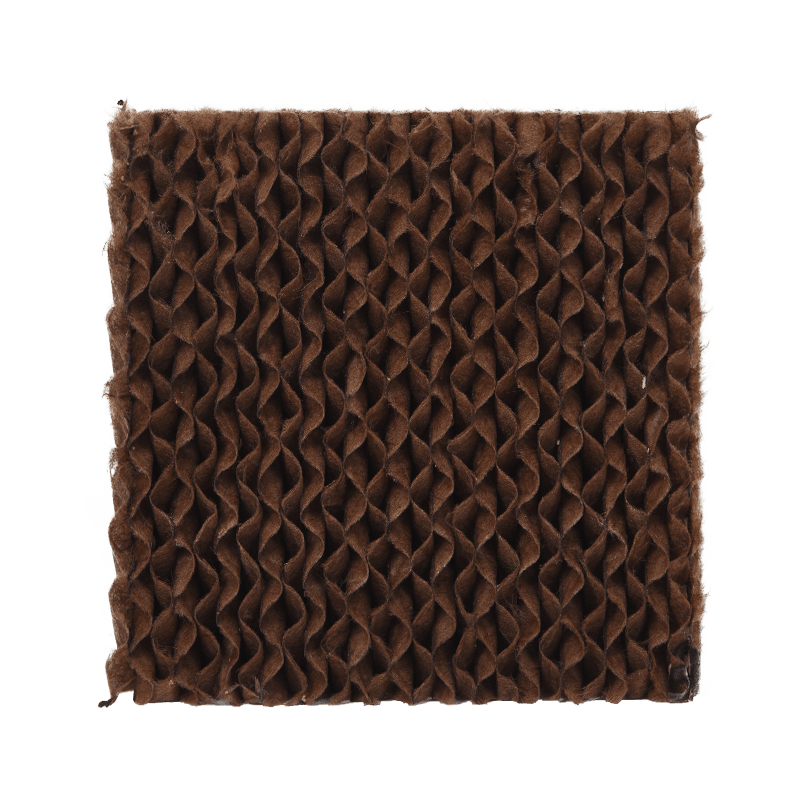 Wholesale Honeycomb Type Evaporative Cooling Pad & Frame Suppliers, OEM/ODM CompQisheng Paper Products Co., Ltd is China OEM/ODM Honeycomb Type Evaporative Cooling Pad & Frame suppliers and Honeycomb Type Evaporative ...View Product →
Portable Coolers for Small Houses and Spot Cooling
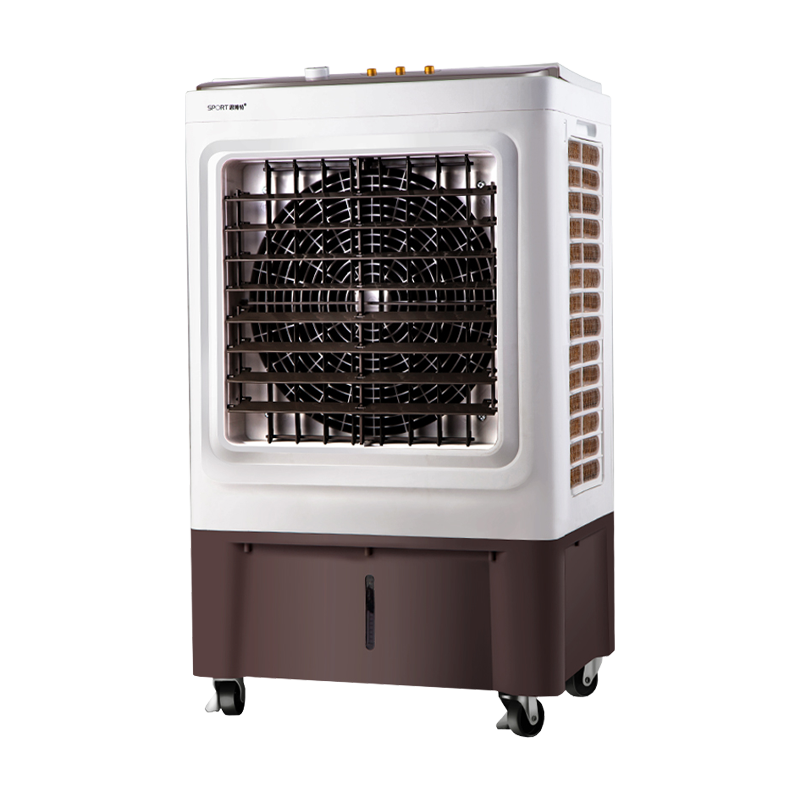
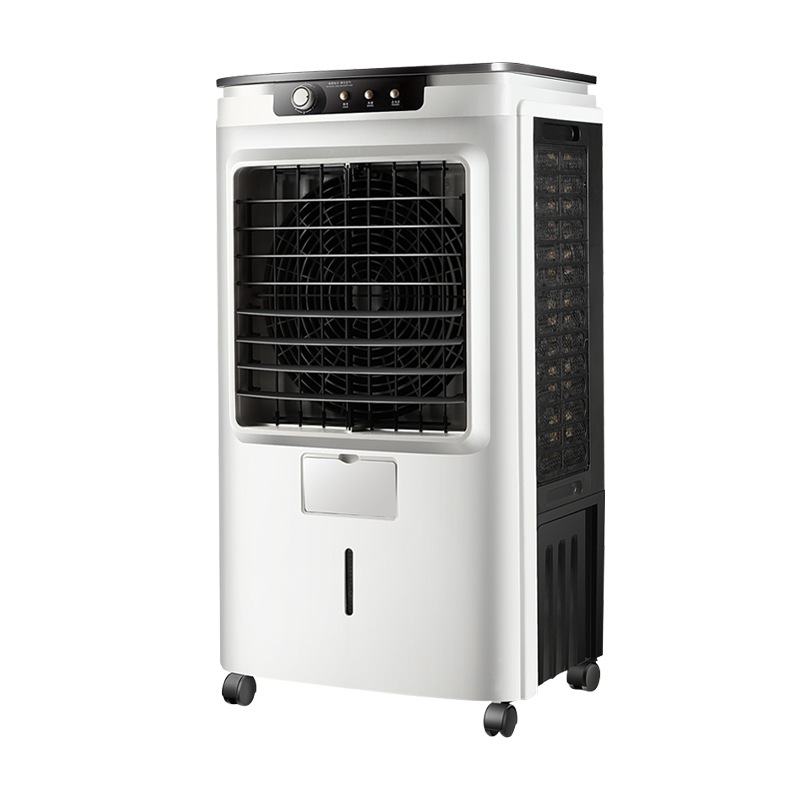
A full pad-and-fan wall is not always practical. In small propagation houses, covered display areas, or multi-span structures where the end walls are already occupied, a portable evaporative cooler can be positioned to blow cool air down at bench level. These units integrate the pad, fan, and water tank into one cabinet, so installation is a matter of plugging them in and filling the tank.
A unit such as the 450W portable evaporative air cooler chiller with 45L water tank can cover a small greenhouse zone or a germination room where a full pad wall would be overkill. Portable units also earn their keep as backup during heat waves, while the main pad bank is being serviced or replaced.
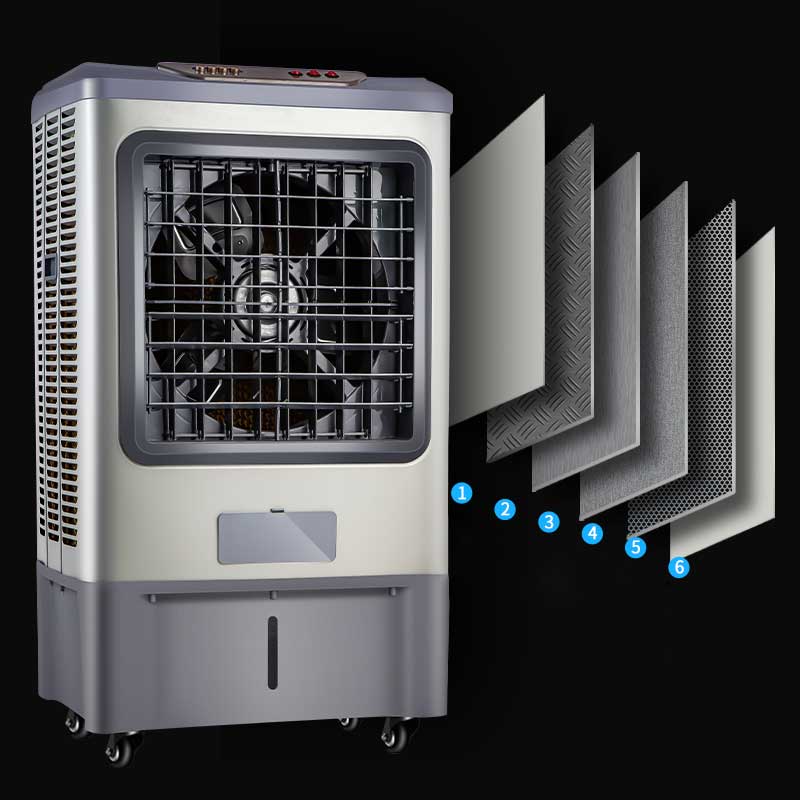 Wholesale 450W Portable Evaporative Air Cooler Chiller, 45L Water Tank SuppliersQisheng Paper Products Co., Ltd is China OEM/ODM 450W Portable Evaporative Air Cooler Chiller, 45L Water Tank suppliers and 450W Portable...View Product →
Maintenance: The Difference Between 2 and 5 Years of Pad Life
Replacing cooling pads is the largest recurring cost of an evaporative system, so pad life matters. With clean water and a dry-out cycle after each evening, good cellulose pads typically last three to five seasons. A small maintenance routine prevents most premature failures:
- Flush the sump weekly to remove sediment and mineral concentrates.
- Allow pads to dry completely at least once a day to slow biological growth.
- Check the water distribution holes for blockage, especially in hard-water areas.
- Replace media when channels collapse, salt scaling hardens the surface, or the cellulose softens between corrugations.
Pads treated with anti-algae agents, such as the blue OxyAir range, resist biological buildup longer, but no media removes the need for clean water and periodic flushing. That durability is one reason growers shift away from air conditioners and mist-only systems; we summarize the broader arguments in our article on the advantages of honey-comb cooling pads over traditional cooling methods.
Greenhouse Cooling System FAQ
Do evaporative cooling systems work in humid climates?
They work, but the temperature drop shrinks as humidity rises. At 60% RH, expect a 5–8°C drop; above 80% RH, the system is better used purely for ventilation. Growers in humid regions often combine pads with high-volume air movement and run the pads only during the hottest hours.
How much water does a pad-and-fan system use?
During peak afternoon operation, a 100 m² greenhouse can use roughly 40–80 litres of water per hour, depending on airflow, humidity, and pad area. Most of that water evaporates; overflow and drift account for 10–20%.
How often should cooling pads be replaced?
Typically every 3–5 years. Inspect annually for channel blockage, white salt scaling, or softening of the cellulose between corrugations. Those are signs to replace the media before the next growing season.
Can I use my existing exhaust fans?
Yes, if they deliver the required airflow at 20–60 Pa static pressure and are installed on the wall opposite the pads. Uneven fan spacing creates hot zones, so check airflow distribution before investing in the pad wall.
The Bottom Line
An effective greenhouse cooling system does not have to be complicated. Start with climate reality: if summer RH stays below 60%, evaporative pad-and-fan is the highest-value solution for most growers. Size airflow and pad area honestly, mount the media in a proper frame, and keep the water clean. That combination routinely delivers 8–12°C of relief on the hottest afternoons and turns a passive solar collector back into a productive growing environment.

 CONTACT US