
 EN
EN  English
 中文简体
中文简体 عربى
عربى Tiếng Việt
Content
- 1 How Each Type of Cooler Works
- 2 Cooling Performance: Temperature Drop and Effectiveness
- 3 Energy Consumption: A Major Practical Difference
- 4 Side-by-Side Comparison of Key Differences
- 5 Humidity: The Critical Difference in Indoor Air Conditions
- 6 Ventilation and Air Quality Differences
- 7 Maintenance Requirements and Running Costs
- 8 Which Should You Choose: A Practical Decision Guide
The fundamental difference is that an evaporative air cooler cools air through water evaporation, while a regular air cooler (typically a refrigerative or compressor-based unit) cools air by passing it over a refrigerant-chilled coil. An evaporative cooler draws warm outside air through water-saturated pads, where evaporation absorbs heat and reduces air temperature by 5–15°C depending on ambient humidity — all without a compressor or refrigerant. A regular air cooler (air conditioner) uses a vapor-compression cycle to remove heat from indoor air and expel it outside, achieving more powerful and consistent cooling but consuming 3 to 10 times more electricity. The right choice depends almost entirely on the local climate: evaporative coolers excel in hot, dry conditions, while refrigerative units are necessary in humid environments where evaporative cooling loses effectiveness.
How Each Type of Cooler Works
Evaporative Air Cooler: Water Evaporation Principle
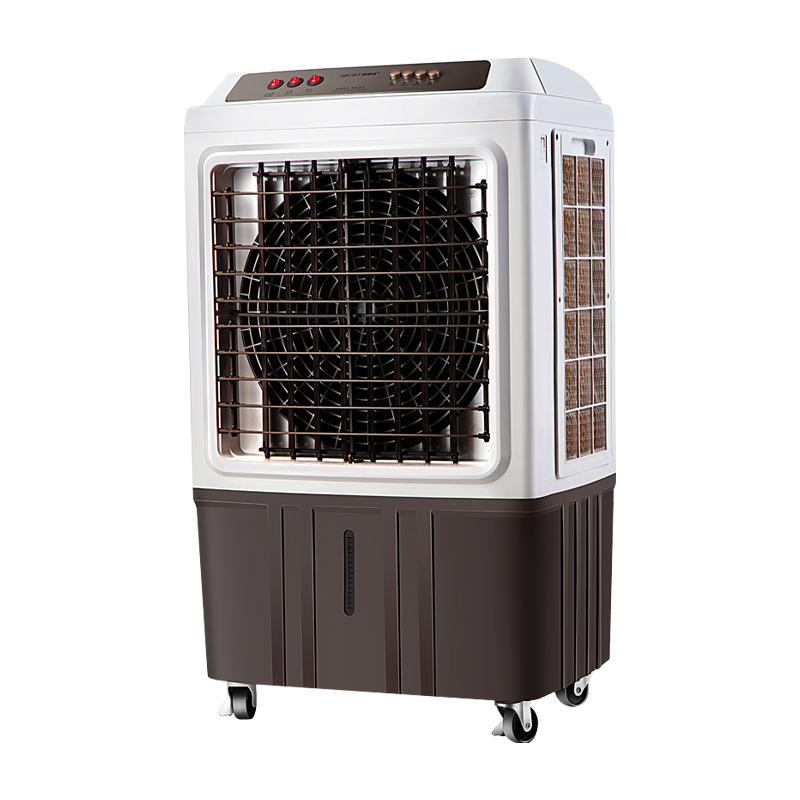
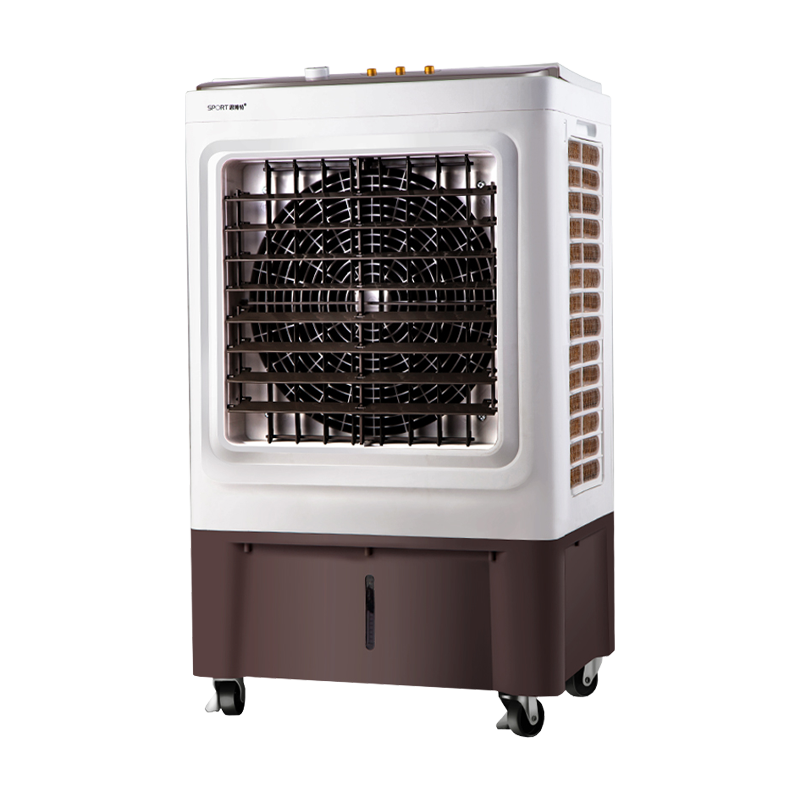
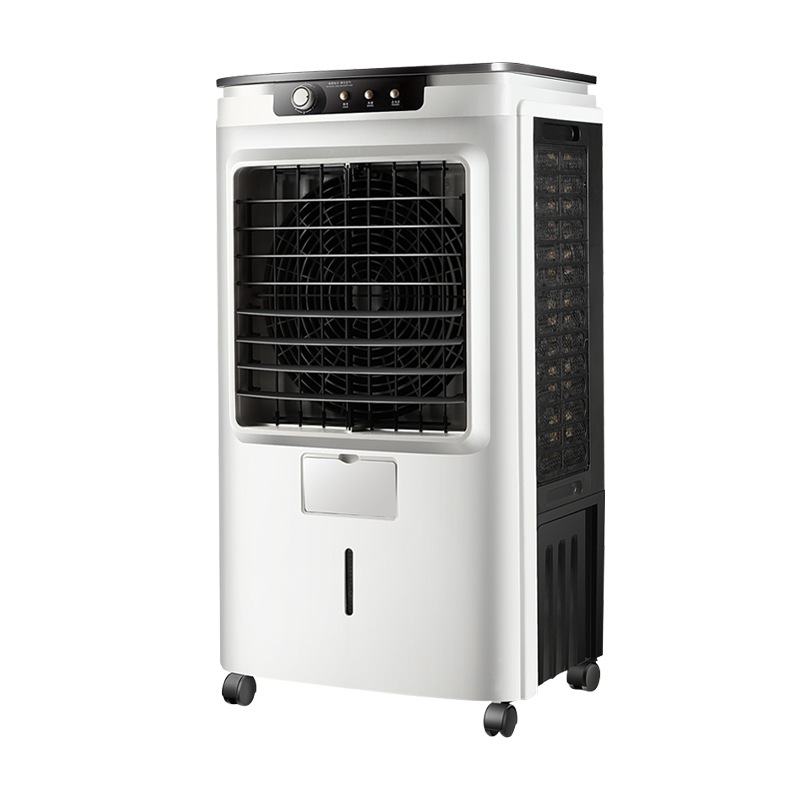
An evaporative cooler works on a simple thermodynamic principle: when water evaporates, it absorbs latent heat from the surrounding air, reducing its temperature. The unit draws warm, dry outdoor air through thick cellulose or synthetic cooling pads that are continuously wetted by a water pump. As air passes through these saturated pads, water molecules absorb heat energy and evaporate into the airstream, leaving the exiting air cooler and slightly more humid. A fan then pushes this cooled air into the space. The system requires a continuous supply of fresh air from outside and open windows or vents to allow stale, humid air to escape — it is fundamentally an open-loop ventilation system, not a sealed cooling circuit.
Regular Air Cooler (Refrigerative): Vapor Compression Principle
A regular air cooler — more precisely an air conditioner — operates on the vapor-compression refrigeration cycle. A compressor pressurizes refrigerant gas, which then releases heat through a condenser coil (typically mounted outside or at the rear of the unit). The refrigerant then expands through an expansion valve, dropping in temperature, and absorbs heat from indoor air as it passes over the evaporator coil. This is a closed-loop, sealed system that can cool air regardless of outdoor humidity, removing both heat and moisture from the indoor air simultaneously.
Cooling Performance: Temperature Drop and Effectiveness
The most practical difference between the two technologies is the cooling temperature drop achievable under real-world conditions.
- Evaporative coolers achieve a temperature drop that depends directly on the outdoor relative humidity. At 10% relative humidity (typical arid desert climate), the theoretical maximum temperature drop from evaporation is approximately 16–20°C. At 50% relative humidity, the achievable drop falls to around 5–8°C. Above 70% relative humidity, evaporative cooling is largely ineffective — the air is already near saturation and cannot absorb additional moisture through evaporation.
- Regular air coolers (air conditioners) can maintain a set indoor temperature regardless of outdoor humidity, typically achieving and holding indoor temperatures 8–15°C below ambient even in tropical humid conditions where outdoor temperatures reach 35°C and relative humidity exceeds 80%.
In hot, dry climates (Middle East, North Africa, southwestern United States, inland Australia), evaporative coolers can be more effective than air conditioners at achieving comfortable temperatures because the large temperature drop possible at low humidity exceeds what a modest-capacity air conditioner could deliver.
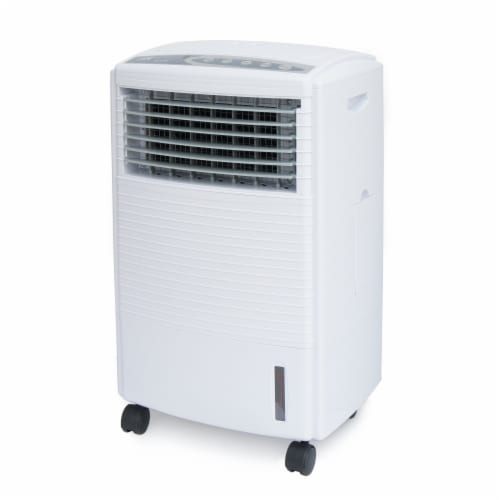
Energy Consumption: A Major Practical Difference
Energy consumption is one of the most significant differences between the two technologies and often determines which is more economical over the life of the product.
- A typical evaporative cooler covering 40–60 m² consumes approximately 100–250 watts of electricity — primarily to run the fan motor and the small water pump. This is comparable to the power consumption of two or three incandescent light bulbs.
- An equivalent-capacity split-type air conditioner (1.5–2.0 kW cooling output) consumes approximately 500–700 watts in EER-rated operation, and a window or portable unit for the same space may consume 800–1,200 watts.
- Over a three-month summer cooling season at 8 hours per day, an evaporative cooler costing 150W average consumption would use approximately 110 kWh, while an equivalent air conditioner at 700W would consume approximately 504 kWh — nearly five times more electricity for the same operational period.
- Evaporative coolers do consume water — a typical unit evaporates 3–15 liters per hour depending on size and climate conditions, which must be accounted for in water-scarce regions.
Side-by-Side Comparison of Key Differences
| Feature | Evaporative Air Cooler | Regular Air Cooler (AC) |
|---|---|---|
| Cooling mechanism | Water evaporation | Refrigerant vapor compression |
| Typical power consumption | 100–250 W | 500–1,500 W |
| Best climate | Hot and dry (RH below 50%) | Any climate including humid |
| Effect on indoor humidity | Increases humidity | Reduces humidity (dehumidifies) |
| Ventilation requirement | Requires open windows / vents | Works with closed windows |
| Refrigerant required | No | Yes (R-32, R-410A, R-134a, etc.) |
| Purchase cost (residential unit) | Low (USD 50–400) | Medium–High (USD 300–2,000+) |
| Installation complexity | Plug-and-use; simple water fill | Professional installation usually required |
| Environmental impact | No refrigerant; low CO₂ per hour of use | Refrigerant GWP concern; higher CO₂ per hour |
| Air quality effect | Introduces fresh outdoor air continuously | Recirculates indoor air (filter dependent) |
Humidity: The Critical Difference in Indoor Air Conditions
The contrasting effects on indoor humidity represent one of the most practically important differences between the two technologies, with direct consequences for comfort, health, and the suitability for different building types.
- Evaporative coolers add humidity to the indoor air. In dry climates where indoor relative humidity often falls below 20–30% during summer, this added moisture is actually beneficial — it reduces the discomfort of dry eyes, dry skin, and respiratory irritation, and can reduce static electricity buildup in the space.
- Regular air conditioners remove humidity from the indoor air as a byproduct of the cooling process — moisture from the air condenses on the cold evaporator coil and drains away. This dehumidification effect is essential in tropical and coastal climates where high humidity causes discomfort independently of temperature, and where excess moisture encourages mold growth.
- Using an evaporative cooler in a humid climate does not just reduce cooling effectiveness — it can actively raise indoor humidity to uncomfortable or unhealthy levels (above 70% RH) that promote mold, dust mite proliferation, and wood moisture damage to furniture and building materials.
Ventilation and Air Quality Differences
The two technologies have fundamentally different relationships with the outdoor air, which affects indoor air quality in opposite ways.
An evaporative cooler continuously draws fresh outdoor air through the building and expels stale indoor air — it functions simultaneously as a cooler and a ventilation system. This constant air exchange dilutes indoor pollutants such as CO₂, VOCs from furniture and building materials, and cooking odors. Studies have shown that evaporative cooling in commercial buildings can maintain indoor CO₂ levels below 1,000 ppm (the threshold typically associated with cognitive performance impact) without any supplementary mechanical ventilation system.
A regular air conditioner recirculates the same indoor air through its filter and cooling coil, expelling only the removed heat to the outside. Without supplementary ventilation, indoor CO₂ and pollutant levels can accumulate over time in tightly sealed air-conditioned spaces. The air conditioner's filter captures particles from recirculated air but does not provide the dilution effect of fresh air introduction that evaporative cooling delivers automatically.
Maintenance Requirements and Running Costs
The maintenance demands and ongoing running costs differ considerably between the two technologies.
Evaporative Cooler Maintenance
- Cooling pad replacement — cellulose pads typically need replacement every 1–3 seasons depending on water mineral content. Hard water accelerates mineral scale buildup on pads, reducing airflow and cooling effectiveness.
- Water tank cleaning — the reservoir must be drained and cleaned every 1–2 weeks during use to prevent algae and Legionella bacteria growth, particularly in warm climates. Some units include automatic drain functions to reduce this risk.
- No refrigerant servicing, no compressor oil checks, and no professional gas charging is ever required — maintenance is straightforward and can be performed by the owner.
Regular Air Conditioner Maintenance
- Filter cleaning every 2–4 weeks during use and professional servicing of the refrigerant circuit and coils typically recommended annually.
- Refrigerant leaks require professional repair and gas recharging — a service cost typically ranging from USD 100–300 per event depending on refrigerant type and leak severity.
- Compressor failure — the most costly repair — can cost USD 400–1,500 to replace, often approaching the cost of a new unit for lower-priced models.
Which Should You Choose: A Practical Decision Guide
The correct choice between an evaporative cooler and a regular air conditioner depends primarily on climate, and secondarily on budget and use case:
- Choose an evaporative cooler if you live in a hot, dry region with summer relative humidity consistently below 50%, you want minimal electricity bills, you value fresh air ventilation, and you need a portable or easy-install solution.
- Choose a regular air conditioner if your climate is humid (relative humidity regularly above 60%), you need precise temperature control, you must cool a sealed indoor space, or you require cooling effectiveness regardless of outdoor conditions.
- In transitional climates (moderate humidity, warm summers), a two-stage approach is often optimal: use an evaporative cooler during dry spring and early summer months, and switch to air conditioning only during the hottest, most humid weeks — significantly reducing total seasonal energy consumption compared to air conditioning alone.

 CONTACT US