
 EN
EN  English
 中文简体
中文简体 عربى
عربى Tiếng Việt
Content
- 1 Product Specification Comparison
- 2 Cooling Efficiency and Energy Consumption Analysis
- 3 Applicable Scenarios and Industry Application Differences
- 4 Maintenance Costs and Service Life Assessment
- 5 Procurement Decision Recommendations and Common Misconceptions
- 6 Industry Development Trends and Technology Upgrade Directions
After comparing two mainstream industrial evaporative air coolers, it was found that high-airflow models (8000-10000m³/h) are better suited for open industrial plants and livestock farming facilities exceeding 200㎡, while medium-airflow models (4000-6000m³/h) demonstrate higher energy efficiency ratios and lower operating noise in workshops, greenhouses, and commercial spaces under 150㎡. Improper selection not only leads to insufficient cooling performance but also causes energy waste and premature equipment wear.
Product Specification Comparison
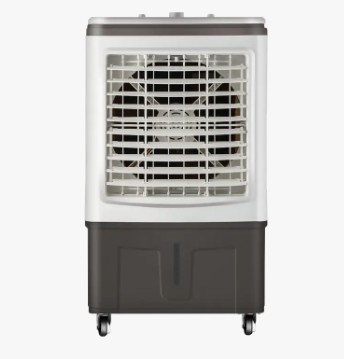
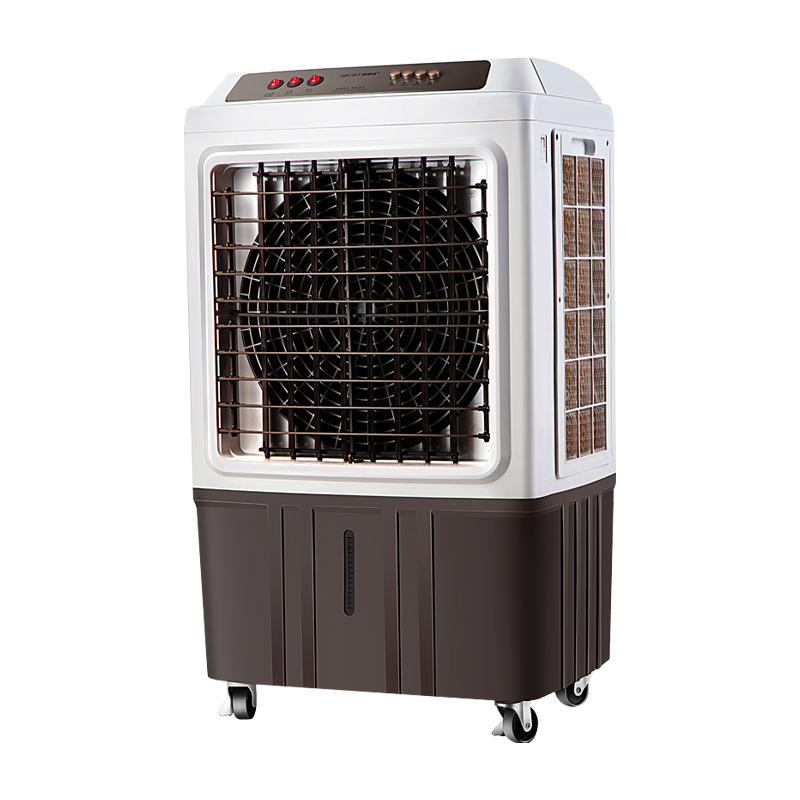
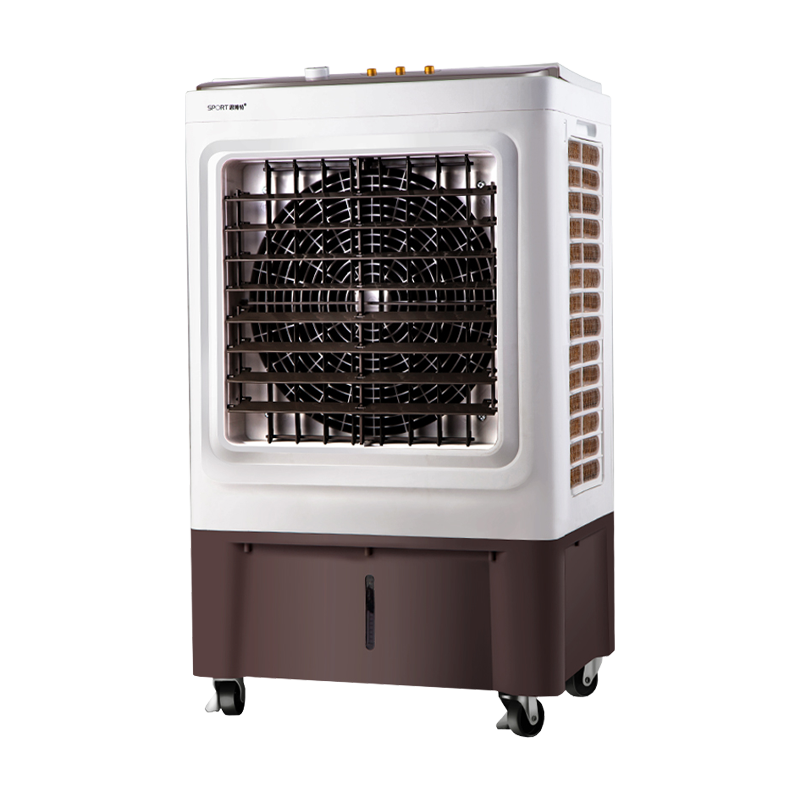
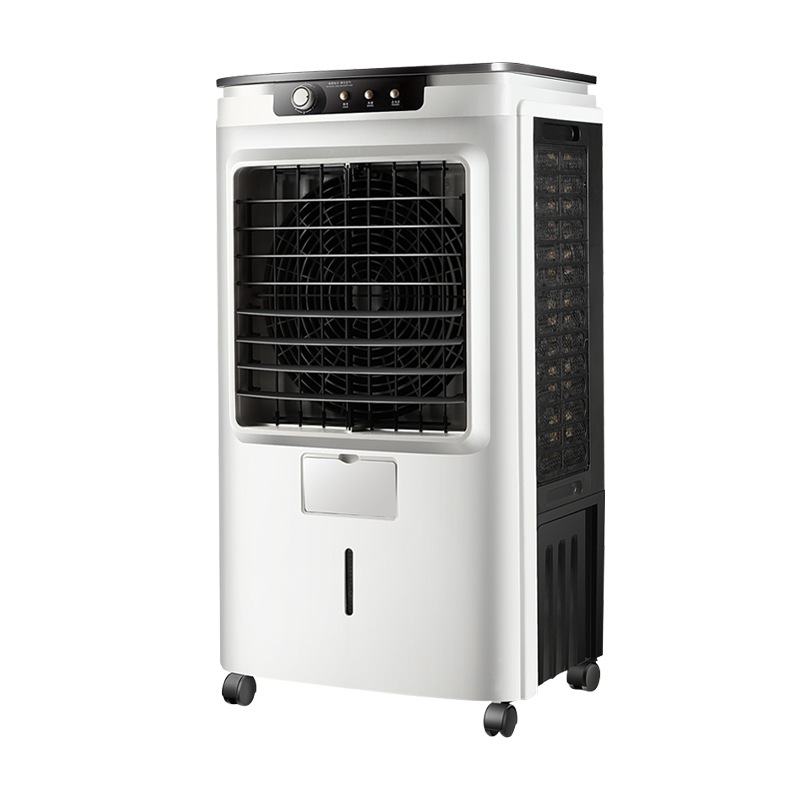
The following table provides a side-by-side comparison of two industrial evaporative air coolers across dimensions including airflow rate, coverage area, power consumption, water tank capacity, and noise level, enabling buyers to quickly identify the model that matches their requirements.
| Comparison Dimension | High-Airflow Industrial Cooler | Medium-Airflow Industrial Cooler |
|---|---|---|
| Rated Airflow | 8000-10000m³/h | 4000-6000m³/h |
| Coverage Area | 200-300㎡ | 100-150㎡ |
| Rated Power | 450-550W | 250-350W |
| Water Tank Capacity | 80-100L | 40-60L |
| Operating Noise | 65-72dB | 55-62dB |
| Unit Weight | Approx. 45-55kg | Approx. 25-35kg |
| Mobility | Universal wheels + brake lock | Universal wheels |
Cooling Efficiency and Energy Consumption Analysis
Evaporative Cooling Efficiency Differences
High-airflow models utilize thickened honeycomb cellulose cooling pads with an evaporation area of 12-15㎡. In dry environments with relative humidity below 40%, the outlet air temperature can be reduced by 8-12℃ compared to ambient temperature. Medium-airflow models feature cooling pads with an evaporation area of approximately 8-10㎡, achieving a temperature reduction of 6-10℃ under identical conditions. For high-temperature operations such as textile workshops and metal processing facilities, the continuous airflow capacity of high-airflow models ensures that the working area temperature remains stable within the 28-32℃ range.
Per-Unit-Area Energy Consumption Comparison
Taking a 200㎡ plant as an example, operating two medium-airflow units in parallel requires a total power of approximately 500-700W, whereas a single high-airflow unit only needs 450-550W to cover the same area. When covering spaces exceeding 200㎡, the per-unit-area energy consumption of a single high-airflow model is approximately 15%-20% lower than that of two medium-airflow units. However, in scenarios under 100㎡, medium-airflow models do not need to operate at full load, resulting in lower actual energy consumption and a more pronounced energy efficiency advantage.
Applicable Scenarios and Industry Application Differences
The design positioning of the two models determines their optimal application scenarios; incorrect selection will directly impact cooling effectiveness and equipment lifespan.
Typical Applications for High-Airflow Models
- Large Industrial Plants: Machine shops, injection molding facilities, and welding workshops with dense heat sources, typically with ceiling heights of 4-6 meters, requiring continuous high-volume air exchange to displace hot air
- Livestock Farming: Pig houses and cattle sheds in open or semi-open structures, needing to cover farming areas exceeding 200㎡ to reduce animal heat stress
- Greenhouses: Rapid cooling and ventilation during peak summer temperatures to prevent crop wilting from excessive heat
- Logistics and Warehousing: Large warehouse sorting areas with high personnel mobility, requiring extensive air circulation
Typical Applications for Medium-Airflow Models
- Small and Medium Workshops: Electronics assembly and packaging light-industry workshops of 100-150㎡, where noise control requirements are stringent
- Commercial Spaces: Shopping mall counters, supermarket checkout areas, and internet cafes requiring a balance between cooling and quiet environments
- Greenhouse Seedling Areas: Seedling greenhouses with high precision requirements for temperature and humidity, where medium airflow prevents strong wind damage to young plants
- Temporary Event Venues: Outdoor weddings and exhibition booths for short-term use, with lightweight equipment that is easy to transport
Maintenance Costs and Service Life Assessment
Cooling Pad Replacement Cycle and Water Quality Requirements
Both models are equipped with honeycomb cellulose cooling pads featuring excellent water absorption, low airflow resistance, and long service life. Under normal tap water conditions, the cooling pad replacement cycle is typically 1-2 years. If the water source has high hardness (TDS exceeding 300mg/L), mineral deposits will accelerate pad clogging, potentially shortening the replacement cycle to 8-12 months. High-airflow models have larger pad areas, so a single replacement costs approximately 1.5-1.8 times that of medium-airflow models. Users in high-hardness water areas are advised to install pre-treatment water softening devices to extend pad lifespan.
Daily Maintenance Workload Comparison
High-airflow models have water tank capacities of 80-100L, with daily evaporation rates of approximately 30-50L during hot summers, requiring 1-2 refills per day. Medium-airflow models with 40-60L tanks typically need only one daily refill. Both models should have their water tanks and cooling pads cleaned every 2-4 weeks to prevent algae growth and bacterial proliferation. Due to their more complex structure, a thorough cleaning of high-airflow models takes approximately 30-40 minutes, while medium-airflow models require about 20-25 minutes.
Procurement Decision Recommendations and Common Misconceptions
Core Selection Principles
- Measure Area Before Selecting Airflow: Use a preliminary estimate of 40-50m³/h per square meter, taking the upper limit for open plants and the lower limit for semi-enclosed spaces
- Pay Attention to Ambient Humidity: In regions where relative humidity exceeds 60%, evaporative cooling efficiency drops significantly; high-airflow models are recommended to compensate for efficiency losses
- Assess Noise Sensitivity: In noise-sensitive environments such as offices and commercial spaces, operating noise should be kept below 60dB, giving medium-airflow models a clear advantage
- Confirm Water Source Conditions: Ensure a continuous and stable tap water supply on-site, and evaluate water hardness impact on cooling pad lifespan
Common Selection Misconceptions
Some buyers hold the misconception that "higher airflow is always better," forcing high-airflow models into spaces under 100㎡ and causing the following issues: first, excessive cooling leading to physical discomfort; second, high noise levels disrupting normal work; and third, frequent starts and stops shortening motor lifespan. Conversely, using medium-airflow models in 300㎡ plants results in insufficient air throw distance and elevated temperatures in dead zones, forcing the addition of more units and ultimately driving up total procurement and operating costs.
Industry Development Trends and Technology Upgrade Directions
The evaporative air cooler industry is currently advancing toward intelligence, energy efficiency, and modularity. New-generation products have begun integrating variable-frequency speed regulation technology, which automatically adjusts fan speed based on ambient temperature, achieving energy savings of 30%-40% under partial-load conditions. Smart control systems support remote operation and scheduled on/off functions via mobile apps, with some high-end models connecting to IoT platforms for multi-unit cluster management and energy consumption data visualization. In terms of materials, the application of nano-coated cooling pads and antibacterial cellulose media allows pads to maintain high evaporation efficiency while offering stronger anti-mold and antibacterial properties, further reducing maintenance frequency and operating costs.

 CONTACT US