
 EN
EN  English
 中文简体
中文简体 عربى
عربى Tiếng Việt
Content
- 1 Core Product Parameter Comparison
- 2 Cooling Performance and Evaporative Efficiency Analysis
- 3 Noise Control and Silent Mode In-Depth Comparison
- 4 Precise Matching of Applicable Scenarios and Industry Applications
- 5 Energy Costs and Long-Term Operational Economics
- 6 Maintenance Convenience and Service Life Assessment
- 7 Procurement Decision Framework and Common Selection Misconceptions
- 8 Industry Trends: Power Segmentation and Scenario Customization
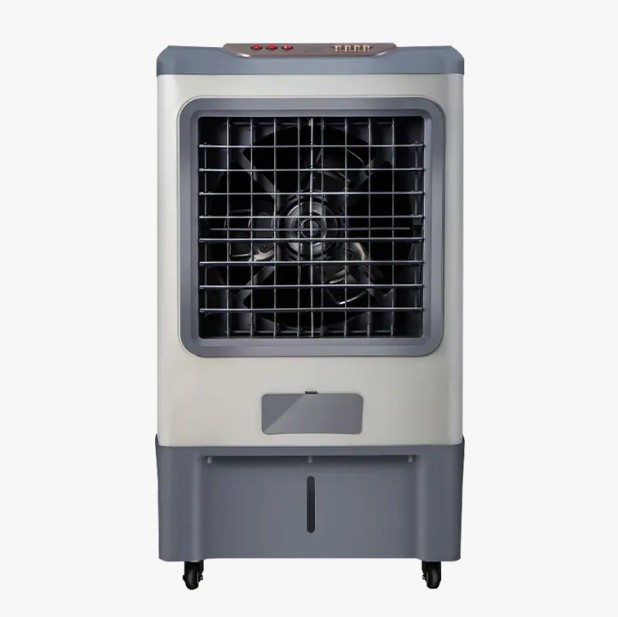
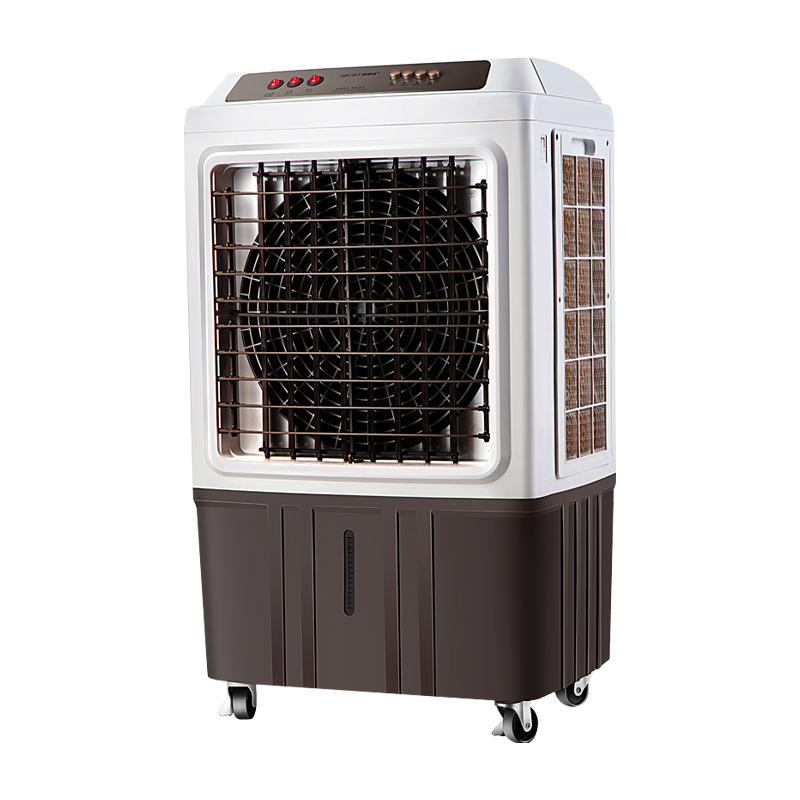
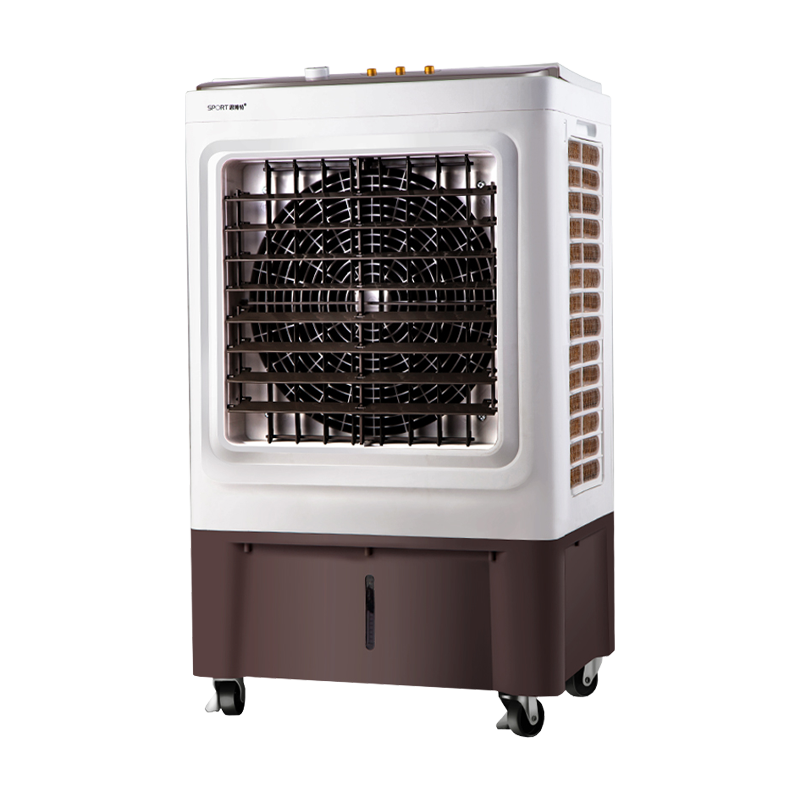
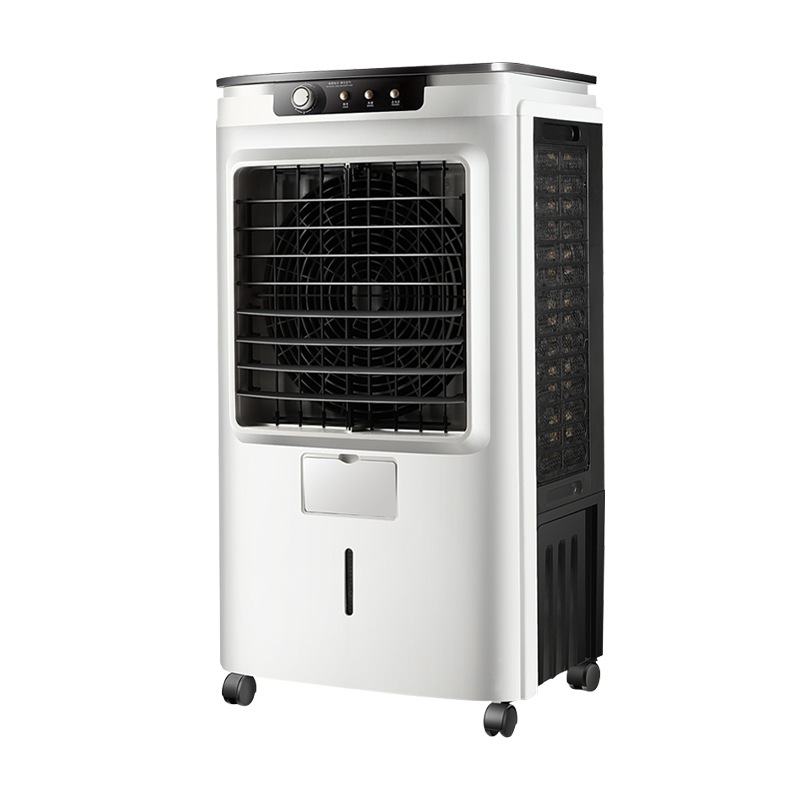
After comparing two portable evaporative air coolers from the same series, it was found that the 450W model, with its three-speed adjustment and high airflow output, delivers significantly superior cooling efficiency in heat-intensive industrial plants and extreme high-temperature conditions; meanwhile, the 150W model stands out with its ultra-low noise level of 30-40dB in silent mode, making it more suitable for offices, bedrooms, and commercial retail spaces where noise sensitivity is critical. The two are not substitutes for each other but rather complementary product lines addressing different scenario needs; the key to selection lies in clarifying the thermal load, spatial area, and noise tolerance of the intended environment.
Core Product Parameter Comparison
The following table provides a comprehensive comparison of the 450W and 150W portable evaporative air coolers across five dimensions: power rating, water tank capacity, speed settings, noise range, and applicable scenarios.
| Comparison Dimension | 450W Portable Evaporative Air Cooler | 150W Portable Evaporative Air Cooler |
|---|---|---|
| Rated Power | 450W | 150W |
| Water Tank Capacity | 45L | 45L |
| Speed Settings | Three-speed adjustment | Three-speed adjustment |
| Low-Speed Noise | Approx. 45-55dB | 30-40dB |
| High-Speed Noise | Approx. 65-75dB | Approx. 50-60dB |
| Silent Mode | No dedicated silent mode | Dedicated silent mode with auto low-speed lock |
| Coverage Area | 150-250㎡ | 50-100㎡ |
| Typical Applications | Industrial plants, livestock farming, large warehouses | Offices, bedrooms, retail shops, study rooms |
Cooling Performance and Evaporative Efficiency Analysis
450W Model: Powerful Cooling Driven by High Wattage
The 450W power rating gives this model a stronger heat load carrying capacity. Its high-power water pump distributes water more evenly across the honeycomb cooling pad surface, significantly expanding the effective evaporation area and increasing the water evaporation rate by approximately 40%-60%. Combined with an efficient fan, this model can achieve uniform air distribution across 150-250㎡ at high speed, effectively eliminating local hot spots. In extreme high-temperature environments above 35℃, the 450W model can reduce the outlet air temperature by 8-12℃ compared to ambient temperature, making it suitable for welding workshops, injection molding plants, and summer livestock sheds where heat sources are concentrated.
150W Model: Precise Temperature Control in Low-Power Scenarios
Although the 150W model has only one-third the power of the 450W model, its Energy Efficiency Ratio (EER) performs excellently in small-to-medium spaces. The model employs low-noise fans and optimized water channel design, achieving an outlet temperature reduction of 5-8℃ in enclosed or semi-enclosed spaces of 50-100㎡. Due to its lower power consumption, its electricity usage per unit time is only 33% of the 450W model. In office scenarios running 8 hours daily, it can save approximately 2.4 kWh per day. For environments with low thermal loads where comfort cooling is the primary goal, the 150W model offers a clear cost-performance advantage.
Noise Control and Silent Mode In-Depth Comparison
Noise level is one of the core metrics distinguishing the target user groups of the two models. Especially for nighttime use and office scenarios, the noise difference directly determines user experience.
| Speed Setting | 450W Model Noise Range | 150W Model Noise Range | Reference Environment |
|---|---|---|---|
| Low Speed | 45-55dB | 30-40dB | Whisper / Quiet library |
| Medium Speed | 55-65dB | 40-50dB | Normal indoor conversation |
| High Speed | 65-75dB | 50-60dB | Normal TV volume |
Dedicated Silent Mode on the 150W Model
The 150W model features a dedicated silent mode. When activated, the device automatically locks to low-speed operation, strictly controlling noise within the 30-40dB range—equivalent to a whisper or the ambient sound of a quiet library. This design is specifically optimized for nighttime sleep, study work, and conference room scenarios, minimizing user interference while maintaining basic cooling capacity. In contrast, even at low speed, the 450W model produces noise around 45-55dB, which is acceptable but lacks dedicated silent optimization and may still generate perceptible operating sound in extremely quiet environments.
Differences in Noise Reduction Technology Paths
The 150W model employs multiple noise reduction technologies: efficient low-noise fan blade design reduces aerodynamic noise; internal sound insulation materials and optimized structure suppress vibration transmission; streamlined air guide grilles at intake and exhaust ports reduce turbulent flow noise. The 450W model prioritizes heat dissipation efficiency and airflow output, with larger fan diameter and higher rotation speed than the 150W model, making noise control more challenging at high-power operation. For industrial users, 65-75dB noise is usually not an issue in noisy workshop environments; however, for commercial and residential users, this noise level clearly exceeds the comfort threshold.
Precise Matching of Applicable Scenarios and Industry Applications
Core Battlegrounds for the 450W Model
- Industrial Manufacturing Workshops: Machine shops, welding, and injection molding areas with concentrated heat sources and ceiling heights of 4-6 meters require continuous high-volume air exchange. The 450W model's high-speed setting ensures working area temperatures remain stable below 30℃
- Livestock Farming Sheds: Pig houses and cattle sheds in semi-open structures face summer heat stress that threatens animal health. The 450W model covers 150-250㎡ of farming area, effectively reducing livestock mortality rates and feed intake decline risks
- Large-Scale Warehousing and Logistics: Sorting centers and transit warehouses with high personnel mobility and open spaces require extensive air circulation to improve the working environment
- Outdoor Event Venues: Temporary exhibition booths and open-air dining areas with high ambient temperatures and limited shade. The 450W model's high airflow can rapidly establish a comfortable microclimate
Comfort Zones for the 150W Model
- Office Spaces: Open-plan offices and individual workstation areas within 50-100㎡ where the 150W model can maintain a comfortable temperature of 26-28℃, with silent mode not interfering with conference calls and focused work
- Commercial Retail: Shopping mall counters, convenience store checkout areas, and coffee shops requiring a balance between cooling and customer experience, where low-noise operation does not disrupt the consumption atmosphere
- Residential Environments: Bedrooms, study rooms, and living rooms used at night, where the 30-40dB noise level in silent mode helps improve sleep quality and study concentration
- Small Greenhouse Seedling Areas: Seedling greenhouses with high precision requirements for temperature and humidity, where the 150W model's gentle airflow prevents strong wind damage to young plants
Energy Costs and Long-Term Operational Economics
Daily Operating Cost Calculation
Based on a commercial electricity rate of $0.12/kWh and 8 hours of daily operation, the daily energy cost difference between the two models is significant. The 450W model, at medium load (approximately 350W actual power consumption), consumes about 2.8 kWh daily, costing roughly $0.34 per day. The 150W model, at medium load (approximately 120W actual power consumption), consumes about 0.96 kWh daily, costing roughly $0.12 per day. The daily electricity cost gap is approximately $0.22, the monthly gap about $6.60, and the annual gap about $79. For commercial users requiring year-round operation, this cumulative difference cannot be ignored.
Per-Unit-Area Cooling Cost Comparison
However, energy costs must be evaluated in conjunction with coverage area. The 450W model covers 150-250㎡, with a daily per-unit-area consumption of approximately 0.011-0.019 kWh/㎡. The 150W model covers 50-100㎡, with a daily per-unit-area consumption of approximately 0.010-0.019 kWh/㎡. Within their respective optimal coverage areas, the per-unit-area cooling costs of both models are essentially equivalent. This means that selection errors are the true root cause of cost overruns—using a 450W model in a 100㎡ office causes severe overcooling and energy waste, while using a 150W model in a 200㎡ plant results in insufficient cooling that forces extended runtime, ultimately driving electricity costs higher rather than lower.
Maintenance Convenience and Service Life Assessment
Universal Maintenance Standards for 45L Water Tanks
Both models are equipped with 45L water tanks. During hot summers with daily evaporation rates of approximately 15-25L, refilling is typically required every 1-2 days. Water tanks and cooling pads should be cleaned every 2-4 weeks to prevent algae growth and mineral deposits. Honeycomb cellulose cooling pads have a replacement cycle of 1-2 years under normal tap water conditions. If water hardness is high (TDS exceeding 300mg/L), installing a pre-filter is recommended to extend pad lifespan. Since both models share the same tank capacity, daily refilling frequency and cleaning workload are essentially identical.
Motor and Fan Lifespan Differences
The high-power motor and high-speed fan in the 450W model experience faster bearing wear under long-term high-load operation compared to the 150W model. If running at high speed for more than 8 hours daily, the 450W model's motor lifespan is estimated at 3-5 years; the 150W model, with lower power and slower rotation speed, can achieve a motor lifespan of 5-7 years. It is recommended that 450W model users switch to medium or low speed during non-extreme high-temperature periods to balance cooling needs with equipment longevity. Regular cleaning of fan blades and filters to prevent dust buildup that causes dynamic imbalance is a shared key factor in extending the service life of both models.
Procurement Decision Framework and Common Selection Misconceptions
Four-Step Selection Decision Method
- Measure Spatial Area: For 50-100㎡, prioritize the 150W model; for 100-150㎡, evaluate heat source density; for 150㎡+ or heat-intensive environments, directly select the 450W model
- Assess Noise Tolerance: In bedrooms, study rooms, and conference rooms where the noise threshold should remain below 45dB, the 150W model's silent mode is the only choice; industrial workshops with noise thresholds typically above 70dB can fully accommodate the 450W model
- Confirm Usage Time Slots: For nighttime long-duration operation (over 6 hours) with noise sensitivity, the 150W model is superior; for daytime intermittent operation or urgent cooling during peak heat, the 450W model is more efficient
- Calculate Long-Term Electricity Costs: Based on 8 hours daily at a commercial rate of $0.12/kWh, the 150W model saves approximately $79 annually in electricity costs, offering significant appeal for budget-conscious users
Three Major Selection Misconceptions Warning
Misconception One: "Higher power means faster cooling, so use high power even in small spaces." Using a 450W model in a 50㎡ bedroom not only causes excessive cooling but also disrupts sleep with high noise, wasting over 50% in per-unit-area energy consumption. Misconception Two: "Low-power models save money, so they can handle large spaces if you push them hard enough." Using a 150W model in a 200㎡ plant results in insufficient cooling that forces the unit to run at high load continuously, increasing motor overheating risk. Actual electricity costs end up comparable to the 450W model while delivering far inferior cooling performance. Misconception Three: "Noise only affects comfort, so it doesn't matter in industrial settings." In quality inspection workshops or precision instrument operation rooms where verbal communication is required, even industrial environments should have noise底线 requirements. Sustained noise above 65dB increases worker fatigue and error rates.
Industry Trends: Power Segmentation and Scenario Customization
The evaporative air cooler market is currently transitioning from "one power rating fits all" to "multi-power gradient coverage." The parallel positioning of the 450W and 150W models exemplifies this trend. Future product iteration directions include: the proliferation of variable-frequency speed regulation technology, enabling a single unit to automatically adjust within the 150W-450W power range based on ambient temperature, balancing silence and powerful cooling; integration of intelligent temperature control systems allowing remote target temperature and operating schedule settings via mobile apps for refined energy management; and modular cooling pad designs allowing users to replace media of different materials based on water hardness, reducing maintenance costs. For buyers, clarifying the true needs of their specific scenario and avoiding being misled by single parameters is the fundamental path to proper selection.

 CONTACT US